




Trust has emerged as the defining currency for leadership, governance and organisational performance, with communication experts urging leaders across business, government and civil society to deliberately earn public confidence through consistent action, empathy and accountability rather than relying on position or institutional authority.
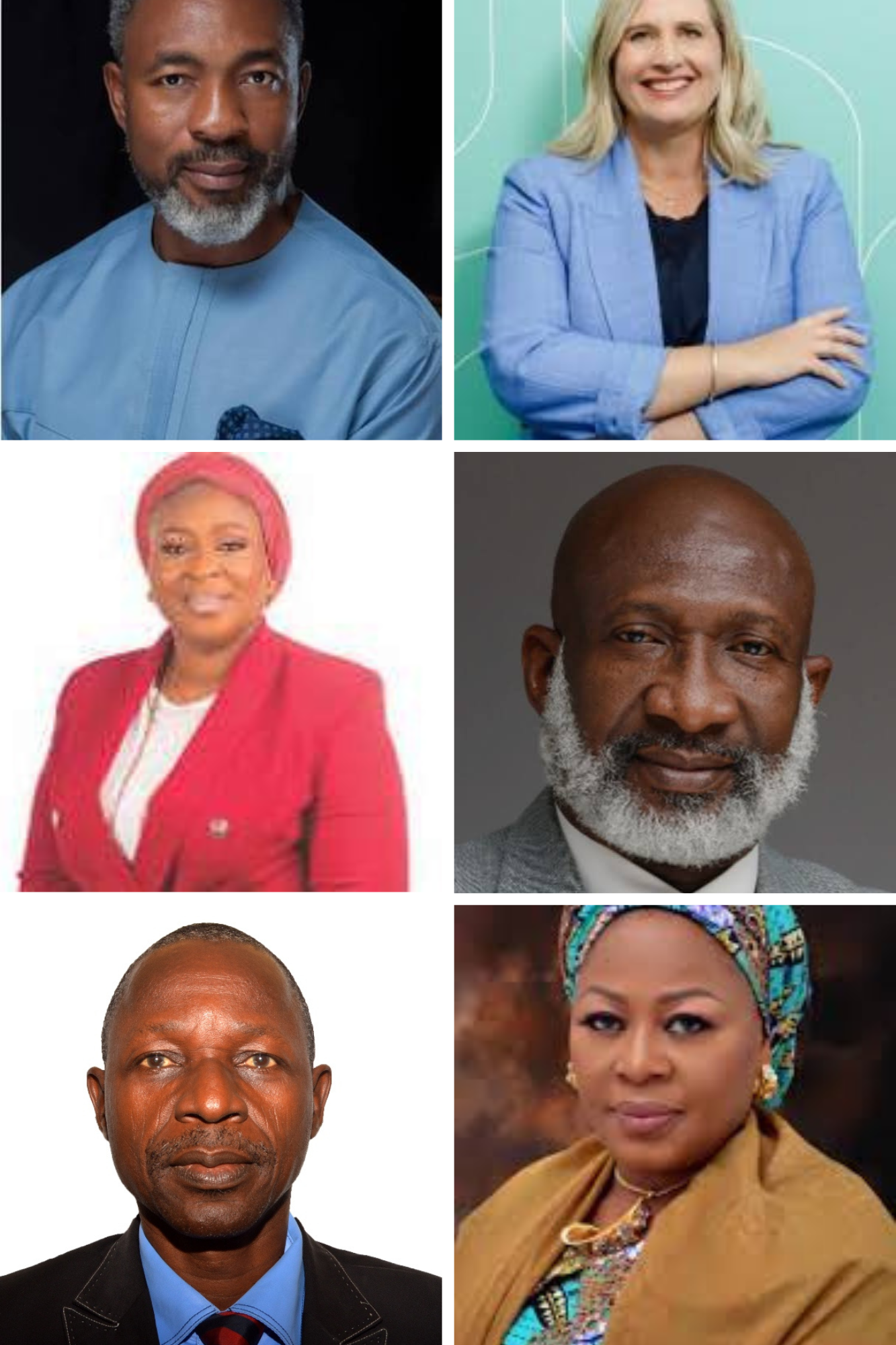
Meanwhile, this position dominated discussions at the Nigerian Institute of Public Relations (NIPR) Induction Summit, following the institute’s Q2 PR Power Lunch themed “Advancing Impactful Leadership and Social Cohesion Through Strategic Trust Brokerage,” where the 2026 Edelman Trust Barometer was presented by Edelman Africa Chief Executive Officer, Karena Crerar.
ALSO WATCH: CWAY’ S CHILDREN’S DAY SUPERKID CELEBRATION
Crerar, in a detailed presentation that framed the tone of the summit, warned that global societies are increasingly shaped by what she described as an “insular trust mindset,” where people are more likely to trust those who share similar values, beliefs and information sources while distrusting those who differ from them.
Again, she noted that this pattern is weakening institutional authority across government, media, business and non-governmental organisations, while strengthening trust in smaller circles such as family, peers and immediate workplaces.
According to her, Nigeria reflects both challenges and opportunities within this global shift. She disclosed that the country records a notable income based trust gap, where high income and low income groups experience markedly different levels of trust in institutions, a divergence she said signals unequal lived experiences across society.
WATCH ALSO:MARKETING EDGE ONTV HOST DEMILADE
Despite this, she pointed to rising optimism in Nigeria, including a significant increase in the belief that the next generation will be better off, describing it as one of the more positive indicators in the global study.
Crerar further explained that trust is no longer distributed evenly across institutions but has become deeply localised, shaped by competence, ethics and perceived authenticity.
With this, she stressed that businesses increasingly benefit from higher trust levels than other institutions because they are seen to directly influence livelihoods through employment, welfare and economic stability.
Moreso, she also highlighted a growing global reality where domestic companies are often trusted more than foreign ones, noting that countries are increasingly favouring local institutions in matters of economic participation and credibility.
This, she said, has implications for global organisations operating in local markets, which must now invest more deliberately in long term community relationships to maintain legitimacy.
WATCH ALSO:MARKETING EDGE ONTV HOSTS YBO
A central theme of her presentation was the concept of trust brokerage, which she defined as the deliberate effort to bridge divides between groups that do not naturally trust each other by translating needs, building shared understanding and facilitating cooperation. She argued that trust brokers do not attempt to force agreement but instead create conditions for mutual recognition and collaboration.
The Edelman Africa CEO also warned that rising economic pressure, geopolitical uncertainty and fears around artificial intelligence are deepening public anxiety, particularly among lower income groups who feel more exposed to systemic change.
She noted that this anxiety contributes to perceptions of grievance and weakens confidence in institutions unless deliberately addressed through transparent and human centred communication.
She emphasised that organisations must now communicate with authenticity, consistency and empathy, adding that audiences increasingly reject messaging that lacks lived experience or transparency.
According to her, reputation may generate visibility, but only sustained trust creates resilience, especially in crisis situations where credibility determines public response.
Contributing to the discussion, Mojisola Saka, Founder and Chief Experience and Engagement Officer at Boucles Africa, said businesses have become the most trusted institutions because they are directly linked to citizens’ economic wellbeing through salaries, healthcare support and employee welfare. She noted that trust has evolved into a powerful currency that shapes influence, organisational performance and social legitimacy.
She argued that leadership communication must move beyond information delivery to reflect honesty, accessibility, empathy and accountability, stressing that stakeholders now expect authenticity over formal messaging.
She added that artificial intelligence will further increase the demand for authenticity in communication and deepen the value of trust in stakeholder relationships.
Also speaking, Chairman of the NIPR Membership Services Committee, Maryam Sanusi, described trust brokerage as a missing link in many public sector communication efforts, arguing that programmes often fail not due to poor planning but because institutions overlook trusted community intermediaries.
Drawing from her experience at the Federal Roads Maintenance Agency, FERMA, she explained that infrastructure projects frequently faced resistance despite extensive publicity campaigns.
According to her, progress improved significantly only when communication shifted to engaging local trust figures such as traditional rulers, women leaders and commercial motorcycle union representatives who eventually became project advocates within their communities.
Sanusi stressed that once these local actors accepted ownership of projects, implementation became smoother and resistance reduced significantly.
ALSO WATCH:MARKETING EDGE ONTV HOSTS ADETUNJI OYEBANJI
She therefore urged communicators to prioritise relationship building over message broadcasting and to actively involve trusted local voices in development communication.
She further noted that trust must be continuously earned and not assumed, adding that institutions must recognise differences, broker cooperation and act as translators between competing social realities in order to sustain credibility.
Adding another dimension, Prof Rotimi Williams Olatunji, Dean, School of Communication, Lagos State University, emphasised that trust is fundamentally dependent on consistency between words and actions.
He stated that strategic communication cannot succeed without credibility, which is demonstrated when institutions fulfil the promises they make to their audiences.
ALSO WATCH:NIPR COURTESY VIST TO ABU ZARIA VC
Significantly, he noted that leaders must embody the values they communicate, warning that public trust collapses when there is a disconnect between messaging and behaviour. He also observed that growing preference for domestic companies in many countries reflects efforts to protect national economies, while Nigeria’s cultural resilience and optimism continue to shape public attitudes despite economic pressures.
Also, strategic communications expert Franklyn Ginger-Eke described trust as one of Nigeria’s greatest cultural strengths, noting that Nigerians are naturally welcoming and trusting.
However, he cautioned that worsening economic realities are increasingly testing public confidence and shaping how trust is expressed across society.
ALSO WATCH:MARKETING EDGE ONTV HOSTS MAUREEN IFADA
So, while commending the Edelman Trust Barometer as a timely intervention, he said Nigeria’s trust profile should be viewed within its unique cultural context, adding that economic conditions remain the biggest factor influencing confidence in institutions and leadership.
Collectively, the panelists agreed that rebuilding public confidence requires a deliberate shift toward trust brokerage as a communication strategy, stronger alignment between leadership words and actions, deeper engagement with local communities and sustained commitment to transparency and accountability.
Earlier in his remarks, NIPR President, Dr. Ike Neliaku, urged newly inducted public relations professionals to reject negative narratives about Nigeria and instead commit to ethical communication practices that strengthen national cohesion and rebuild public trust.
The summit ultimately reinforced a shared message that trust is no longer automatic but must be continuously earned, managed and brokered across all levels of society.
WATCH ALSO: MARKETING EDGE HOSTS NITE OF TRIBUTES FOR ITS LATE PUBLISHER


Comment
No comments found.