
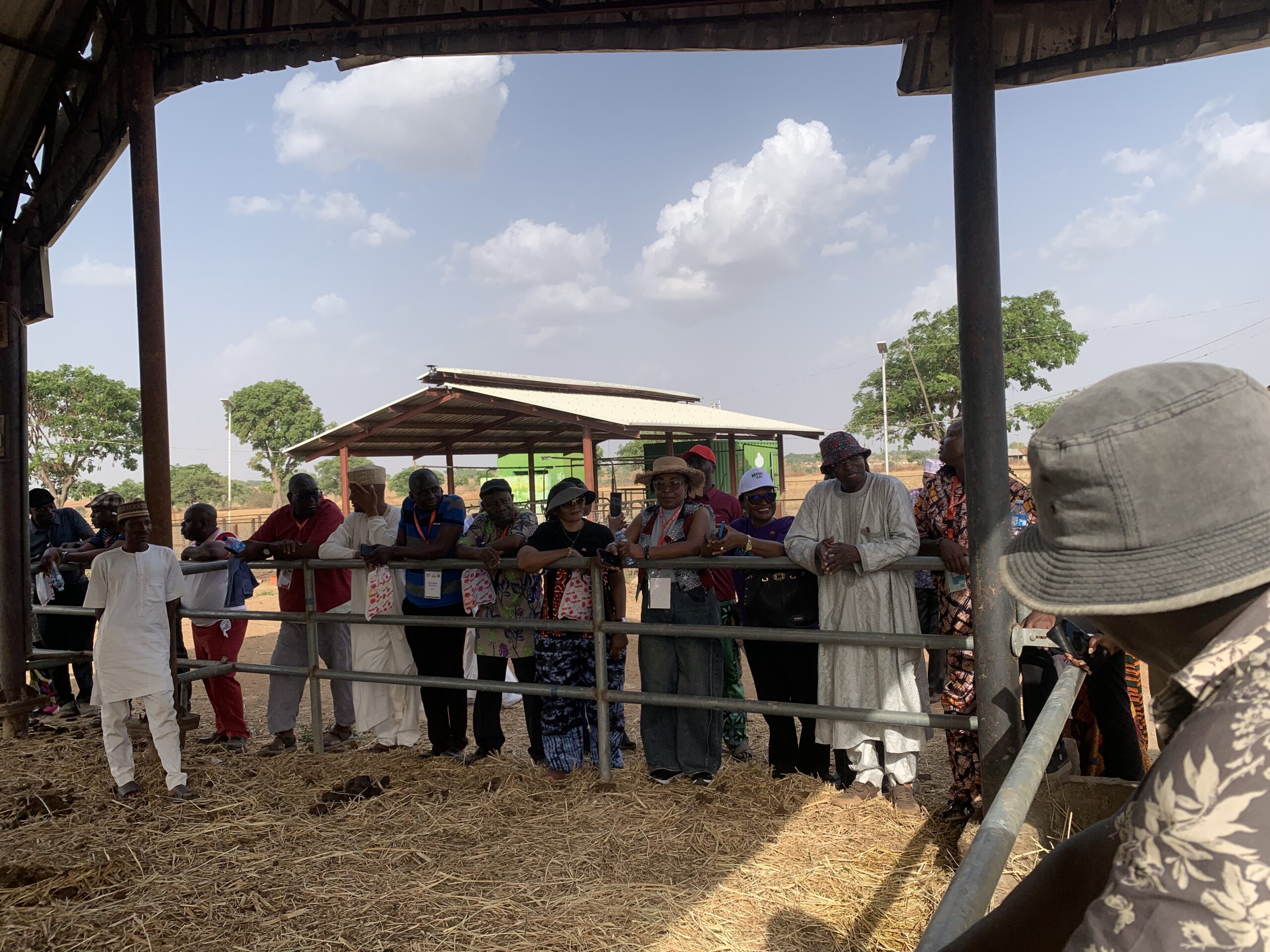




There is a particular kind of advocacy that does not happen in conference halls. It happens in the field, on the farm, among the animals and the soil and the early morning work that most Nigerians who consume food have never seen.
On Friday, the Nigerian Institute of Public Relations made a deliberate choice to take its members exactly there to the personal farm of the Honourable Alhaji Idi Mukhtar Maiha, Nigeria’s Minister of Livestock Development, in Kaduna, for a hands-on session that transformed the week’s theme from a conversation into a lived experience.
The visit, organised as part of the activities of the third Nigerian Public Relations Week 2026 under the theme “Food Security: From Policy Paper to Public Plate — The Imperatives of Public Relations,” was led by Yomi Badejo-Okusanya, Chairman of the Planning Committee for NIPRW 2026.
It brought together NIPR members from across Nigeria’s 36 states and the FCT for an experience that went well beyond tourism. It was a deliberate act of institutional advocacy the Institute putting its own members on the front lines of a national challenge and asking them to carry the message back home.
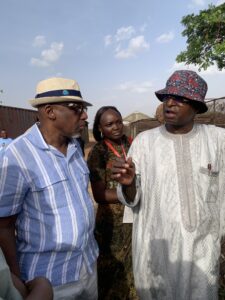
Alhaji Idi Mukhtar Maiha, Nigeria’s Minister of Livestock Development and Yomi Badejo-Okusanya, chairman planning committee NIPRW
The choice of host was itself significant. Alhaji Idi Mukhtar Maiha is not merely a minister with a brief on livestock. He is a farmer with skin in the game. A graduate of Ahmadu Bello University with a background spanning NNPC operations and the managing directorship of Zaidi Farms Limited, Maiha was appointed by President Bola Ahmed Tinubu in October 2024 as the pioneer Minister of the Federal Ministry of Livestock Development a ministry created specifically to give Nigeria’s livestock sector the dedicated institutional attention it had never received.
According to the Ministry’s official records and the Federal Ministry of Finance, his National Livestock Growth and Advancement Strategy is a two-phased, ten-year plan designed to double herd size and expand sectoral output by at least 100 percent by 2035.
The private sector has already responded, with the Nigerian Association of Chambers of Commerce, Industry, Mines and Agriculture unveiling a $50 billion investment initiative aligned with this strategy, aimed at growing the sector into a $74 billion economic powerhouse.
On his farm, away from the formality of government briefings, Maiha spoke with a directness and practical clarity that clearly made an impression on his guests. He laid out the mathematics of diversified livestock farming in terms that any communicator could understand and any Nigerian could act on.
“If you go into livestock business, you can spread your portfolio in a way that you are dealing with large animals, small animals and micro livestock. That means that every season of the year there is something coming out of your farm. That is how to make income,” he told the gathered NIPR members.
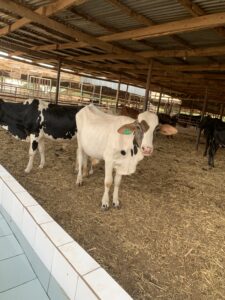
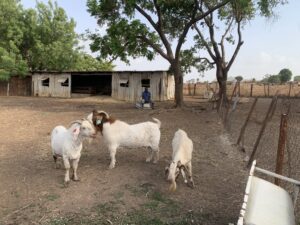
He explained the gestation timelines that make diversified livestock farming a year-round income proposition 268 days for a cow, 150 days for goats and sheep, and between three and four months for chickens.
“You will have something to gain from all of the livestock at different periods,” he said.
He made the case for ranching in a way that challenged longstanding misconceptions. The concept, he said, is not new to Nigeria and certainly not foreign.
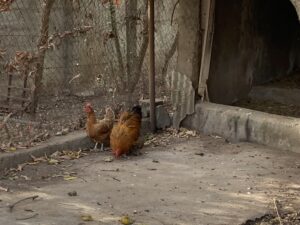
“The concept of ranching is not new in Nigeria. It has been existing before independence. Just because one doesn’t know that ranching exists or is far away from it doesn’t mean it is not there.
Ranching is a business model and we are trying to promote it,” he said. He also made an accessible entry point for those with limited land or capital, encouraging the NIPR members present to start small and start immediately.
“Vegetables are easy to grow,” he said, urging every person in the room to consider starting with a vegetable garden at home as a first step toward food self-sufficiency.
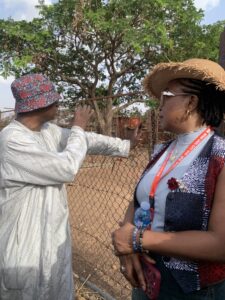
He also encouraged parents to reduce screen time for their children and connect them to nature, arguing that this was how Nigeria could grow a new generation of young Nigerians willing to take agriculture seriously.
On the ministry’s broader agenda, Maiha spoke about the Presidential Initiative for Women and Youth in Livestock, which according to the Ministry’s official records targets approximately 1,000 beneficiaries per state roughly 37,000 people in total providing them with capacity building, certification recognised by the National Board for Technical Education and pathways into the livestock value chain.
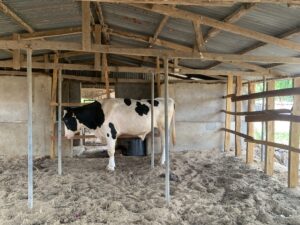
“We have an initiative for women and youth. We have actually finished all the framework work. We are now trying to put the numbers in terms of what amount of money will be able to teach 1,000 youth from each state across the entire value chain. Some would want to choose pasture cultivation, some would want to do feed production,” he said.
He also stressed the communication dimension of the ministry’s challenge, noting that volume, velocity and value are critical in communicating the sector’s potential to the public and calling on NIPR specifically to help the ministry bridge that gap.
“We need NIPR to help communicate the value of what Nigeria is trying to grow,” he said, pointing out that achieving just 10 percent growth in domestic food production would make a measurable difference to food security and employment.
He also raised a food safety concern that most Nigerians have never considered the health risks embedded in commercially prepared salads. He warned that vendors sometimes apply chemicals to keep the produce looking fresh, and that when the salad absorbs these substances before being harvested, the residues remain in the leaves being consumed. It was a practical public health point that underscored the broader argument of the visit: that Nigerians need to know more about where their food comes from, how it is produced and what is in it. That is, in its essence, a public relations problem.
Responding on behalf of NIPR, Yomi Badejo-Okusanya was both moved and committal. He acknowledged that the visit had opened his eyes in ways he had not anticipated, and he turned the moment into a pledge.
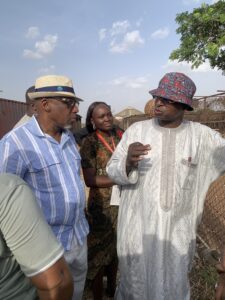
“Assure you that all of us are ambassadors for your ministry, every one of us. The great thing you have is that we are from different states. We have come from all over. So we are going to go back with this message,” he said.
He went further, committing the Institute to follow through beyond the week’s programme. “I want to commit to you: we are going to follow up with you, because we need it. It is going to be our contribution to the project of the federal government on encouraging livestock farming. The next NIPRW is going to be in Abuja. By that time we must have marked our progress, and part of that progress is how many of us here would have gone into livestock farming and come back with positive reports,” Badejo-Okusanya said.
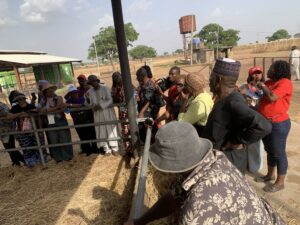
It was a commitment that gave the entire visit its defining significance. The Nigerian Institute of Public Relations did not simply listen to a minister talk about food security. It walked through a working farm, it heard the economics of livestock laid out in plain terms, it was challenged to start growing something, and it left with a pledge to return with results. That is what it looks like when a professional association decides that its mandate is not just to communicate Nigeria’s story but to live it.




Comment
No comments found.