
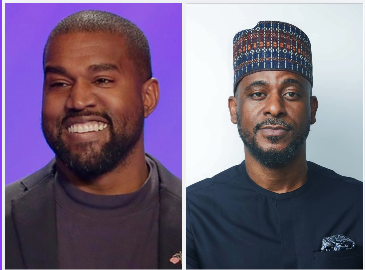




The decision by British authorities to deny entry to American rapper Kanye West, a move that consequently forced the cancellation of his headline appearances at Wireless Festival after major sponsors including Pepsi and Diageo withdrew support, has not only unsettled the programming architecture of one of Europe’s most visible music platforms.
In fact, it has also, more importantly, triggered a far-reaching conversation across the global marketing communications industry about brand alignment, sponsorship governance, celebrity partnerships and crisis communication preparedness in a reputation-sensitive era.
Indeed, in the immediate aftermath of the decision, and subsequently as the implications became clearer, MARKETING EDGE reached out to leading industry professionals to assess what the situation means for brands navigating increasingly complex celebrity ecosystems.
Also, equally importantly, what it signals about the future of sponsorship strategy in an environment where reputational alignment now functions as a measurable commercial variable rather than a secondary consideration.
To begin with, the controversy itself took shape after the UK Home Office rejected the rapper’s travel request in April, ruling that his entry would not be conducive to the public good.
Following that decision and almost immediately thereafter festival organisers confirmed the cancellation of his planned three-night headline performances.
ALSO WATCH:MARKETING EDGE ONTV
a direct consequence, the programming structure carefully built around his appearance began to unravel, especially because tickets had only recently gone on sale and the campaign narrative had already positioned him as the central attraction of the edition.
Predictably, and then quite rapidly, the situation escalated further when global sponsors began withdrawing support from the event. Significantly, that sequence of withdrawals did not merely affect funding confidence; rather, it reinforced what observers now describe as a decisive shift in how brands respond to reputational exposure tied to high-profile personalities in the contemporary sponsorship environment.
Reacting to the development, and speaking from a commercial architecture perspective, Ogbitse George, Managing Partner and Chief Commercial Officer at EFCTV Machine Africa, described the festival disruption as a powerful industry lesson on the structural risks of building campaign ecosystems around a single personality.
According to him, and importantly within the logic of integrated campaign planning, the incident demonstrates what happens when “contractual confidence outpaces reputational intelligence,” stressing that Kanye West was not merely another performer on the lineup but rather, and more strategically, the cultural thesis around which the entire edition had been constructed.
Consequently, once the visa denial removed that central narrative anchor, the festival’s positioning collapsed almost instantly.
Therefore, he argued that brands and organisers must deliberately ensure that talent supports a platform instead of inadvertently allowing talent to become the platform itself.
ALSO WATCH:MARKETING EDGE ONTV
Furthermore, drawing parallels with African market realities, he noted that similar situations have played out within Nigeria’s advertising environment where brands built significant above-the-line investments around reality television personalities whose exits under controversy later forced rapid withdrawal of campaign materials already deployed across multiple media channels.
Equally revealing, and perhaps even more instructive from a governance standpoint, George pointed to the withdrawal of sponsors such as Pepsi, Diageo and AB InBev as evidence of what he described as the arrival of a “consequence economy,” a moment in which, increasingly, audiences interpret brand associations as reflections of institutional values rather than marketing coincidence.
In that sense, and from a governance-framework perspective, he explained that the withdrawals were unlikely to have been spontaneous reactions. Instead, they were more plausibly the activation of pre-existing internal brand-safety thresholds designed to protect long-term corporate equity.
ALSO WATCH:MARKETING EDGE ONTV
More importantly still, he observed that the development exposes what he described as a maturity gap between global brand-risk governance systems and several African marketing environments, where, in contrast, ambassador relationships sometimes continue even after reputational warning signals have become publicly visible.
Therefore, when addressing the broader question of balancing commercial opportunity with ethical considerations in celebrity partnerships, George emphasised that alignment decisions must be resolved before agreements are signed rather than after controversies emerge.
At the same time, and providing further analytical clarity, he distinguished between personality-level controversy and conduct-level controversy, noting that while the former may occasionally coexist with strong brand partnerships, the latter significantly increases reputational exposure, a distinction he believes sits at the heart of the Kanye West situation.
ALSO WATCH:MARKETING EDGE ONTV
From a crisis-communication standpoint as well, he observed that festival organisers were responding to a decision made externally by regulators rather than internally by promoters.
Interestingly, he described this as a communication advantage that could have been leveraged more strategically to reassure audiences quickly and simultaneously reposition the narrative around the event’s continuity rather than its disruption.
Also speaking with MARKETING EDGE, and expanding the conversation into the territory of structural brand-equity protection, Idu Raphael, Chief Executive Officer and Chief Creative Officer at Poke Ltd, said the sponsor withdrawal reflects a broader shift in how brands now manage partnerships involving unpredictable personalities.
According to him, and very importantly within the context of long-term sponsorship planning, what the situation reveals is a clear movement away from reactive crisis response toward pre-emptive brand-equity protection strategies designed to prevent reputational exposure before escalation occurs.
ALSO WATCH:MARKETING EDGE ONTV
So, in practical terms, therefore, Raphael explained that live entertainment platforms present complex alignment risks for sponsors.
As a result, partnerships must now be evaluated not only on visibility potential but also simultaneously on behavioural history, public sentiment trajectories and long-term audience expectation patterns.
Consequently, he stressed that marketing teams must begin integrating structured scenario planning into celebrity-partnership frameworks, ensuring that exit strategies are already defined before brand relationships are activated.
Again, equally critical in his assessment, festival organisers and platform owners must respond to controversies with speed, clarity and narrative control. Otherwise, he warned, delayed responses often create communication vacuums that are quickly filled by speculation, criticism and uncontrolled interpretation.
In addition, and extending the governance conversation beyond sponsors alone, Raphael pointed to the importance of engaging political and regulatory stakeholders early within partnership ecosystems, noting that such actors can significantly influence outcomes, as clearly demonstrated in the Wireless Festival situation itself.
ALSO WATCH:MARKETING EDGE ONTV
Meanwhile, adding yet another governance-level perspective to the unfolding debate, another industry professional who spoke with MARKETING EDGE described the development primarily as a corporate-oversight decision shaped less by audience sentiment and more directly by shareholder-value considerations.
According to this practitioner, while Kanye West continues to command strong global fan loyalty, large-scale entertainment platforms depend heavily on sponsorship structures.
Therefore, and quite predictably within such financing ecosystems, brand-safety considerations frequently outweigh fan enthusiasm whenever reputational exposure reaches a defined risk threshold.
In that context, the source further explained that the outcome illustrates how shareholder-value priorities increasingly shape sponsorship decisions within today’s global entertainment-marketing environment.
ALSO WATCH:MARKETING EDGE ONTV
Consequently, when viewed across regulatory action, sponsor withdrawal patterns, governance responses and communication strategy implications, industry observers now describe the episode as one of the clearest recent demonstrations of how regulatory authority, corporate brand-safety frameworks and celebrity-reputation volatility can converge rapidly to reshape major cultural events.
Therefore, the Wireless Festival fallout is no longer being interpreted simply as a programming disruption. Rather, it is increasingly understood as a defining case study in the evolving relationship between brands, culture platforms and celebrity partnerships in a global communications landscape where reputational alignment now functions not as an accessory to sponsorship, but as its foundation.


Comment
No comments found.