
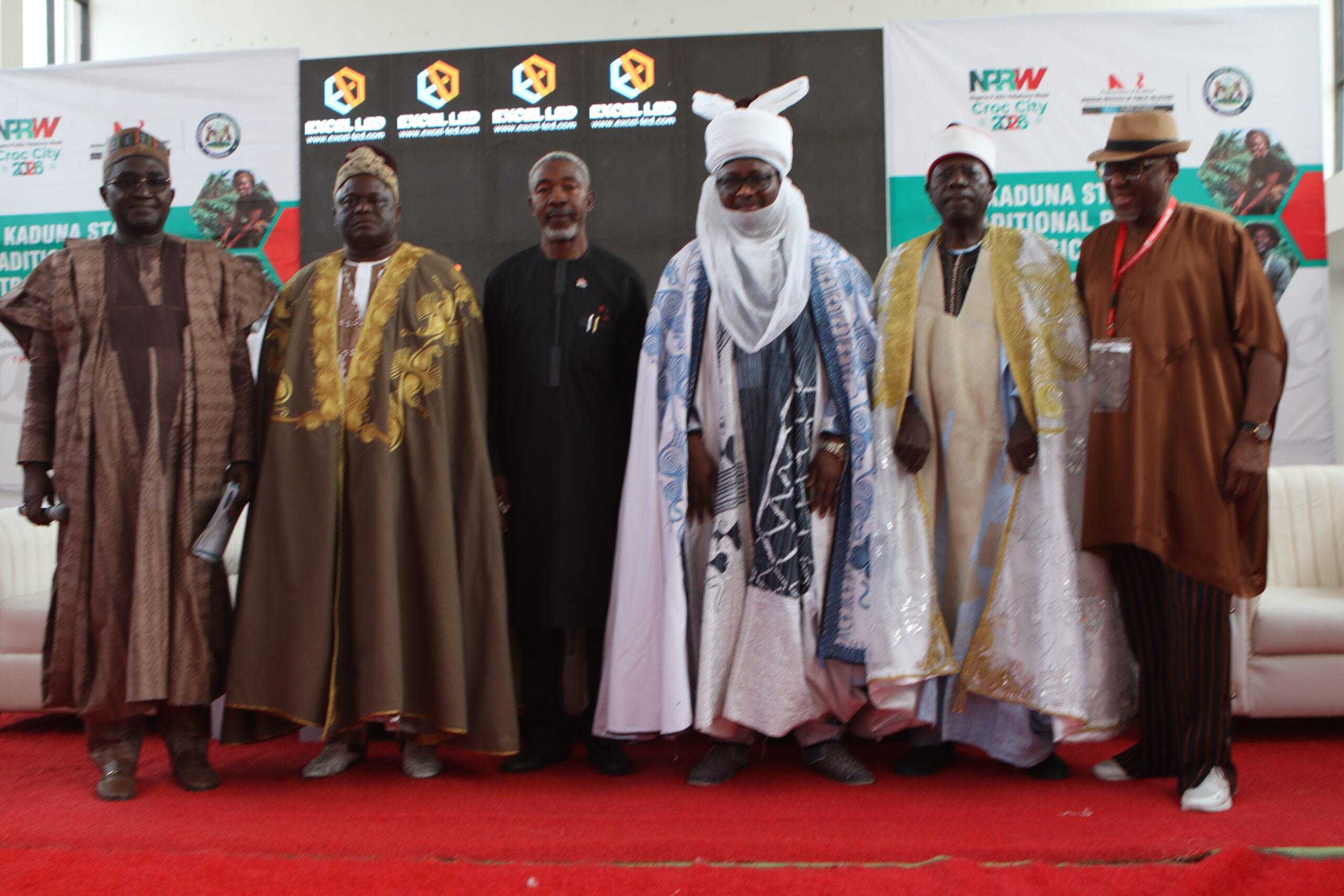




As part of activities leading to the Nigeria Public Relations Week (NPRW) 2026, the Nigerian Institute of Public Relations (NIPR), in partnership with the Kaduna State Government, convened a high-level forum of traditional rulers under the theme, “The Kaduna Peace Model: Traditional Leadership and National Stability.”
The engagement culminated in the adoption of a landmark peace communication framework aimed at strengthening national stability, grassroots governance, and food security.
The Forum, held on Thursday, April 16, 2026, at the General Hassan Usman Katsina Government House Banquet Hall, brought together thirty-five traditional rulers from across the twenty-three Local Government Areas of Kaduna State, alongside senior government officials and communication professionals.
Deliberations focused on the critical role of traditional institutions in sustaining peace, fostering inclusive governance, and enhancing social cohesion.
Representing the Governor of Kaduna State, Senator Uba Sani, the Honourable Commissioner for Local Government and Chieftaincy Affairs reaffirmed the administration’s commitment to peace, security, and development, while commending NIPR for its strategic contributions to public communication and nation-building.
In his remarks, the Emir of Zazzau and Chairman of the Kaduna State Council of Traditional Rulers highlighted the enduring relevance of traditional institutions as stabilising forces. He advocated greater constitutional recognition for traditional rulers and the national adoption of the Kaduna Peace Model.
Delivering the keynote address, the Emir of Birnin Gwari, who is also a Fellow of NIPR, emphasised the role of traditional rulers as trusted communication anchors, noting their unique capacity in conflict mediation, early warning intelligence, and community engagement. He called for stronger institutional integration of traditional leadership within governance frameworks.
A major highlight of the Forum was the conferment of the title of Royal Ambassador of the World Public Relations Forum (WPRF) Abuja 2026 on the Emir of Zazzau. Presenting an overview of the Kaduna Peace Model, the Commissioner for Information and Culture explained that the approach, anchored on community engagement, non-kinetic strategies, and intelligence-led systems, has significantly reduced conflict, improved investor confidence, and strengthened public safety in the state.
Following extensive deliberations, participants adopted a set of resolutions collectively known as the Kaduna Declaration on Peace Communication for Community Harmony and Development.
Key resolutions include:
- Recognition of traditional rulers as Peace Communication Anchors
- Strengthening of early warning and response systems
- Support for government peace and security initiatives
- Promotion of peace as a foundation for food security and economic growth
- Enhanced collaboration with communication professionals and the media
- Adoption of the Kaduna Peace Model as a national template
The Forum also called for increased institutional support for traditional rulers, the restoration of grassroots administrative structures, and the establishment of a National Traditional Rulers Forum for Strategic Communications. NIPR noted that the outcomes of the Forum will feed directly into discussions at NPRW 2026, where food security, governance, and strategic communication will take centre stage.
The Forum concluded that sustainable peace and national development can best be achieved through deliberate collaboration between government, traditional institutions, communication professionals, and citizens. Signed: Publicity Sub-Committee Team National Planning Committee Nigeria Public Relations Week (NPRW 2026)




Comment
No comments found.