


When ChatGPT launched in November 2022, it broke the internet. One million users in five days. A hundred million in two months. Nothing in the history of consumer technology had ever moved that fast. OpenAI had not just built a product; it had created an entirely new category of how humans interact with machines.
Then, quietly, Anthropic showed up with Claude. And the conversation has been shifting ever since.
Two AIs, two very different philosophies
Understanding why users are increasingly gravitating towards Claude requires understanding what each company is actually trying to build, because the products reflect fundamentally different worldviews.
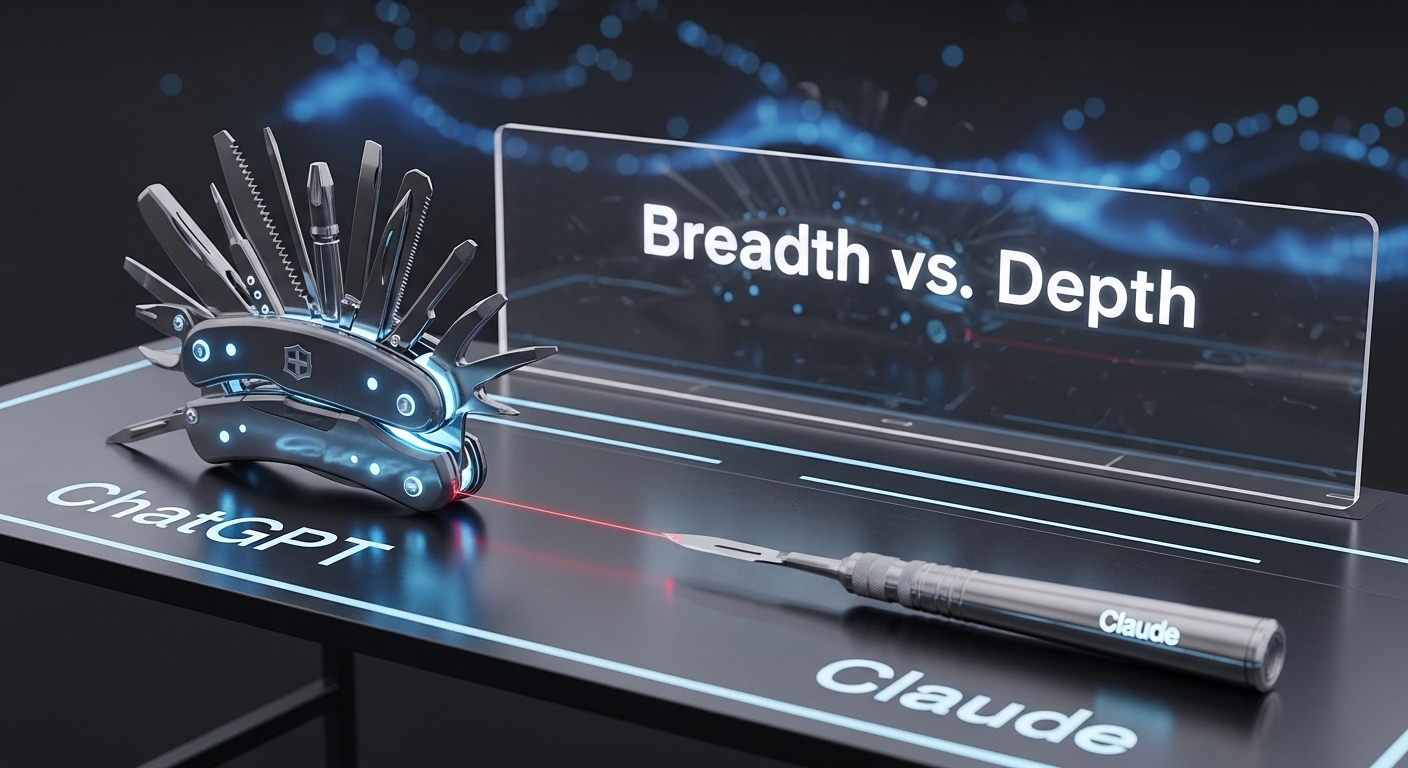
OpenAI built ChatGPT to be everything to everyone. Image generation, voice conversations, memory, browser plugins, custom bots, and deep integrations across Microsoft’s entire product suite. It is the Swiss Army knife of AI, extraordinarily versatile, constantly expanding, and aggressively feature-rich.
Anthropic built Claude differently, with fewer features. Deeper performance. The philosophy is not breadth, it is precision. Claude was designed from the ground up with a framework called Constitutional AI, embedding safety, honesty, and nuanced reasoning directly into how the model thinks. The result is an AI that does fewer things but, in the areas that matter most to professional users, does them exceptionally well.
Where Claude is winning
The data tells a clear story in certain categories. Developer surveys consistently show 70% of developers prefer Claude for coding tasks, citing better understanding of multi-file codebases, more accurate refactoring, and fewer hallucinated API calls. On SWE-bench Verified, the industry standard benchmark for real-world software engineering, Claude Opus 4.6 scores 80.8%, with end-to-end coding accuracy of approximately 95% versus ChatGPT’s approximately 85%. That gap translates directly into fewer debugging cycles and faster output.
For writers and analysts, the preference is equally clear. Claude consistently produces more nuanced, natural-sounding prose and is preferred by professional writers, with its one-million-token context window offering a major advantage for long-form work. In a 2026 essay-writing benchmark, Claude scored 85% on structure versus ChatGPT’s 78% when producing long-form analytical content.
In head-to-head testing, where ChatGPT often leaned on academic frameworks and generic creative tropes, Claude demonstrated a superior lived-in quality that felt far less robotic. For users who interact with AI as a senior-level collaborator rather than a search engine, that difference is significant.
Where ChatGPT still leads
Fairness demands honesty here. ChatGPT is not losing; it is simply winning different battles.
ChatGPT remains the better all-in-one AI toolkit. Its image and video generation capabilities, custom chatbots, and browser-based agentic automation make it ideal for users who want to explore the full spectrum of what AI can do. For marketers needing visual content, educators building custom tools, and casual users who want a single app that handles everything, ChatGPT’s ecosystem advantage is real and substantial.
Memory is another area where ChatGPT holds a meaningful edge. It learns who you are across conversations, your preferences, your patterns, and your history. Claude, by contrast, operates within the context of each individual conversation. For users who want an AI that genuinely knows them over time, that distinction matters.
The Ad question nobody is talking about
One development that has quietly shifted user sentiment deserves more attention. OpenAI began showing advertisements on its Free and Go tiers in February 2026. The Go plan costs $8 per month, meaning users are paying a subscription fee and still seeing ads.
For many power users, this crossed a line. When an AI assistant starts serving ads, the incentive structure changes, the question becomes whether the product is optimising for the user or the advertiser. Claude’s products remain ad-free, and for users who think carefully about that distinction, it has become a meaningful point of difference.
What this means for marketers
The Claude versus ChatGPT conversation is not just a technology story. It is a brand story and a masterclass in positioning.
ChatGPT owns a first-mover advantage, mass-market recognition, and the broadest feature set in the industry. Claude owns depth, trust, and a growing reputation as the professional’s tool of choice. For content creators and marketers specifically, the emerging consensus is ChatGPT for breadth and Claude for depth.
That is a positioning battle being fought in real time, and both companies are watching every shift in user preference carefully. The brands, agencies, and marketing teams choosing which AI to build their workflows around are not just making a technology decision. They are making a bet on which philosophy of intelligence they trust most.
ChatGPT started the AI revolution and deserves every credit for that. Claude arrived with a different question, not “what can AI do?” but “what should AI be?”
In 2026, both are excellent, and the gap between them is smaller than the gap between either one and everything else on the market. But the users migrating towards Claude are not doing so because ChatGPT stopped being good. They are doing so because their needs have matured, and Claude was built precisely for that moment.
The revolution is no longer about who arrived first. It is about who is built for what comes next.
When ChatGPT launched in November 2022, it broke the internet. One million users in five days. A hundred million in two months. Nothing in the history of consumer technology had ever moved that fast. OpenAI had not just built a product; it had created an entirely new category of how humans interact with machines.
Then, quietly, Anthropic showed up with Claude. And the conversation has been shifting ever since.
Two AIs, two very different philosophies
Understanding why users are increasingly gravitating towards Claude requires understanding what each company is actually trying to build, because the products reflect fundamentally different worldviews.
OpenAI built ChatGPT to be everything to everyone. Image generation, voice conversations, memory, browser plugins, custom bots, and deep integrations across Microsoft’s entire product suite. It is the Swiss Army knife of AI, extraordinarily versatile, constantly expanding, and aggressively feature-rich.
Anthropic built Claude differently, with fewer features. Deeper performance. The philosophy is not breadth, it is precision. Claude was designed from the ground up with a framework called Constitutional AI, embedding safety, honesty, and nuanced reasoning directly into how the model thinks. The result is an AI that does fewer things but, in the areas that matter most to professional users, does them exceptionally well.
Where Claude is winning
The data tells a clear story in certain categories. Developer surveys consistently show 70% of developers prefer Claude for coding tasks, citing better understanding of multi-file codebases, more accurate refactoring, and fewer hallucinated API calls. On SWE-bench Verified, the industry standard benchmark for real-world software engineering, Claude Opus 4.6 scores 80.8%, with end-to-end coding accuracy of approximately 95% versus ChatGPT’s approximately 85%. That gap translates directly into fewer debugging cycles and faster output.
For writers and analysts, the preference is equally clear. Claude consistently produces more nuanced, natural-sounding prose and is preferred by professional writers, with its one-million-token context window offering a major advantage for long-form work. In a 2026 essay-writing benchmark, Claude scored 85% on structure versus ChatGPT’s 78% when producing long-form analytical content.
In head-to-head testing, where ChatGPT often leaned on academic frameworks and generic creative tropes, Claude demonstrated a superior lived-in quality that felt far less robotic. For users who interact with AI as a senior-level collaborator rather than a search engine, that difference is significant.
Where ChatGPT still leads
Fairness demands honesty here. ChatGPT is not losing, it is simply winning different battles.
ChatGPT remains the better all-in-one AI toolkit. Its image and video generation capabilities, custom chatbots, and browser-based agentic automation make it ideal for users who want to explore the full spectrum of what AI can do. For marketers needing visual content, educators building custom tools, and casual users who want a single app that handles everything, ChatGPT’s ecosystem advantage is real and substantial.
Memory is another area where ChatGPT holds a meaningful edge. It learns who you are across conversations, your preferences, your patterns, your history. Claude, by contrasts, operates within the context of each individual conversation. For users who want an AI that genuinely knows them over time, that distinction matters.
The Ad question nobody is talking about
One development that has quietly shifted user sentiment deserves more attention. OpenAI began showing advertisements on its Free and Go tiers in February 2026. The Go plan costs $8 per month, meaning users are paying a subscription fee and still seeing ads.
For many power users, this crossed a line. When an AI assistant starts serving ads, the incentive structure changes, the question becomes whether the product is optimising for the user or the advertiser. Claude’s products remain ad-free, and for users who think carefully about that distinction, it has become a meaningful point of difference.
What this means for marketers
The Claude versus ChatGPT conversation is not just a technology story. It is a brand story, and a masterclass in positioning.
ChatGPT owns first-mover advantage, mass-market recognition, and the broadest feature set in the industry. Claude owns depth, trust, and a growing reputation as the professional’s tool of choice. For content creators and marketers specifically, the emerging consensus is ChatGPT for breadth and Claude for depth.
That is a positioning battle being fought in real time, and both companies are watching every shift in user preference carefully. The brands, agencies, and marketing teams choosing which AI to build their workflows around are not just making a technology decision. They are making a bet on which philosophy of intelligence they trust most.
ChatGPT started the AI revolution and deserves every credit for that. Claude arrived with a different question, not “what can AI do?” but “what should AI be?”
In 2026, both are excellent, and the gap between them is smaller than the gap between either one and everything else on the market. But the users migrating towards Claude are not doing so because ChatGPT stopped being good. They are doing so because their needs have matured, and Claude was built precisely for that moment.
The revolution is no longer about who arrived first. It is about who is built for what comes next.
ALSO WATCH:MARKETING EDGE ONTV


Comment
No comments found.