
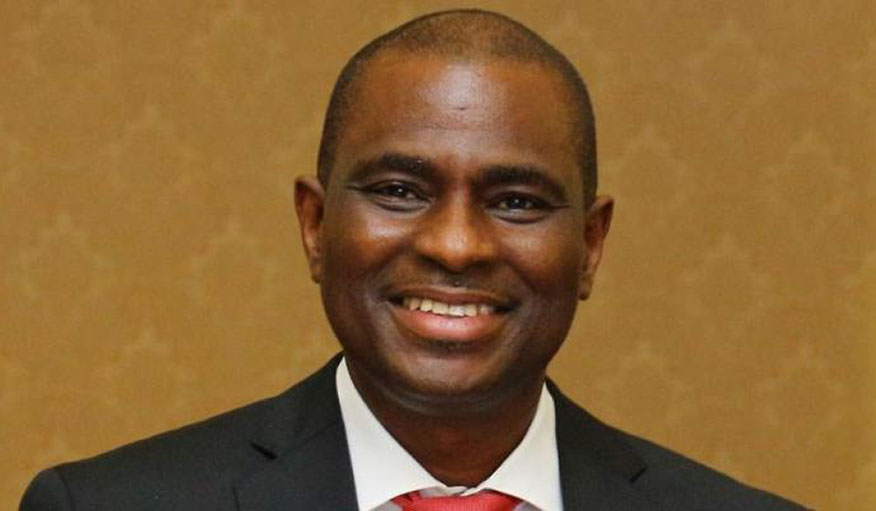





Segun Ogunsanya, chairman Airtel Foundation, has warned that artificial intelligence, for all its transformative potential, introduces a category of crisis risk that is faster, more complex and more difficult to detect than anything organisations have previously faced, and that the communications and technology industry must urgently move from reactive crisis management to proactive resilience if it is to stay ahead of these emerging threats.
Ogunsanya made this position clear while speaking as a guest at the CMC Connect LLP Crisis Management Advocacy Month 2026 conference in Lagos, an event that brought together senior government officials, communications professionals and technology leaders to examine the intersection of artificial intelligence and crisis management under the theme “Crisis Management in the AI Milieu: New Threats, Smarter Responses.”
His words: “It is here. It is changing economies, influencing societies and redefining the boundaries of human capabilities. But with this power comes vulnerability, and the very systems designed to enhance our decisions can also expose us to new forms of risk,” he said, framing artificial intelligence not as a distant future concern but as a present reality already reshaping how crises emerge, escalate and are resolved.
Ogunsanya identified three specific characteristics that make AI driven crises uniquely dangerous compared to traditional forms of institutional risk. They are faster than conventional crises, meaning that by the time an organisation detects and responds to a threat, the damage may already be irreversible. They are more complex, involving layers of algorithmic decision making that even the people who built the systems may not fully understand. And critically, they are often invisible until it is too late. “A single defective model can cascade into financial instability. A biased algorithm can widen social divides. Unregulated deployment can compromise national security,” he said, giving weight to concerns that many in the industry acknowledge privately but rarely state this plainly in public forums.
He illustrated the real-world stakes of AI driven information risk with a reference to how artificial intelligence is already being used in global financial markets to predict geopolitical shifts and position trades ahead of major events, including military conflicts. For Ogunsanya, this was not an abstract example but a vivid demonstration of how the same technology that can improve organisational decision making can also be weaponised to exploit crisis for financial gain, spreading misinformation and distorting reality in the process.
On the question of governance, the Airtel chairman was unambiguous. He argued that the pace at which AI is evolving makes traditional policy frameworks inadequate and that governments and regulators must develop governance structures that are as dynamic and adaptive as the technology they are trying to govern. “We cannot have policies that are too gentle every day. Governance must also use AI to police AI,” he said, making the case that the only credible response to AI driven risk is AI informed regulation.
Ogunsanya also demonstrated in real time the analytical power of AI during his remarks, sharing that he had asked an AI tool before the event what could go wrong with the conference’s subject matter. The response, he said, immediately identified potential flashpoints including public backlash, political tension and misinterpretation risks, even flagging how a simple question about crisis could be reframed to cause controversy. “It shows the power of this technology but it must be used very wisely,” he said.
He closed with a call that was both philosophical and practical. “Whether artificial intelligence or human intelligence, the goal must be to serve humanity rather than destabilise it. The first step to solving any problem is the moment you recognise the problem exists.”


Comment
No comments found.