
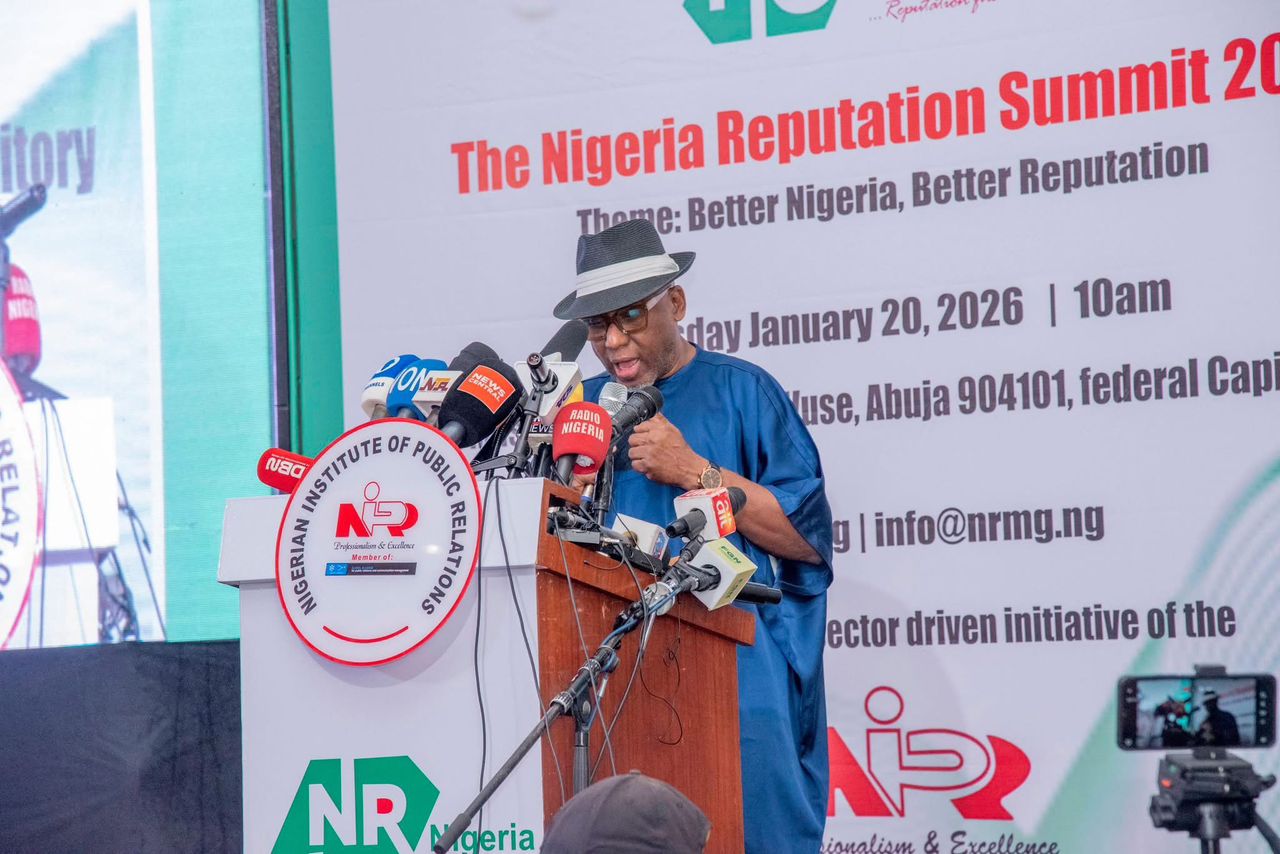


Nigeria’s reputation has been shaped more by fragmented narratives than by coordinated strategy, and more by reaction than intention, stakeholders heard on Tuesday at the inaugural Nigeria Reputation Summit held at the Shehu Musa Yar’Adua Centre, Abuja.
Speaking at the event, Yomi Badejo Okusanya, Chairman of the Nigeria Reputation Management Group and Founder of CMC Connect LLP, declared that the time had come for a deliberate and coordinated approach to managing Nigeria’s reputation across government, business, media and society.
Leadership, Governance and National Image
The summit featured a keynote address by Babatunde Fashola, SAN, former Lagos State Governor and two-time minister, delivered on the theme “Better Nigeria, Better Reputation.” His address examined how leadership, governance and institutional consistency directly shape national perceptions.
According to Okusanya, reputation has moved beyond symbolism. He stressed that it is no longer a soft issue, cosmetic exercise or optional consideration.
Addressing leaders from government, business and civil society, he noted that in today’s hyper-connected and digitally amplified world, reputation has become a strategic national asset.
Reputation as a Strategic National Asset
Okusanya outlined how reputation influences investment flows, citizens’ trust, diplomatic standing, consumer confidence, corporate vibrancy and even national security.
He emphasised that reputation is not what people merely believe about a nation, but what leadership consistently proves through actions.
He warned that any nation that fails to manage its reputation leaves its story to chance and to others.
According to him, reputation is not built through propaganda, but through credibility, consistency, transparency and performance.
Shared Responsibility Across Sectors
He further explained that reputation management extends far beyond communications departments.
For government, he said, it requires policy delivery and trust-building. For business, it demands ethics and stakeholder engagement.
For the media, it calls for balance, accuracy and a sense of national responsibility.
“A better Nigeria is not just a political aspiration; it is a reputational imperative,” Okusanya stated.
Government Presence and Youth Engagement
The summit held with Mohammed Idris, Minister of Information and National Orientation, in attendance as Chief Host, while the Minister of Foreign Affairs, Yusuf Tuggar, served as Special Guest of Honour.
An interactive session at the summit explored how young Nigerians, through technology and creativity, can actively contribute to rebuilding the country’s reputation.
From Reputation Repair to Reputation Leadership
The event marked the beginning of what organisers described as an important national conversation on taking responsibility for how Nigeria is seen and experienced, both at home and abroad.
Speaking on the need for private sector involvement, Okusanya appealed to corporate Nigeria to partner with the initiative.
He emphasised that the change Nigeria seeks in its reputation goes beyond Abuja and leadership circles, stressing that it involves every citizen.
He noted that Nigeria’s story is still being written and urged stakeholders to ensure it is written with truth, responsibility and strategic intent.
According to him, the nation must move from reputation repair to reputation leadership, adding that when actions improve, perceptions will inevitably follow.
Institutional Framework and National Mandate
The summit was organised by the Nigeria Reputation Management Group, a cross-sector initiative of the Nigerian Institute of Public Relations (NIPR).
The group operates under the legal framework of the NIPR, which is supervised by the Federal Ministry of Information and National Orientation.
The initiative aims to provide policy direction and quality advisory support to government and private sector organisations on building and sustaining reputation as a core national asset.


Comment
No comments found.