
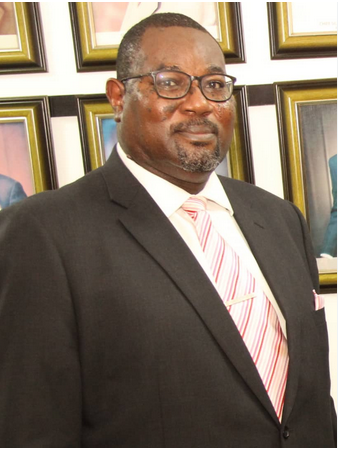



Few corporate careers span four and a half decades within a single organisation. Even fewer culminate in leading that organisation through some of the most defining moments in its history.
Yet for Adetunji Oyebanji, the former Managing Director of 11 Plc, longevity was never the objective. Instead, a combination of purpose, values, opportunity and timing shaped a professional journey that stretched across 45 years and several continents.
Speaking during an exclusive interview with MARKETING EDGE ONTV, the industry leader opened up about the decisions, challenges, opportunities and experiences that shaped his remarkable career, while also sharing his perspectives on leadership, corporate governance, the future of Nigeria’s energy industry and life after retirement.
For the veteran executive, retirement is not a moment of uncertainty but a natural transition he has long anticipated. Looking back, said he healways understood that every professional journey eventually reaches a point where one must step aside and allow others to continue the work.
Using Christmas as an analogy, he remarked that just as nobody is surprised when December 25 arrives, retirement should never catch anyone unprepared. Consequently, he explained that he had spent years preparing mentally for this phase of his life, making the transition easier to embrace.
Interestingly, he revealed that when he joined Mobil Oil Nigeria in 1980 as a Marketing Representative Trainee, becoming Managing Director was never part of a grand career plan. Recalling his employment interview, he said one of the interviewers asked how far he hoped to rise within the organisation.
At the time, the highest-ranking Nigerian executive in the company was the Marketing Director. According to him, his response was simple: he wanted to attain the highest level any Nigerian had reached within the organisation. What followed, however, was a career journey that exceeded even those early ambitions.
Oyebanji recounted how he came close to leaving the company on several occasions. In one instance, he and a colleague had made plans to establish a business together. Yet just before the move materialised, the colleague advised him against resigning, insisting that he was destined for greater responsibilities within the organisation.
Years later, another colleague made a similar prediction. Perhaps even more remarkable was the day he had concluded arrangements to leave the company after securing another opportunity elsewhere.
According to him, on the very day he intended to submit his resignation letter, he received news that he had been selected for a three year assignment in the United States.
Reflecting on those moments, Oyebanji said he eventually came to believe that his future remained within the organisation. Nevertheless, he emphasised that the journey was far from smooth.
Among the experiences he described as particularly demanding was the transition from Mobil Oil Nigeria Plc to 11 Plc following ExxonMobil’s divestment and NIPCO Investments’ acquisition of the majority stake.
According to him, uncertainty spread quickly throughout the organisation as employees worried about what the ownership change would mean for their careers and the company’s future. Oyebanji recalled that approximately 20 senior managers resigned within a relatively short period, creating additional pressure on the leadership team.
As Managing Director at the time, he said his responsibilities extended beyond managing business operations. He also had to reassure employees, maintain stakeholder confidence and build trust with the incoming owners, all at the same time.
Another experience that left a lasting impression on him was his assignment in Cameroon, where he helped oversee a similar ownership transition. He recalled operating in a highly charged environment characterised by strong labour union influence, employee anxiety and language barriers. Despite those challenges, he said he focused on building dialogue, maintaining trust and ensuring operational stability throughout the process.
The COVID-19 pandemic presented yet another test of leadership.Reflecting on that period, Oyebanji noted that while many organisations could temporarily suspend operations, petroleum marketing companies had no such luxury because fuel remained an essential commodity.
Consequently, he said the company had to strike a delicate balance between maintaining supply chains and protecting employees during an unprecedented public health crisis.
He also pointed to the fuel subsidy era as one of the most financially challenging periods for operators in the downstream sector. According to him, marketers frequently sold products below market value and then waited months for government reimbursements. As delays lengthened, many businesses faced severe cash flow constraints.
Faced with those realities, Oyebanji said he negotiated alternative arrangements with suppliers who agreed to defer payments until subsidy claims were eventually settled, a decision he believes helped the company navigate one of the industry’s most difficult periods.
While discussing the achievements that bring him the greatest satisfaction, Oyebanji repeatedly returned to the successful transition from Mobil Oil Nigeria Plc to 11 Plc.
In his view, preserving employee confidence, maintaining operational continuity and earning the trust of new stakeholders during such a significant ownership change represented one of the defining accomplishments of his career.
He also reflected proudly on the company’s collaboration with Mr Bigg’s, which introduced quick service restaurants into filling stations at a time when the concept was still relatively uncommon in Nigeria. According to him, what began as an innovative experiment has since become a widespread feature across the country’s retail fuel landscape.
Looking ahead, Oyebanji believes Nigeria’s downstream petroleum industry is entering a fundamentally different era. Drawing from decades of experience, he argued that the emergence of local refining capacity is changing market dynamics and gradually shifting the industry away from scarcity-driven competition.
As fuel availability improves, he believes marketers will increasingly differentiate themselves through service quality, customer experience, operational efficiency and brand reputation.
Furthermore, Oyebanji maintained that alternative energy solutions will play an increasingly important role in shaping the future of the sector. He pointed specifically to the growing adoption of Compressed Natural Gas, renewable energy investments and emerging technologies that continue to redefine how energy is produced, distributed and consumed.
When asked what advice he would offer young Nigerians hoping to build successful careers in the industry, Oyebanji stressed the importance of continuous learning and adaptability.
Using the evolution of photography as an example, he explained how technology transformed cameras from film based systems to instant photography and eventually to digital devices.
In his view, the same transformation is unfolding across the energy industry. Consequently, he urged young professionals to continually update their knowledge, acquire new skills and remain alert to emerging trends, warning that those who fail to evolve risk becoming irrelevant in an increasingly competitive environment.
Oyebanji also credited his international assignments in Ethiopia, Cameroon, Belgium and the United States with broadening his perspective on leadership and business excellence.
According to him, those experiences exposed him to global standards and reinforced his belief that competitiveness is built on discipline, accountability and consistency rather than excuses.
Beyond the energy sector, he remains deeply committed to strengthening corporate governance in Nigeria through his role as President and Chairman of the Governing Council of the Chartered Institute of Directors Nigeria.
Reflecting on the current state of governance, he expressed concern that many organisations still approach governance as a compliance exercise rather than a strategic business imperative.
In his view, organisations that embed governance into their culture are more likely to earn stakeholder trust, attract investment and achieve long term sustainability.
Perhaps one of the most personal moments during the conversation came when he reflected on why he remained with one organisation for 45 years despite opportunities to leave. According to him, the answer lies largely in values.
He explained that the organisation’s commitment to integrity, transparency and meritocracy closely mirrored his own personal beliefs. That alignment, coupled with opportunities for growth, leadership development and international exposure, gave him little reason to look elsewhere.
Even as retirement begins, Oyebanji said he has no plans to slow down. Instead, he intends to devote more time to governance advocacy, professional institutions, community service and leadership development initiatives.
As Osagie Ogedegbe takes over the reins of leadership at 11 Plc, his advice remains rooted in one principle he considers fundamental to effective leadership: balancing the interests of all stakeholders while remaining focused on the long term future of the organisation.
Moreover, while he may be stepping away from executive management, he remains optimistic about the future of both 11 Plc and Nigeria’s energy industry.
For him, years of investment in LPG, CNG infrastructure, lubricants and other growth areas have laid a strong foundation for future success. Looking back on 45 years of service, he said his greatest satisfaction comes not from titles or positions, but from knowing he remained true to his values while contributing to the growth of an organisation and an industry that shaped his life.


Comment
No comments found.