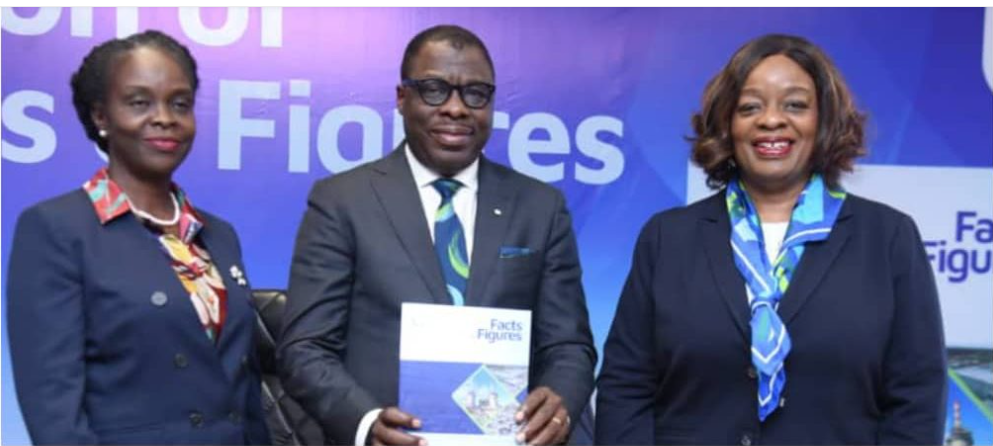


Nigeria LNG Limited (NLNG) has reinforced its long term commitment to deepening Nigeria’s gas economy, unveiling an ambitious growth strategy anchored on the completion of its landmark Train 7 expansion project, increased domestic gas supply, accelerated energy transition, stronger environmental stewardship and sustained investment in the country’s industrial future.
The company outlined the next phase of its growth journey during its annual media engagement held in Lagos on Tuesday, where its leadership highlighted how NLNG is leveraging Nigeria’s vast natural gas resources to drive industrialisation, improve energy security, strengthen local energy access and create lasting economic value.
Leading the engagement, the Managing Director and Chief Executive Officer, Engr. Adeleye Falade, reaffirmed the company’s determination to expand production, improve operational performance and strengthen its contribution to Nigeria’s economic transformation agenda.
He stressed that NLNG’s ongoing investments are strategically designed not only to increase gas production but also to strengthen domestic gas supply, accelerate Nigeria’s energy transition and position the country to benefit from rapidly evolving global energy dynamics.
At the centre of the company’s growth strategy is the Train 7 project, one of Africa’s most significant liquefied natural gas expansion projects. Once completed, the project will lift NLNG’s production capacity by approximately 35 percent, increasing output from 22 million tonnes per annum to 30 million tonnes per annum.
ALSO WATCH:MARKETING EDGE ON TV HOSTS NKECHI ALI-BALOGUN
Beyond boosting exports, the expansion is also expected to significantly strengthen domestic energy availability. Specifically, NLNG projects that the initiative will increase Liquefied Petroleum Gas (LPG) supply to the Nigerian market by nearly 50 percent, translating into an additional 250,000 tonnes annually to support households and industries.
Falade explained that Train 7 represents far more than an increase in production capacity. Rather, he described it as a strategic investment that reinforces confidence in Nigeria’s enormous gas reserves while accelerating economic growth through higher exports, stronger local gas utilisation, deeper Nigerian Content participation and expanded industrial opportunities.
“Train 7 represents much more than additional production capacity. It reflects our confidence in Nigeria’s gas potential and our commitment to creating long term value through increased exports, stronger domestic gas supply, Nigerian Content development and economic growth,” he stated.
ALSO WATCH: MARKETING EDGE 3 CROWNS MILK MUM OF THE YEAR AWARD WINNERS
In addition, the NLNG boss disclosed that the company is actively advancing a domestic LNG project aimed at expanding gas availability within Nigeria. He revealed that discussions are already underway with the company’s Board to extend the initiative offshore in response to growing domestic energy demand.
According to him, although large scale energy projects typically require several years to mature, NLNG remains fully committed to the initiative and has not slowed its pace of execution.
“We already have a project around domestic LNG. It is very much active and there are people working on it. Like many projects of this nature, it takes years, but we have certainly not abandoned it,” Falade said.
Furthermore, he disclosed that the company is exploring additional options to accelerate critical gas infrastructure development in order to meet Nigeria’s rising energy needs while supporting broader economic growth.
Responding to questions on regulatory concerns, Falade stated that NLNG has not experienced policy bottlenecks capable of slowing its strategic projects. Nevertheless, he emphasised the importance of sustained engagement with policymakers to drive reforms that will unlock Nigeria’s economic potential and further strengthen investor confidence across the energy sector.
ALSO WATCH:MARKETING EDGE ONTV HOSTS KELECHI NWOSU
Meanwhile, the NLNG boss unveiled the company’s remarkable economic contributions since inception, revealing that the organisation has generated over US$149.6 billion in revenue, returned more than US$47.2 billion in dividends to shareholders and remitted over US$10.8 billion in taxes to the Federal Government following its transition to tax compliant status.
Additionally, NLNG has built an asset portfolio valued at more than US$22.9 billion, successfully exported over 6,285 LNG cargoes to international markets and continues supplying more than 500,000 tonnes of Liquefied Petroleum Gas annually to Nigerian consumers.
According to Falade, these milestones clearly demonstrate the company’s strategic importance to Nigeria’s economy while reinforcing its role in strengthening energy security, attracting foreign exchange earnings and improving the country’s competitiveness within the global LNG market.
He further noted that NLNG remains fully aligned with the Federal Government’s Decade of Gas initiative, stressing that natural gas continues to offer Nigeria one of its strongest pathways towards industrialisation, economic diversification, cleaner energy and long term sustainable development.
Beyond production growth, Falade reiterated that environmental sustainability remains central to NLNG’s long term business strategy.
He identified the Finima Nature Park as one of the company’s flagship carbon sink projects, explaining that the protected ecosystem continues to expand while efforts are underway to secure its recognition as a Ramsar Wetland of International Importance, further demonstrating NLNG’s commitment to biodiversity conservation.
Additionally, he disclosed that the company continues to plant trees annually as part of its carbon reduction programme while deploying advanced technologies to monitor greenhouse gas emissions across its operations.
According to him, NLNG has attained the gold standard in emissions reporting by successfully identifying and quantifying all major emission sources within its facilities.
To further improve operational efficiency, Falade explained that the company now deploys Forward Looking Infrared (FLIR) cameras to detect fugitive methane emissions that conventional monitoring systems may not easily identify, thereby enabling faster intervention and reducing environmental impact.
He also revealed that NLNG is collaborating with the Nigerian Upstream Petroleum Regulatory Commission (NUPRC) to identify suitable locations for carbon capture and storage projects as part of its broader long term decarbonisation strategy.
Falade maintained that as global markets increasingly demand lower carbon energy products, reducing emissions has become both an environmental obligation and a commercial necessity, warning that producers with higher carbon intensity risk becoming less competitive internationally.
Equally significant, he identified the Bonny Bodo Road project as one of the country’s largest corporate funded infrastructure developments. Beyond connecting Bonny Island to mainland Rivers State by road for the first time, he said the project is opening new economic opportunities for businesses, residents and surrounding communities.
Addressing wider industry concerns, Falade acknowledged that feed gas availability remains one of the major challenges confronting Nigeria’s gas sector. Nevertheless, he expressed optimism that ongoing reforms, stronger collaboration among government agencies, regulators and upstream operators, as well as renewed investments across the gas value chain, will steadily improve long term gas supply.
He also maintained that although new LNG producing countries continue to intensify global competition, NLNG remains strategically positioned to sustain its leadership through operational excellence, dependable delivery, continuous investment in infrastructure and sustained capacity development for its workforce.
“Nigeria possesses one of the world’s largest gas reserves. Our collective responsibility is to monetise that resource responsibly and sustainably, creating jobs, expanding energy access, driving industrialisation and improving lives for generations to come,” Falade said.
Earlier, the General Manager, External Relations and Sustainable Development, Sophia Horsfall, described the annual Facts and Figures presentation as another demonstration of NLNG’s unwavering commitment to transparency, accountability and sustained engagement with the media.
She explained that the platform enables journalists to access credible industry data, operational updates and strategic insights that support balanced reporting on NLNG’s activities and the increasingly important role of natural gas in Nigeria’s economic development.
The engagement also featured extensive conversations around developments in the global LNG market, domestic gas utilisation, Nigeria’s energy transition agenda, sustainability initiatives, the Train 7 expansion project, Nigerian Content development and emerging opportunities expected to shape the future of the country’s gas industry.
As Nigeria intensifies efforts to unlock the full value of its abundant gas reserves, NLNG’s latest investment plans reinforce the company’s strategic role in expanding domestic gas infrastructure, accelerating energy transition, strengthening environmental sustainability, driving industrial growth and positioning Nigeria as a more competitive player in the evolving global liquefied natural gas market.

Comment
No comments found.