
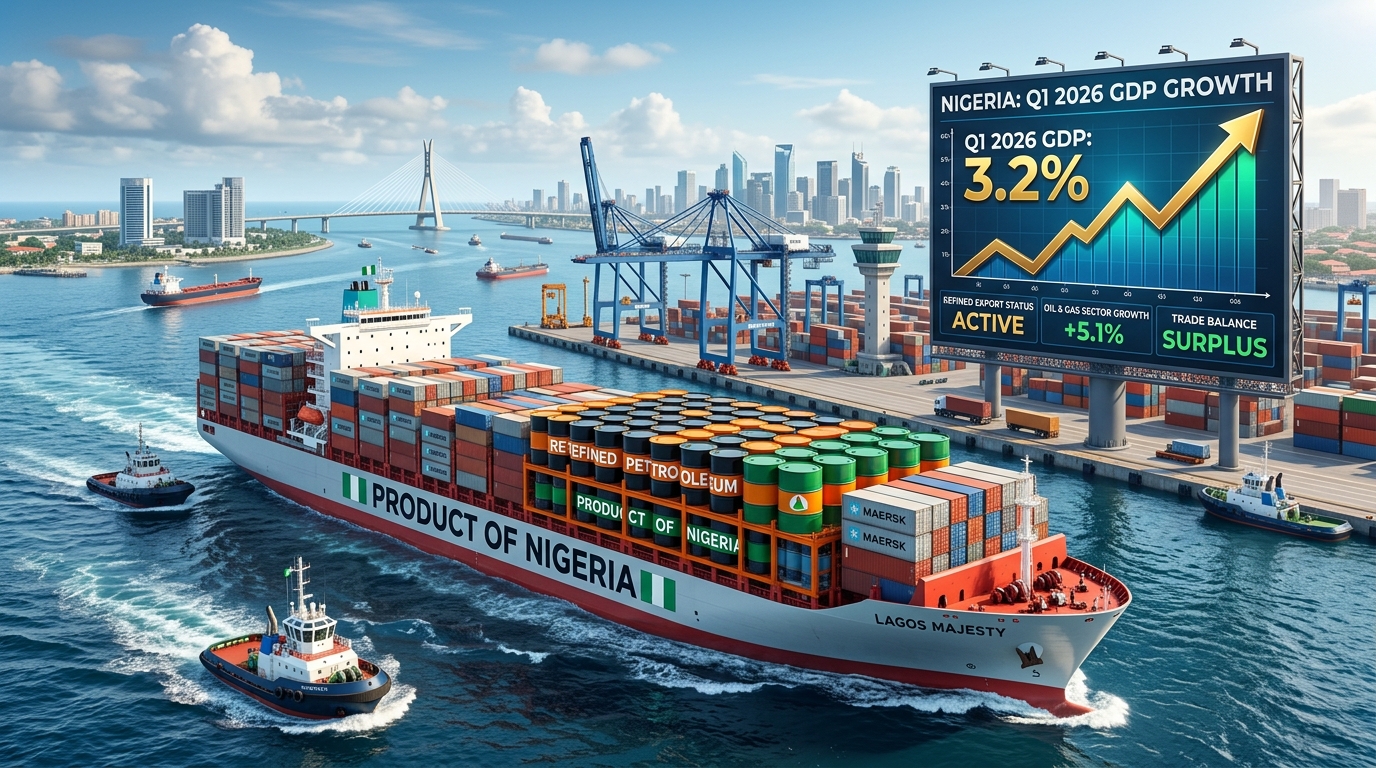


Nigeria’s economy is tracking toward 4.0 per cent real GDP growth in the first quarter of 2026, representing the country’s strongest opening-quarter performance since the post-pandemic recovery began in 2021 and signalling that the most agonising phase of the reform adjustment cycle is gradually fading.
The projection aligns with the World Bank’s upgraded January forecast predicting 4.4 per cent growth for both 2026 and 2027, the fastest pace in over a decade. The multilateral institution raised Nigeria’s outlook from earlier projections of 3.7 per cent and 3.8 per cent, citing sustained momentum across multiple economic sectors.
The expansion builds on 2025’s 4.2 per cent growth rate, driven primarily by services sector performance, particularly finance and information communication technology, alongside modest agricultural recovery and Nigeria’s emergence as a net exporter of refined petroleum products following Dangote Refinery’s operationalisation.
“In Nigeria, growth edged up to 4.2 per cent in 2025,” the World Bank stated. “The increase was driven by expansion in the services sector, especially the finance and information and communication technology sectors, a modest recovery in agriculture, and the country’s emergence as a net exporter of refined petroleum products.
For 2026-2027, growth acceleration is anticipated through continued services expansion, agricultural output rebound, and modest acceleration in non-oil industrial activities. Economic reforms, including tax system overhaul alongside prudent monetary policy, are expected to support activity whilst improving investor sentiment and reducing inflation further.
The projected 4.0 per cent Q1 2026 growth suggests Nigeria is moving beyond acute adjustment pain following subsidy removal, naira devaluation, and interest rate increases implemented since mid-2023. These reforms triggered inflation exceeding 30 per cent, naira depreciation past ₦1,600 per dollar, and purchasing power erosion across consumer segments.
However, inflation has gradually moderated from peaks whilst the exchange rate stabilised, signalling that reform shocks, whilst still impacting households, are losing intensity relative to the immediate post-implementation period when adjustment costs overwhelmed any emerging benefits.
Oil sector performance contributes meaningfully. Average daily crude production reached 1.58 million barrels in Q4 2025, whilst refined petroleum exports began generating revenue previously lost through importation. Higher oil output is expected to offset lower international oil prices in 2026, helping boost fiscal revenues and strengthen external balance.
Despite optimistic projections, the World Bank cautioned that sustaining momentum requires addressing longstanding structural challenges. Although Nigeria adopted fiscal rules in 2007, reducing the economy’s exposure to oil revenue volatility, weak institutional frameworks have historically undermined enforcement.
The growth rate, whilst representing a decade-high performance, remains insufficient to dramatically reduce poverty or achieve Nigeria’s $1 trillion economy target by 2030. The economy would require growth approximately five times faster than the recent pace to meet that aspiration.
Whilst 4.0 per cent growth signals a positive trajectory, the pace remains “too slow to reduce poverty” significantly given population growth exceeding 2.5 per cent annually, meaning per capita GDP improvements remain marginal even as the aggregate economy expands.
For businesses and investors, the projections validate reform strategies whilst highlighting that Nigeria’s economic recovery remains fragile, requiring sustained policy discipline and structural improvements beyond the current trajectory, delivering meaningful poverty reduction and shared prosperity outcomes that the government is targeting.
ALSO WATCH:MARKETING EDGE ONTV




Comment
No comments found.