
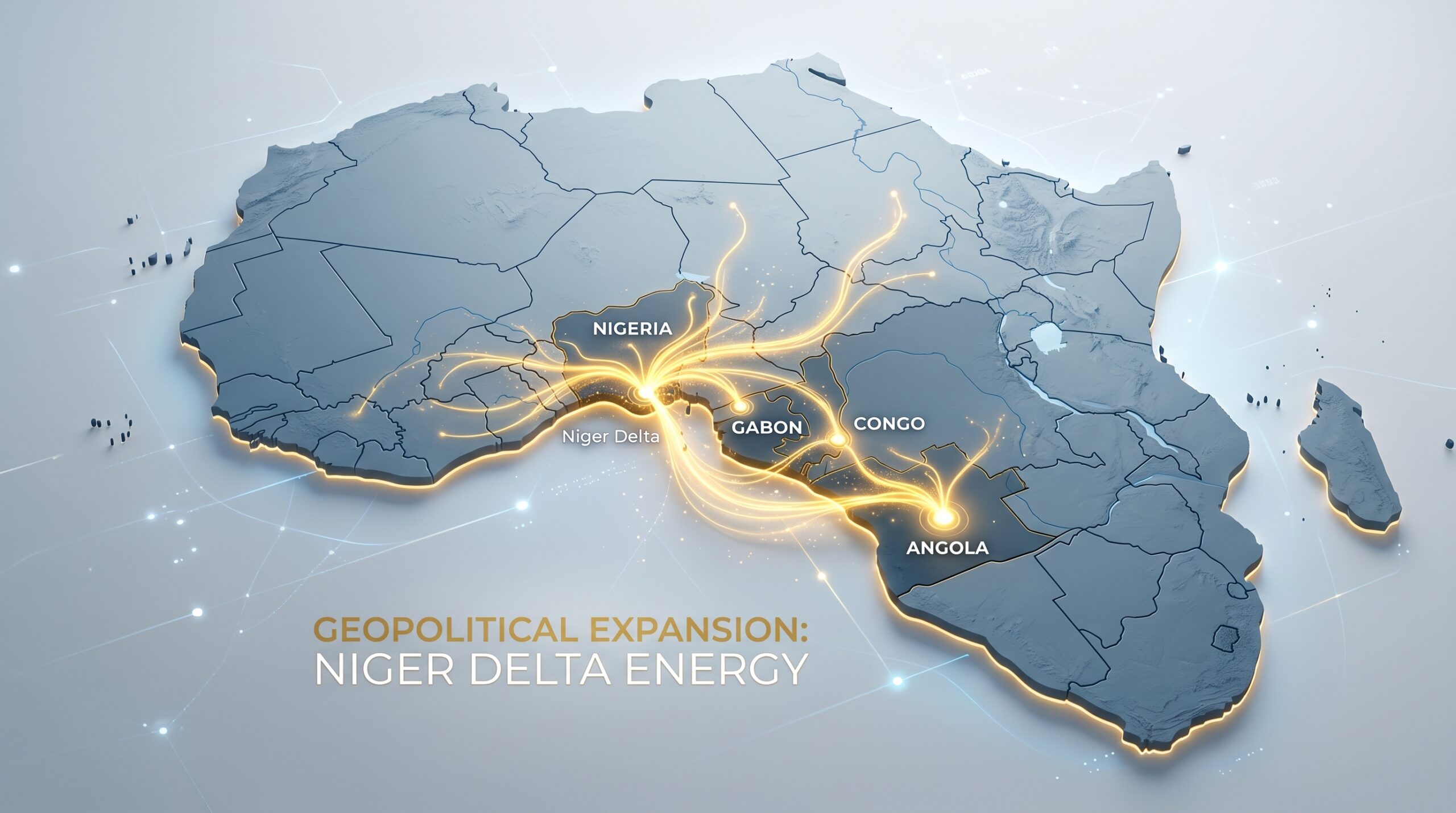


Nigerian independent oil producers who spent the past three years acquiring divested assets from international majors are pivoting toward cross-border growth strategies, positioning themselves as regional operators rather than purely domestic players as production gains and operational experience enable expansion beyond home market constraints.
Heirs Energies, which purchased Oil Mining Lease 17 from Shell in 2021, exemplifies strategic evolution. The company doubled production from 27,000 barrels per day to 55,000 bpd whilst CEO Osa Igiehon confirmed plans targeting pan-African expansion: “We are looking to expand across Africa.” The announcement represents inflection point where Nigerian independents transition from opportunistic buyers of neglected domestic assets toward proactive regional competitors seeking growth beyond the constrained home market.
Domestic consolidation creates expansion platform
The expansion ambitions follow a successful domestic acquisition wave. Shell, ExxonMobil, Agip, and Equinor collectively divested $4 billion worth of onshore Nigerian assets between 2024 and 2026. Indigenous firms, including Seplat, Oanso, Renaissance, and Chappal, assumed control of blocks international majors deemed politically difficult or incompatible with carbon reduction targets.
These acquisitions provided operational experience in managing security challenges, community relations, and production optimisation that international majors struggled to address effectively. Nigerian independents demonstrated they could navigate complexities foreign operators found intractable, pipeline security through community partnerships, regulatory compliance under evolving Petroleum Industry Act frameworks, and technical operations despite infrastructure constraints.
Production results validated capabilities. Nigerian crude output increased 400,000 barrels daily between 2023 and 2025, reaching 1.6 million bpd, the strongest onshore performance in twenty years. Growth came predominantly from blocks transferred to indigenous operators who deployed local expertise and community relationships that international majors lacked.
Why expansions now make strategic sense
Nigerian independents face a mature domestic market approaching saturation. While 50 oil blocks became available through the 2025/2026 licensing round, competition intensified with 300 companies bidding. Domestic opportunistic increasingly require capital-intensive deepwater exploration or rehabilitation of marginal fields offering limited upside relative to investment requirements.
Simultaneously, African markets present attractive opportunities. West and East African countries seeking to reverse production declines require operators comfortable managing political risk, infrastructure gaps, and community dynamics, precisely the capabilities Nigerian independents developed domestically. Angola, Equatorial Guinea, Gabon, and Congo face similar divestment patterns as international majors exit politically complex onshore operations.
Nigerian firms possess competitive advantages in these markets. Cultural familiarity with African operating environments, experience navigating challenging regulatory frameworks, established relationships with African governments through regional energy forums, and operational models optimised for constrained infrastructure environments all translate effectively across borders.
Financing remains constraint
However, regional expansion requires capital that Nigerian independents struggle to access. Domestic banks face exposure limits on oil sector lending. International project finance remains expensive for companies lacking long operational track records. The delayed launch of Africa Energy Bank, designed as a $5 billion multilateral development finance institution supporting African energy projects, limits financing options.
Heirs Energies’ expansion announcement came whilst discussing the need for capital to execute growth plans. The company achieved production gains through operational improvements and targeted drilling at existing assets, but greenfield development or cross-border acquisitions demand greater resources than domestic optimisation projects require.
Some firms pursue creative financing structures. Seplat’s $1.3 billion acquisition of ExxonMobil’s shallow-water operations utilised a combination of equity, bank facilities, and future production payments. However, replicating such structures across borders introduces currency risk, political risk premiums, and unfamiliar legal frameworks that complicate transaction execution.
Regional competition considerations
Nigerian independents entering regional markets encounter established players. Chinese national oil companies maintain a significant African footprint through infrastructure-for-oil arrangements. Mid-sized international independents from Europe and North America already operate in markets Nigerian companies target. Indigenous players in destination countries possess home-court advantages that Nigerian firms enjoyed domestically but lose when operating externally.
Success requires differentiation beyond merely being African operators. Nigerian independents must demonstrate technical capability, financial stability, and operational excellence exceeding alternatives. Early market selection becomes critical, targeting jurisdictions where Nigerian experience provides a genuine advantage rather than pursuing opportunities where capital-rich competitors maintain structural edges.
Strategic implications
The expansion ambitions signal the maturation of the Nigerian independent sector from opportunistic domestic buyers toward strategic regional operators. However, announcing expansion plans differs substantially from executing them. Capital constraints, operational complexity, managing multi-country portfolios, regulatory challenges across jurisdictions, and competition from better-capitalised players all represent formidable obstacles.
Whether Nigerian independents successfully replicate domestic success regionally depends on accessing patient capital, selecting winnable markets, and maintaining operational discipline that enabled domestic production gains. The strategic intent exists; execution capability requires demonstration through actual cross-border transactions and production results rather than merely stated ambitions.
For the African energy sector, successful Nigerian independent expansion would demonstrate that indigenous operators can compete regionally, potentially creating pan-African champions rivalling international majors’ historical dominance. Failure would reinforce the perception that Nigerian firms remain opportunistic domestic players capitalising on international majors’ existence rather than building sustainable regional businesses capable of long-term competition.
ALSO WATCH:MARKETING EDGE ONTV




Comment
No comments found.