
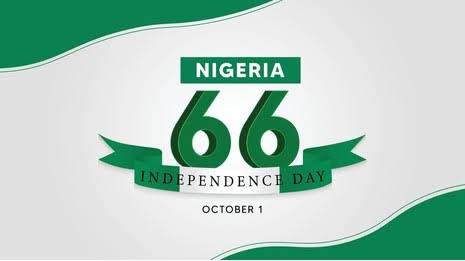


As Nigeria marks 66 years of independence, the country presents the curious picture of a legacy brand with extraordinary awareness, powerful cultural equity and remarkable consumer loyalty, yet a widening gap between its promise and the experience of many of its people.
Recently, a familiar legacy brand reminded Nigerians what it means to celebrate longevity, as the Nigerian Bottling Company marked 75 years of Coca Cola in Nigeria, bringing three generations of consumers into the anniversary story.
For Coca Cola, the celebration was not simply about counting years but about memories, relationships and the everyday moments through which the brand had become part of people’s lives, with its anniversary campaign celebrating the moments that mattered to Nigerians and thanking consumers for making the brand part of their stories.
That is what makes the country’s own anniversary particularly interesting because, if Coca Cola can reach 75 years and look back at the memories, promises and experiences that kept consumers connected to the brand, what happens when Nigeria itself reaches 66?
What would Nigerians celebrate if the country were treated like a legacy brand, can it be the promise made at independence, the people who have carried the country through difficult years, the creativity that has travelled around the world, or the more uncomfortable question of how closely the experience of Nigeria matches the promise of Nigeria? In fact, that is the real brand audit.
On October 1, 1960, Nigeria became independent from British colonial rule, entering the world carrying enormous expectations, with its most recognisable brand assets being a green and white flag, national symbols, an anthem and a promise of unity among people separated by tribe, tongue and geography.
From the beginning, therefore, Nigeria’s brand promise was bigger than sovereignty because it was about freedom, progress, prosperity and unity, as well as a country capable of becoming a major force in Africa.
That expectation has remained familiar over the decades, and even in his 2026 Independence Day address, President Bola Ahmed Tinubu described the national journey around the promise of a united, strong and prosperous Nigeria and referred to the country’s aspiration to remain a giant in Africa
A legacy brand survives partly because consumers remember what it promised them in the first place, and Nigeria has had 66 years to fulfil its own promise, leaving the question of what consumers have experienced along the way.
In branding, the consumer does not encounter a promise in isolation but encounters the product, and for Nigeria, the product is everyday life, including the quality of education a child receives, the road a trader uses to move goods, the power available to a small manufacturer, the cost of food, the ease of doing business and access to healthcare, security, jobs, credit and opportunity.
On one side is a country whose people have repeatedly demonstrated an unusual capacity to survive, adapt and create, while on the other, is a country where daily pressures often force citizens to provide privately what they expect public systems to provide; yet within that tension lies one of Nigeria’s strongest sources of brand equity, and that is its people.
Nigeria’s population gives it one of the world’s largest concentrations of human capital and one of Africa’s biggest consumer markets, but population alone is not the asset; the real asset is what Nigerians do with it.
Nigeria has moved through civil war, military rule, economic shocks, recessions, democratic transitions and major reforms over the years, Remarkably, that resilience has become one of the country’s most recognisable associations, demonstrating a loyalty that remains one of the most valuable assets any legacy brand can possess.
Perhaps nowhere has Nigeria built stronger international brand equity than in culture, as Nigerian music and film have travelled without waiting for a national advertising campaign to tell the world what Nigeria should look like.
Afrobeats has become one of the country’s most powerful cultural exports, with Nigerian artists occupying international stages and collaborating with global stars, while Nollywood has similarly transformed the way Nigerian stories travel by creating an industry capable of telling Nigerian stories to local audiences and increasingly to audiences elsewhere.
Culture has therefore become one of Brand Nigeria’s strongest extensions because a successful brand does not merely tell consumers what it stands for; it gives them reasons to remember it, and Nigeria’s musicians, filmmakers, fashion designers, chefs, writers, artists and entrepreneurs have done exactly that.
The same spirit is visible in Nigerian enterprise, where a trader understands that reputation determines whether customers return, a manufacturer knows that quality determines whether a product survives, a small business owner understands that reliability can be worth more than advertising.
In that way, the Nigerian instinct to create opportunity where opportunity is scarce is therefore both an economic strength and a reminder of what the formal system still needs to deliver.
Every legacy brand eventually faces the same test, but can it continue to deliver what consumers expect? This is where Brand Nigeria encounters its hardest questions.
This is because, the problem is not that Nigerians lack resilience, but that resilience should not become a substitute for functioning systems. Most especially, when citizens repeatedly have to generate their own electricity, drill private boreholes, pay privately for services or create alternative routes around institutional difficulties, they are demonstrating ingenuity, and at the same time, are also revealing a product gap.
No legacy brand survives indefinitely on familiarity alone, because consumers need reasons to trust it, and for Nigeria, trust remains a difficult part of the national conversation. When people are uncertain about whether systems will work as promised, they develop alternatives, keep backup plans, seek private solutions, depend on personal networks and adapt.
Despite all these, the people are still the biggest brand asset. Yet this is where the Nigerian story refuses to become a simple tale of decline because the people continue to keep the brand alive through their resilience and creative capacity.
These are not side characters in the national story; they are the shareholders of the brand because they carry its reputation, create its associations and determine how outsiders experience Nigerian products, services, culture and people. That is why Nigeria’s most valuable asset cannot be reduced to oil, land, population or natural resources; it is the human capacity to keep creating value.
So, how should Nigeria celebrate 66? This is where the Coca Cola comparison becomes particularly revealing because, when Coca Cola celebrated 75 years in Nigeria, the company did not simply celebrate the number but celebrated the relationship built with consumers over time. Particularly, that is what makes a legacy celebration meaningful because it connects history to experience, and Nigeria can do the same.
At 66, the country has every reason to celebrate its people, its culture, its entrepreneurs, its creativity and its capacity to survive difficult chapters, but celebration should not prevent reflection because a legacy brand does not strengthen itself by pretending that every customer experience has been perfect; it strengthens itself by recognising where the experience falls short and improving it.
For Nigeria, the next phase cannot depend solely on another slogan because what matters now is whether the reality behind the promise improves. Therefore, if prosperity is part of the promise, more Nigerians should be able to feel it in their incomes and opportunities.
In that case, if progress is the promise, citizens should encounter it in infrastructure, education, healthcare, technology and enterprise; if unity is central to the identity, Nigerians should experience institutions that treat citizens fairly regardless of where they come from. If loyalty is expected from Nigerians, the country must also give its citizens reasons to remain invested in it.
So, what is Brand Nigeria worth at 66? . Its awareness is undeniable and its associations are powerful, encompassing resilience, creativity, enterprise, culture, ambition and adaptability, while its people remain its greatest asset.
At 66, Nigeria does not need another identity because it already has one. The green and white flag remains recognisable, the name Nigeria carries enormous awareness, its people have created cultural equity that advertising money could hardly buy, its entrepreneurs continue to build, its creatives continue to export culture and its citizens continue to demonstrate loyalty even when the experience tests that loyalty.
The real task, therefore, is not to reinvent Brand Nigeria but to strengthen what already exists. Coca Cola’s 75 year celebration offers a useful reminder that legacy becomes valuable when people can look back and identify the memories.
Nigeria’s 66th anniversary should invite the same reflection, so what memories will Nigerians associate with the next decade, and what experiences will define the national brand for the generation coming behind? Truly, those questions matter because Nigeria’s strongest brand asset has never been a slogan, but has always been the people.
After 66 years, perhaps the most meaningful anniversary gift is not another campaign telling Nigerians to believe in their country, but giving them more reasons to believe because they can finally see, feel and experience the promise for themselves.
That is how a legacy brand grows stronger, how equity becomes trust and how Nigeria can move from being a country known for its enormous potential to a country whose everyday experience increasingly matches the promise that began on October 1, 1960.


Comment
No comments found.