
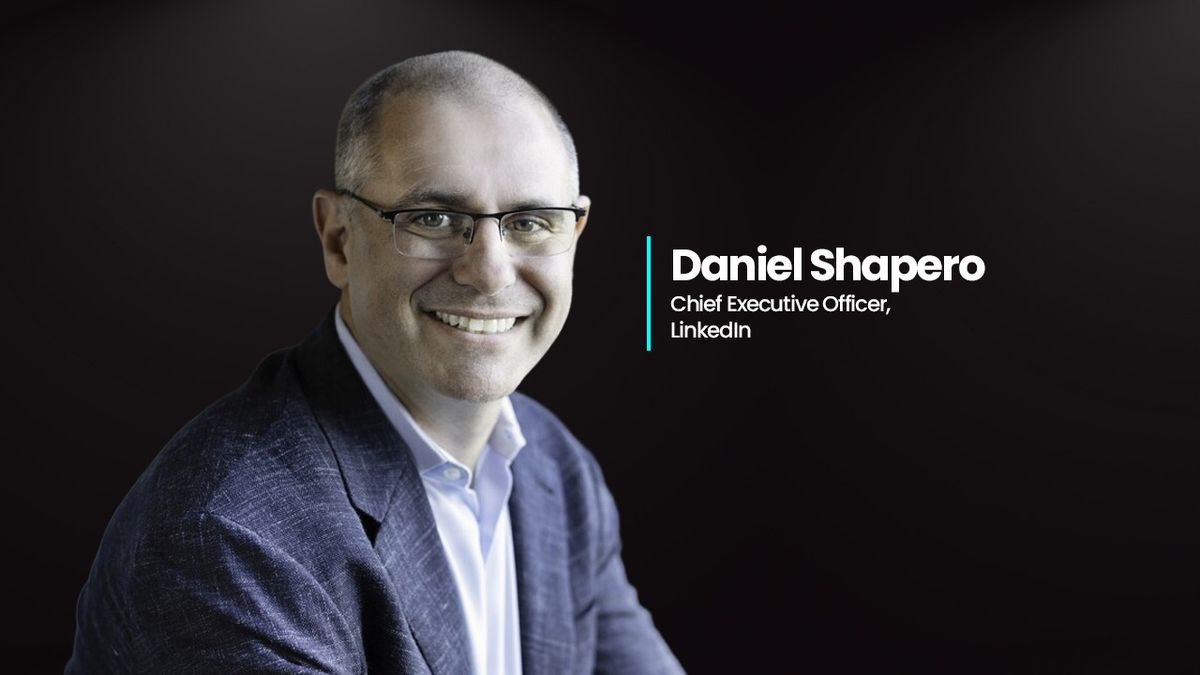


Microsoft announced on 22 April 2026 that Daniel Shapero, LinkedIn’s chief operating officer since 2021, will become CEO effective immediately, succeeding Ryan Roslansky, who has held the position since 2020. Roslansky remains executive vice president at Microsoft with expanded oversight of both LinkedIn and Microsoft Office, positioning him to integrate professional networking data with productivity suite applications.
The leadership transition preserves operational continuity through insider promotion whilst reinforcing a strategic challenge neither executive has fully solved: LinkedIn’s revenue growth decelerated to 11 per cent year-on-year in Q4 2026 despite crossing a $5 billion quarterly revenue milestone, compared to Meta’s 24 per cent growth in the same period, despite operating a similar advertising-driven business model.
The succession signals Microsoft’s belief that the execution problem requires operational excellence rather than a strategic pivot. Shapero joined LinkedIn in 2008 as vice president of global sales, when the company had roughly 300 employees, and spent 18 years leading sales, marketing, product, and business operations before becoming COO.
The internal promotion reflects confidence that institutional knowledge matters more than external perspective when a platform faces growth deceleration after a period of explosive expansion. Under Roslansky, membership doubled from 700 million to 1.3 billion whilst revenue nearly tripled from approximately $8 billion annually to $19 billion. But doubling what already works is easier than sustaining growth when the addressable market approaches saturation.
The reporting structure reveals Microsoft’s actual strategic priority. Shapero reports to Roslansky, who reports to CEO Satya Nadella. The hierarchy positions LinkedIn not as a standalone business requiring autonomous leadership, but as a data source feeding Microsoft’s broader AI ambitions across its Office productivity suite.
When Nadella elevated Roslansky to EVP overseeing both LinkedIn and Office in June 2025, he signalled that professional networking value derives from integration with Outlook, Word, Excel, PowerPoint, and Microsoft 365 Copilot rather than from the social network engagement metrics LinkedIn traditionally optimised.
The AI justification permeates both executives’ statements about the transition. Roslansky wrote: “Last year when Satya Nadella asked me to lead LinkedIn and Microsoft Office, I knew what he was betting on: AI is going to transform how people work and grow in their careers faster than most people expect.”
Shapero echoed that positioning: “The power of economic opportunity and the promise of LinkedIn has never been more important than it is today as the world is transformed by AI and professionals everywhere must transition along with it.”
The framing positions AI as LinkedIn’s growth catalyst, whilst financial results suggest AI investment has not yet translated into accelerated revenue growth.
The business metrics reveal where AI hype diverges from commercial reality. LinkedIn’s 11 per cent revenue growth trails Meta’s 24 per cent, despite both platforms operating advertising-dependent business models targeting similar audiences.
Its Premium subscription offering, LinkedIn’s AI-enhanced value proposition, now has 175 million subscribers generating over $2 billion annually, representing approximately 10 per cent of total revenue. The subscription growth validates that some professionals are willing to pay for AI-powered features. But 90 per cent of revenue still comes from advertising and recruiting solutions, where AI assists rather than transforms monetisation.
For Nigerian B2B marketers evaluating LinkedIn strategy, the leadership transition clarifies the platform’s direction in a way that matters locally. LinkedIn has transformed from a professional jobs board into a social network where executives share personal essays, career advice, and increasingly emotional content that TechCrunch once described as executives “occasionally sobbing on camera.”
The transformation succeeded in driving the engagement metrics that advertising monetisation requires. But it also created an identity tension between professional networking utility and social media performance, something Nigerian professionals navigate differently from Western markets where oversharing professional vulnerability has become more acceptable.
The strategic question Shapero inherits is whether LinkedIn can sustain growth by deepening existing revenue streams or whether it must develop new monetisation mechanisms. Advertising growth of 11 per cent suggests market maturity in core geographies. Premium subscriptions growing to 175 million members demonstrate willingness to pay for enhanced features.
But converting the remaining 1.125 billion free users into paying subscribers requires a stronger value proposition than AI-powered job matching and networking insights, which the free tier already provides adequately for most use cases.
The competitive context matters. Meta operates at nearly ten times LinkedIn’s revenue scale whilst growing more than twice as fast. The comparison is not entirely fair because the platforms serve different primary use cases. But when both compete for the same advertising budgets from B2B marketers choosing between Facebook, Instagram, and LinkedIn, the growth rate differential signals where marketers believe they see stronger return on investment.
LinkedIn’s professional context commands premium CPMs. Meta’s scale delivers reach that premium targeting often cannot overcome when the campaign objective prioritises volume over precision.
The Nigerian implication affects how local B2B brands allocate marketing budgets. LinkedIn usage in Nigeria remains concentrated among senior professionals, C-suite executives, and internationally oriented businesses rather than the mass market.
That concentration creates targeting efficiency for premium products and services but limits scale for brands requiring broader reach. When platform revenue growth slows whilst advertising costs increase, Nigerian marketers must recalculate whether LinkedIn’s professional context still justifies premium pricing or whether reallocating budgets to faster-growing platforms delivers better outcomes.
Shapero’s operational background suggests a focus on monetisation efficiency rather than product innovation. His career progressed through sales, marketing, product, and revenue-generating functions rather than engineering or product development.
The skill set matches the challenge of extracting more revenue from the existing user base rather than reimagining what a professional networking platform should become when AI makes traditional networking functions less valuable.
Microsoft’s bet is that LinkedIn does not need visionary transformation. It needs operational execution that converts AI capabilities into revenue growth matching the investment Microsoft is making in the infrastructure supporting those capabilities.
The broader Microsoft strategy positions LinkedIn as a data asset rather than a standalone business. Professional profiles, career transitions, skill endorsements, and company connections all help train AI models powering Microsoft 365 Copilot and other productivity applications.
The value LinkedIn provides to Microsoft exceeds the advertising revenue it generates directly. Shapero’s mandate likely includes accelerating data integration between LinkedIn and Office whilst maintaining LinkedIn’s brand independence that professionals still value.
That balancing act will determine whether LinkedIn becomes a seamlessly integrated productivity component or maintains a distinct identity as a professional networking destination.
For Marketing Edge readers, the succession demonstrates that even platforms with more than a billion users face growth sustainability challenges when market penetration approaches saturation.
LinkedIn succeeded in doubling membership and nearly tripling revenue under Roslansky. Shapero inherits the harder question: whether the next phase requires a different playbook or simply better execution of the current one.
The answer will determine whether insider continuity proves to be strategic wisdom or a missed opportunity for transformation that only an external perspective could have delivered.
ALSO WATCH:MARKETING EDGE ONTV



Comment
No comments found.