


Behind the headlines, a profession is doing the slow, unglamorous work of changing what the world sees when it looks at Nigeria.
Every country has an image, and every image has an author. Some are drawn with care, over many years, by people who know exactly what they want the world to see. Others are sketched in a hurry by strangers, from a distance, using whichever headline happens to be loudest that week.
For a long time, Nigeria’s portrait has belonged to the second kind. This is a country whose music fills stadiums on other continents, whose young people keep walking away with global prizes, and whose people are famous for bouncing back. It is also a country the world keeps meeting on its worst day. The talent travels well. The trust, somehow, does not.
Closing that gap is not a job for luck, and it is not a job for slogans. It belongs to the people trained to think about how a story is told, who is telling it, and whether it deserves to be believed. They are public relations professionals, the people most Nigerians only think about when something goes wrong. The Nigerian Institute of Public Relations (NIPR) believes it is time the country put them to work.
The numbers show why. When the Institute published Nigeria’s first national reputation index in January, the country scored 35.2 out of 100, a verdict of high potential but low trust. It is a hard grade, but a grade is not a destiny. Behind NIPR stand thousands of practitioners in chapters across the country, men and women who are not outsiders describing Nigeria from a distance. They live the story, speak its languages and understand its people. If anyone can turn a wrong narrative into the right one, it is the professionals who know the truth first.
It starts with conduct
Government has begun to say so out loud. Mohammed Idris, Minister of Information and National Orientation, has tied the country’s reputation directly to the behaviour of those who speak for it. “Public relations, when rooted in ethics, builds credibility and influences how citizens and the world perceive governance,” he said. He was blunt about the cost of getting it wrong: “Without ethical conduct and transparent communication, our reputation as individuals, institutions, and as a nation is compromised.”
His message to communicators was as much a charge as a compliment. They should, he said, continue to be “ambassadors of truth, integrity, and nation-building.” The minister’s words reaffirm the role of public relations professionals in a country that too often dismisses their work as spin. They treat public relations not as decoration, but as a duty.
A problem of trust, not talent
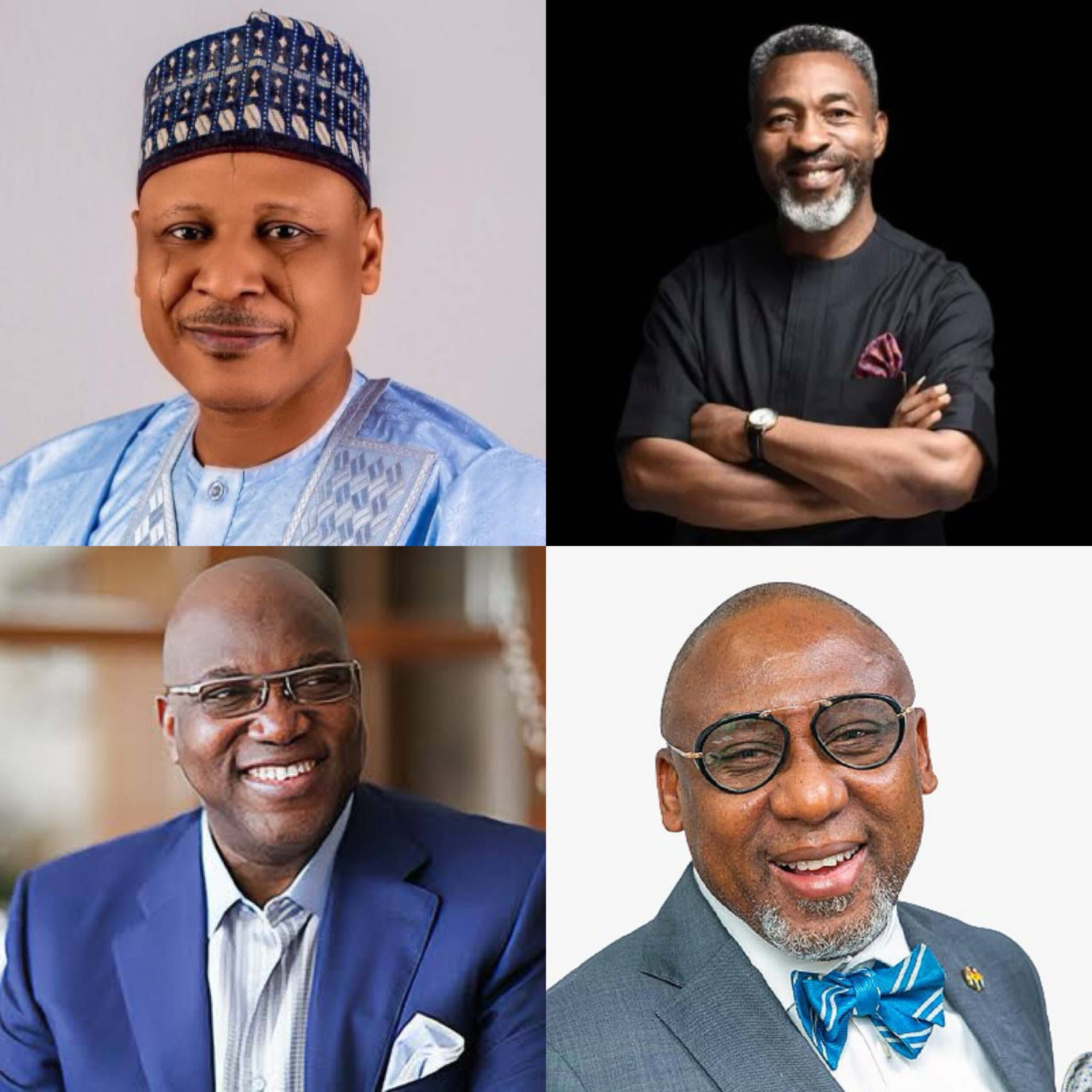
So what is really wrong with Nigeria’s image? Not the raw material, said Dr Ike Neliaku, Nigerian Institute of Public Relations (NIPR). “The challenge we have is the challenge of trust,” he said. “Nigeria’s greatest reputation capital is our people. This comprises our creativity, our music, our fashion, our sports, our food, our resilience and our audacity.”
Is culture enough, then? “Culture can open the door, but it cannot keep the door open.”
What keeps it open, he explained, is discipline in how Nigeria tells its own story. “We are so good in promoting our challenges and our differences, while others manage theirs carefully, pretending that all is well. We give them the information that they use against us.” At home, he added, the problem is a lack of one voice: “If you don’t have coherence, that’s the challenge. One is talking this way, the other one is talking that way.”
The proof is already there
On his part, John Momoh, Chairman Channels Media Group, said Nigeria already has the raw material for a better reputation. “Nigeria is a powerhouse. We’re about 200 million and counting. We are the creative and digital economy helping to redefine global culture. But too often our stories of excellence are overshadowed by headlines that do not reflect who we actually are.”
He pointed to Burna Boy and other Nigerian artists dominating global streaming charts, ninety-nine Nigerian students recognised in the 2025 Cambridge Outstanding Learner Awards, two Nigerian girls who beat teams from Japan, Canada and Spain with an AI safety app, and a first-place ranking for generosity in the 2025 World Giving Report. “Nigeria is not just talked about. Nigeria is celebrated too,” he stated.
“For every headline of genius, there’s sometimes a competing headline of frustration, but attention itself tells us something powerful. Nigerian reputation is dynamic. It’s not fixed, and it is shaped not just by what we say but by what we do and how consistently we do it.”
Reputation as a national asset
In the same vein, Yomi Badejo-Okusanya, Lead Partner at CMC Connect LLP and chairman of the Nigeria Reputation Management Group, said: “Reputation is no longer a soft issue. It is not cosmetic and is certainly not optional. In today’s hyper connected, digitally amplified world, reputation has become a strategic national asset that influences investment flows, citizens’ trust, diplomatic standing, consumer confidence and even national security.”
The alternative, he warned, is to lose control of the narrative. “The nation that does not manage its reputation leaves its story to chance and to others. Not through propaganda, but through credibility, consistency, transparency and performance.” Spin, in other words, will not do it. Proof will.
From talk to track record
NIPR has been building that proof. Its 2022 Citizens Summit on national integration, peace and security called for a body dedicated to managing the country’s reputation, and the Nigeria Reputation Management Group followed in October 2024. Moving forward, the Institute took policy out of the conference hall and into plain language through the Nigerian Public Relations Week, from solid minerals in Uyo to food security in Kaduna, under the banner “From Policy Paper to Public Plate.”
Then came the win that put Nigeria on the world stage. After a demanding four-stage bid that took the Institute from Bali to Nairobi to Venice and online, with South Africa a strong contender, Nigeria won the right to host the World Public Relations Forum. From 15 to 21 November, Abuja welcomes about 3,000 delegates from the Global Alliance’s 126 member countries, the first time the forum has come to Nigeria. The Institute itself has been crowned Global Public Relations Association of the Year, from 89 entries across 19 countries. And in Gudi, Nasarawa State, it is building the University of Public Relations and Leadership, billed as the first university devoted entirely to the profession.
Who holds the pencil
Now there is a profession of Nigerians in every corner of the country, trained, ethical and unafraid, who understand the people, the culture and the languages Nigerians actually speak. They are the image makers, and they are ready to put the story right.


Comment
No comments found.