
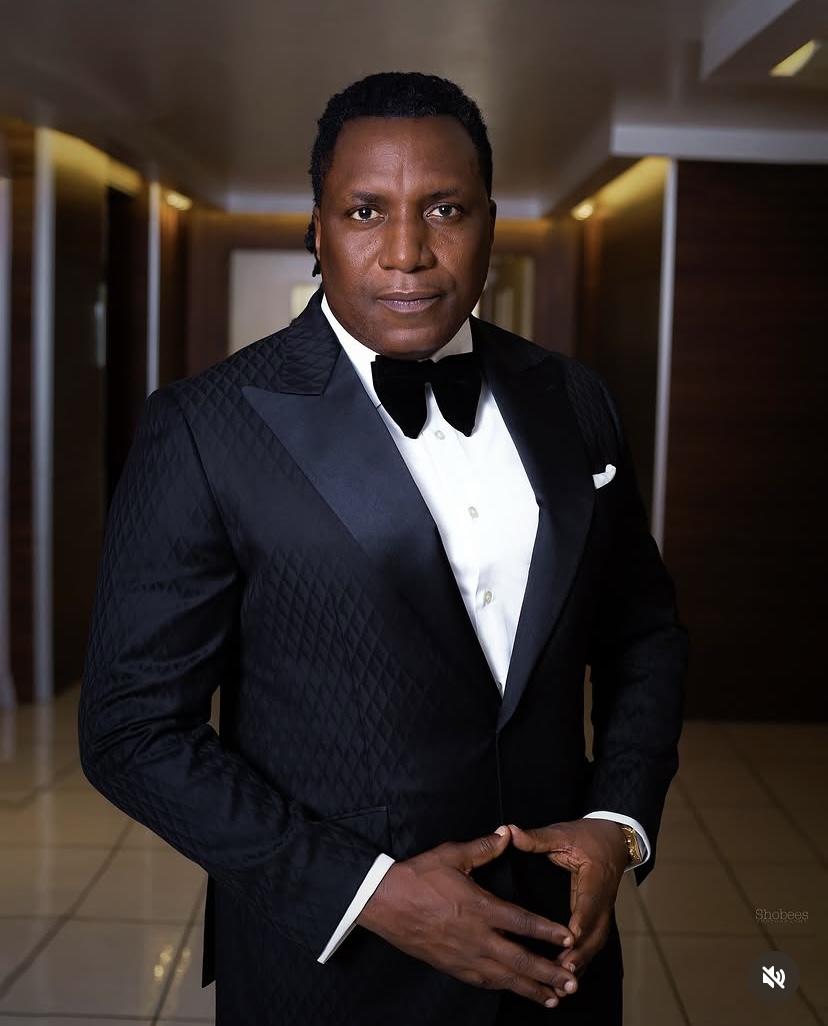




For decades, media planning and buying in Nigeria have evolved from an industry largely driven by relationships and instinct to one anchored on data, measurement and specialised expertise. But with technology platforms taking greater control of the advertising transaction, the industry may once again be approaching a defining moment.
The challenge now, according to Steve Babaeko, Group CEO and Chief Creative Officer of X3M Ideas, is not simply how media practitioners can survive disruption, but how they can build value around what technology cannot easily replicate.
Babaeko made this submission while delivering the keynote at the 2026 Annual General Meeting of the Media Independent Practitioners Association of Nigeria, MIPAN, where he challenged practitioners to confront the changing economics of the media business.
His address, titled “Whose Tomorrow Are We Monetizing?”, was delivered against the backdrop of the AGM theme, “Monetizing Tomorrow: Outpacing Disruption, Capturing Growth in the Next Era of Media.”
For Babaeko, the theme was appropriate, but it also required the industry to ask a more difficult question: whose tomorrow is actually being monetised?
Looking back, he noted that MIPAN was founded in 1999 by seven companies determined to move media planning in Nigeria away from guesswork and long standing relationships towards a more scientific discipline built around numbers.
That transformation, he said, represented the industry’s first independence.
But the environment has changed considerably since then.
The media transaction that once formed the foundation of many businesses is increasingly being automated. According to Babaeko, programmatic advertising started the process, self service platforms accelerated it, while artificial intelligence is now taking automation further by planning campaigns, selecting audiences, allocating budgets and optimising placements.
“The transaction is being eaten,” he said.
Interestingly, Babaeko was not speaking as a technology sceptic. He disclosed that X3M Ideas is building an AI studio and that he uses the technology himself.
“I love the machine. I use the machine every day,” he said, adding that “love is not the same as denial.”
His argument, therefore, was not for the industry to resist AI, but to understand where its own value lies in an environment where machines can increasingly execute routine media functions.
In practical terms, he warned that media businesses whose value rests mainly on executing the transaction risk competing in an area where technology will always have an advantage.
“You cannot out-run the algorithm at arithmetic,” he declared.
Rather than trying to beat technology at its own game, Babaeko challenged media practitioners to find the ground that global platforms do not own.
For him, that ground is the Nigerian consumer. While technology platforms may control infrastructure, code and enormous volumes of data, Babaeko argued that they do not fully understand the complex realities of the Nigerian market.
He pointed to the woman in Bodija market listening to her radio, the young man in a danfo whose playlist influences his environment, the WhatsApp broadcast list moving information across an estate, the barber who operates as a one man influencer network and the informal channels through which information travels within families and communities. These realities, he suggested, are difficult to capture completely through global dashboards.
Citing estimates contained in his address, Babaeko noted that more than half of Nigeria’s GDP is generated within the informal economy, while more than 90 per cent of jobs are informal. He also referred to millions of small enterprises operating largely outside the visibility of conventional attribution systems.
For him, this should not necessarily be regarded as a weakness.
“There is a gap between the map they sell us and the territory we actually live in,” he said.
More importantly, he described that gap as an opportunity for Nigerian media practitioners.
According to Babaeko, the ability to understand local culture, language, behaviour, context and meaning remains a valuable human advantage.
This informed what he described as an “Original Africa” orientation, which rejects the notion that African cultural systems are merely less developed versions of Western models.
“They are architecturally different. Complete. Sophisticated on their own terms,” he said.
It was against this backdrop that Babaeko called for what he described as the industry’s “second independence.”
While the first independence was from guesswork, the second, he argued, should be independence from imported frameworks, metrics and definitions of value.
He subsequently offered five areas of action.
First, he urged MIPAN to own the data layer by building and aggregating African audience intelligence rather than relying entirely on the platforms’ view of Nigerian consumers.
Second, he called for practitioners to move their fees from insertion to interpretation, placing greater value on the judgement behind media decisions rather than simply the execution of the buy.
Third, he urged the industry to make AI its “junior” rather than its replacement, allowing the technology to handle arithmetic, optimisation and repetitive tasks while professionals focus on understanding people.
Fourth, Babaeko challenged practitioners to stop allowing global platforms to determine what constitutes premium media.
“When a global platform tells you that its inventory is premium and our local radio, our local street, our local languages are the cheap seats, that is not a fact. That is a pricing strategy,” he argued.
Finally, he called for collective action, stressing that individual agencies may struggle to match the resources of global technology platforms, but MIPAN can create strength through collaboration.
“The unity is the asset. Guard it like money, because it is money,” he said.
Looking back at his own entrepreneurial journey, Babaeko recalled rejecting an offer to buy X3M Ideas in 2012. He said he saw the offer as an attempt to buy his “tomorrow at yesterday’s price.”
For him, that experience captures what independence means in business: making a deliberate bet on future value rather than accepting present comfort.
As the media industry enters another period of transformation, Babaeko believes the opportunity for Nigerian practitioners lies not in competing with machines on speed and efficiency, but in owning the knowledge and meaning that machines cannot fully understand.



Comment
No comments found.