
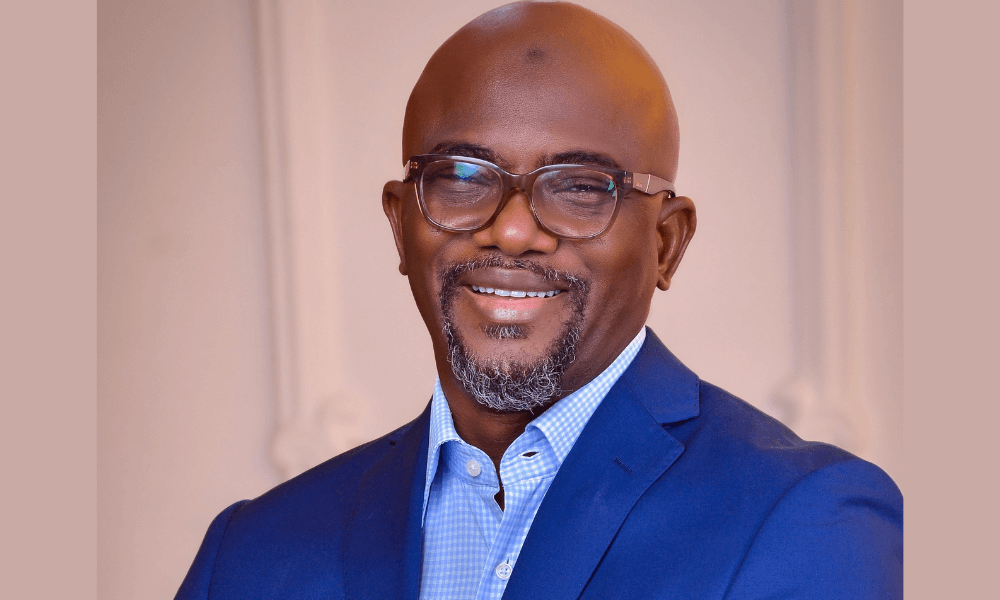




Advertising’s oldest anxieties losing a pitch, retaining a client, staying ahead of a rival agency have been joined by a far bigger one, and the industry needs to reckon with it now, according to Lanre Adisa, President of the Association of Advertising Agencies of Nigeria (AAAN).
Delivering the welcome address at the association’s 53rd Annual General Meeting in Lagos, themed “Advolution: The End of Advertising as We Know It… and How to Win What Comes Next,” Adisa told a room of agency heads, marketers and media stakeholders that the ground beneath the profession is shifting in ways it has never had to confront before.
“In a world where artificial intelligence is transforming creativity, where consumers are changing faster than brands can adapt, where creators are becoming media companies, and where technology is reshaping every aspect of communication, the greatest threat is not that another agency wins the business. It is that the business itself changes and we fail to change with it.”
He was quick to point out that the familiar competitive pressures have not disappeared they have simply been overtaken by a more fundamental question about the industry’s survival. For Adisa, the conference theme itself was chosen to reflect the weight of that question rather than to serve as a clever tagline.
“Advolution: The End of Advertising as We Know It… and How to Win What Comes Next,” he said, “is not merely a conference title. It is a call to action.”
He then laid out, in stark terms, just how far-reaching the disruption has become.
“Across the globe, advertising is undergoing perhaps the greatest transformation in its history. Artificial intelligence is redefining how ideas are conceived, developed and executed. Data is reshaping strategy. Technology is disrupting every touchpoint of the consumer journey. The creator economy has fundamentally altered the way influence is built. And consumers are demanding participation instead of interruption, authenticity instead of spin, and experiences instead of messages. The rules we mastered are evolving. The models that built many successful agencies are being challenged. The future is no longer approaching. The future has arrived. The question before us is simple. Will we merely adapt to change, or will we lead it?”
Despite painting a picture of an industry under pressure, Adisa’s message was not one of alarm for its own sake. He argued that advertising, properly understood, has never been about the campaigns it produces and that this deeper purpose is exactly what will carry the profession through the disruption.
“At its very best, our profession has always been about solving business problems through powerful human insight and transformative ideas. That has not changed. What has changed are the tools available to us. Technology is becoming more powerful by the day. Artificial intelligence will undoubtedly reshape how we work. But technology, on its own, does not create meaning. Algorithms can optimise. Machines can generate. But only people can imagine. Only people understand culture. Only people can feel emotion, appreciate nuance and create ideas capable of moving hearts, shifting behaviour and building enduring brands.”
He closed on a note that doubled as both a warning and an invitation a line that has since become the defining statement of this year’s AGM:
“The future will therefore belong not to those who fear technology, nor to those who rely on it blindly. It will belong to those who combine technology with imagination, data with empathy, and innovation with timeless human creativity.”



Comment
No comments found.