




There is a sentence that surfaced repeatedly across a recent Global Alliance for Public Relations and Communications Management webinar Master Class on Diversity, Equality and Inclusion Implementation, and it cuts through much of the polished corporate language that usually surrounds this subject.
Diversity is not inclusion. A workforce can be diverse on paper, drawn from multiple ethnicities, religions, genders and geographies, and still fail entirely at the harder work of making people feel they genuinely belong. That distinction, drawn most sharply by panellists speaking from Nigeria, Bangladesh, the United Arab Emirates and Indonesia, became the throughline of a conversation that moved from legal frameworks to unconscious bias to the simple, stubborn power of listening.
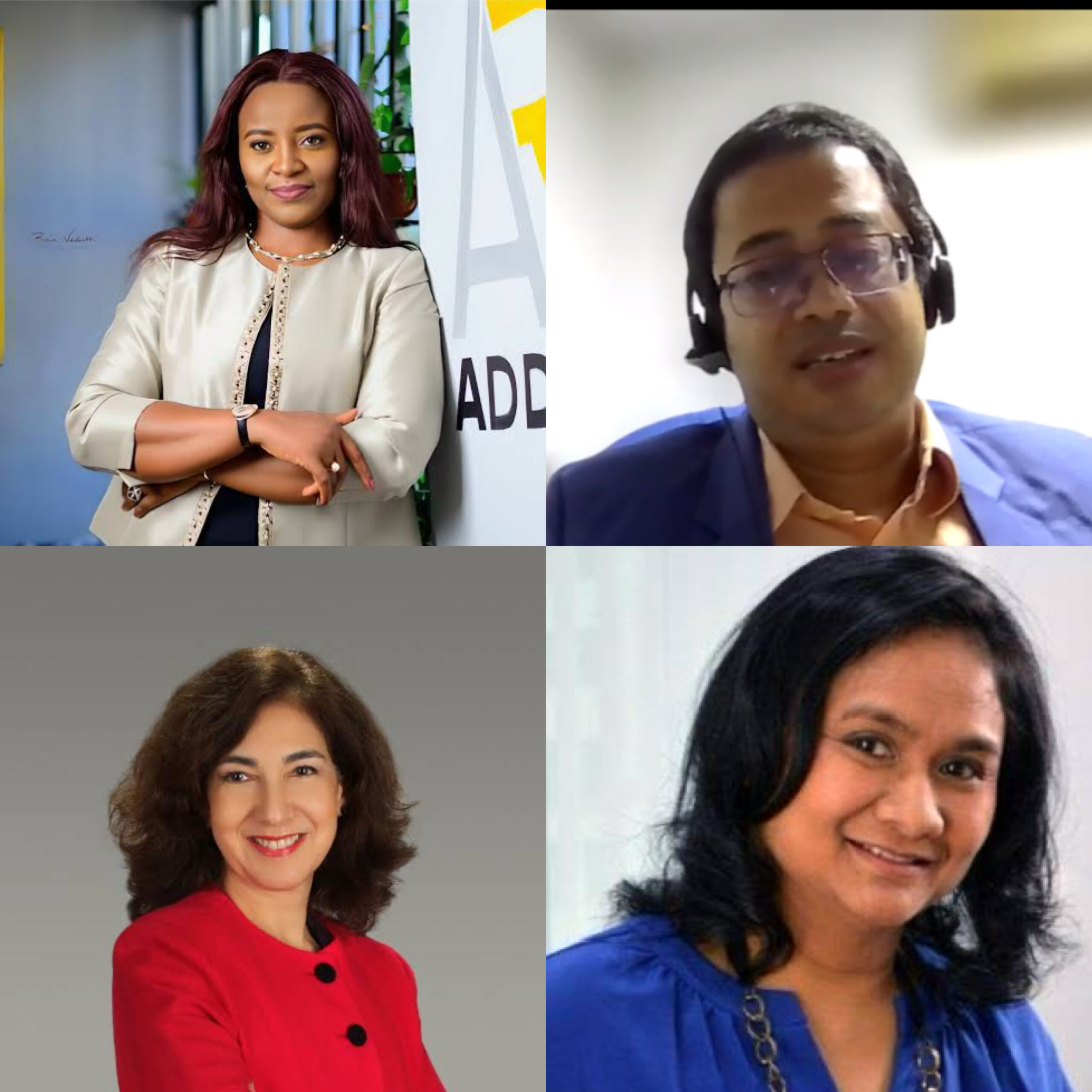
Inimfon Etuk, Founder of She Forum Africa Nigeria, opened by warning against the temptation to import global DEI templates wholesale without adapting them to local realities. Drawing from successful examples she has observed, she pointed to the inclusion of indigenous communities in planning processes as a model worth replicating, not merely as a box-ticking exercise but as a genuine effort to keep such communities meaningfully involved in decisions that affect them.
She turned next to the economic dimension of women’s empowerment, noting that the conversation must move beyond simply offering women jobs and toward actively growing their economic participation, particularly given that the overwhelming majority of businesses in many developing economies are small, medium and micro enterprises. She also flagged generational dynamics as a critical and often underexamined factor, observing that younger generations are far more critical of organisations and demand dialogue, authenticity and genuine participation in how diversity and inclusion are implemented rather than passive compliance with policy.
Etuk then widened the lens to her own work as a strategic communications professional and advocate for women’s rights, framing the entire DEI conversation through the broader principle of human rights.
“Human rights is anchored on the principles of justice, which is a fundamental principle. So whatever is good, ethical and inclusive is really what we are all speaking about as it affects our industry, our sector, our workplaces and our businesses,” she said.
Inimfon Etuk, Founder of She Forum Africa Nigeria
She acknowledged that Nigeria, a country of over 240 million people spanning a diversity comparable to entire continents, has made genuine progress that is not always acknowledged, citing the Federal Ministry of Women Affairs and Social Development’s recent launch of the National Gender Policy following a complete overhaul of the guidelines and frameworks that drive inclusive principles for women, children, families and vulnerable groups.
“What is essential is equitable access for all genders, regardless of what you identify as. If there is an opportunity for one, there should be the same opportunity open and accessible to the other,” she said.
She identified the legal foundation as the most critical driver of equity, explaining that bias against women and minorities in business, science, the arts and emerging sectors like the creative and blue economies is rooted in deep-seated stereotypes about who is qualified to succeed.
“There is something to be said. Let everybody be qualified to buy what is available, to procure whatever services or goods are required,” she said.
She also pointed to institutional capacity and affirmative action as essential, noting the particular relevance of this conversation as Nigeria moves into election season, when candidates emerge and representation comes under heightened scrutiny. Data, she stressed, underpins all of it, since gender-responsive budgeting and the targeting of intervention by sector is impossible without it.
She was candid about the limits of progress too, acknowledging that social norms remain deeply entrenched and that awareness, while growing for years, still meets resistance. “Progress does not always come loudly. Sometimes it comes through small wins, gradual shifts and steady advocacy. There are moments when we get tired, take a break, regroup and continue. But the work remains necessary,” she said.
The conversation then moved to Bangladesh, where Musa Mohammad Arif Billah, Director of Human Resources at the University of Liberal Arts Bangladesh, offered a strikingly personal account of the cultural barriers facing women’s education and employment.
He described a recent conversation with a young woman from an ethnic community in a remote area who, despite wanting to pursue postgraduate and even doctoral studies, faced pressure from her own community to stop after her undergraduate degree and focus instead on marriage and domestic life.

Musa Mohammad Arif Billah, Director of Human Resources at the University of Liberal Arts Bangladesh
“Everyone from our community was saying to her that you have already done your graduation, that’s enough, you have studied a lot. So now you should focus on your personal life, you marry,” he said, recounting her experience as illustrative of a much wider pattern.
He also pointed to discriminatory hiring practices he had witnessed in previous organisations, where some managers were reluctant to hire women out of concern that they would go on maternity leave within a year or two, alongside a broader institutional tendency to overweight certificates and credentials in selection processes rather than genuine capability.
At his own university, Billah said the goal is to maintain what he called a healthy diversity and inclusion index. He cited a national survey showing that women hold only 25 percent representation in Bangladesh’s service and industry sectors, while at his institution, female student enrolment stands at 53 percent, one of the highest rates in the country, achieved through targeted scholarships, discounts and a deliberately safe and liberal environment from leadership downward. He noted that the university also draws talent from religious minorities and diverse ethnic communities as part of a deliberate effort to overcome the structural barriers facing underrepresented groups.
From the Gulf, Dr Tevhide Serra Gorpe, Professor at the University of Sharjah in the United Arab Emirates, situated DEI progress within the broader transformational economic agendas of the GCC countries. She noted that rapid economic development across the region, particularly in the UAE, has driven significant increases in women’s enrolment in education and the workforce, while globalisation and a large expatriate workforce have made Gulf workplaces increasingly diverse.

Dr Tevhide Serra Gorpe, Professor at the University of Sharjah in the United Arab Emirates
However she cautioned that diversity does not automatically translate into smooth implementation. One persistent challenge, she said, is the perception in some quarters that DEI concepts originate from a specifically Western background and therefore sit uneasily alongside local values and traditions, complicating how they are understood and adopted.
She also pointed to multilingual, multicultural workforces as a source of resistance to change, alongside localisation policies common across the Gulf and Southeast Asia, which prioritise the employment of local nationals in ways that can sit in tension with principles of equal opportunity for expatriate workers. Despite these complexities, she noted that legal and policy frameworks across the region continue to evolve to address these tensions directly.
Dr Nia Sarinastiti, Senior Lecturer at Atma Jaya Catholic University of Indonesia, brought the conversation back to a foundational point that would recur throughout the session. Diversity, she reminded participants, does not automatically create inclusion.

Dr. Nia Sarinastiti, Senior Lecturer at Atma Jaya Catholic University of Indonesia\
Indonesia, she explained, is itself an extraordinarily diverse nation, yet that diversity regularly encounters barriers rooted in hierarchy, local tradition, geography and language. Her central argument was about method rather than policy. Communities, she said, respond best not when programmes are imposed upon them but when they are treated as genuine partners in the process.
“Communities will be able to respond best when they are treated as partners, not just called upon,” she said, arguing that inclusion ultimately means collaboration with the people a programme is meant to serve, rather than simply directing initiatives at them from above.
Etuk returned to close out one segment of the discussion with a distinctive argument about the strategic role communication professionals specifically can play in advancing DEI. She described communicators as custodians of information, capacity and data, a versatility that makes them subject matter experts across an extraordinary range of sectors.
“We are busybodies in everything from engineering to creative art, music to fashion. You will find us in every sector of human endeavour,” she said. She argued that this cross-sectoral reach gives communicators a unique opportunity to become custodians of the data that drives business decisions in those sectors, helping every other industry determine its own priorities. She floated a concrete proposal worth noting for its ambition: an annual index, broken down by country and sector, tracking how different groups are faring in terms of opportunity, access and career growth, built on the same information-gathering and data-mining capabilities that already define the communications profession.
When the panel turned to practical first steps organisations and individuals could take, the answers were refreshingly concrete.
Billah was direct about where change must begin. “The most important thing is to remove any unconscious bias, not only for yourself but for the people you work with,” he said, describing how his own university caters to different career paths within its faculty, allowing those drawn to teaching and those drawn to academic research to pursue distinct, equally valued tracks supported by transparent and equal performance appraisal systems. He argued that communication professionals, given their frequent role as institutional speakers, are particularly well placed to spread this message about removing unconscious bias from family, mindset and society more broadly, and made a case for embedding this education at the level of primary schooling rather than waiting until adulthood.
Sarinastiti offered a deceptively simple practical tip rooted in basic communication discipline. She observed that in Indonesia, as in many places, there is a tendency to prioritise talking over listening. Her first practical step was straightforward: listen to the community before assuming you understand its needs. Her second was to deliberately examine who is missing from the conversation altogether, rather than only evaluating the people already present in the room. Both steps, she said, return to the same underlying commitment of wanting people to feel genuinely seen and heard.
Etuk closed the session by returning to the organisational level, offering communication professionals and business leaders a fantastic and fantastically practical question to sit with. At the level of any organisation, whether or not a national legal framework exists, she argued there should be standard operating guidelines defining what is acceptable practice and what is not. These need not be complex frameworks, she said, but the real test lies in implementation and tracking. Her suggested quick win was simple: include DEI reference points in the organisation’s annual report, because the knowledge that progress will need to be reported tends to keep an organisation conscious of its actions throughout the year. She tied the entire conversation back to where she began.
“All of this is hinged on individual and collective respect for human rights, because human rights is directly attached to the justice system. Without justice, we cannot truly be talking about equality or equity, whatever the nomenclature, because there cannot be any meaningful gender inclusion of any sort without justice. This is where decisions are made, and this is where people feel they have been treated rightly or wrongly,” she said.
Taken together, the conversation offered something rarer than another generic DEI checklist. It offered a genuinely global, genuinely textured picture of what equity work actually looks like when it moves beyond slogans, across four countries, four professional vantage points and one consistent, repeated insight: that diversity without genuine partnership, without listening and without justice, is simply diversity, not inclusion at all.


Comment
No comments found.