
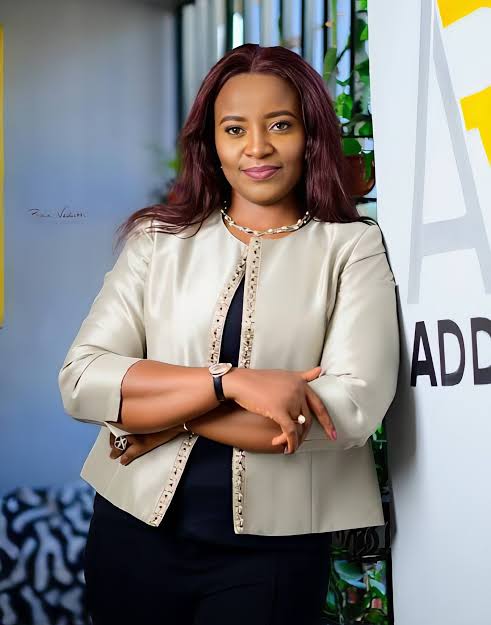




Efforts to advance gender equity, diversity and inclusion will continue to fall short unless they are built on a foundation of justice, according to Inimfon Etuk, Founder of She Forum Africa Nigeria.
Speaking during the Global Alliance for Public Relations and Communications Management Master Class on Diversity, Equality and Inclusion (DEI) Implementation, Etuk argued that conversations about workplace inclusion often focus on policies, targets and compliance frameworks while overlooking the more fundamental issue of human rights.
Drawing from her experience in advocacy and development, she urged communication professionals to view gender equity through a broader lens that extends beyond corporate programmes and organisational commitments. Whether the discussion centres on boardroom representation, workplace opportunities or social inclusion, she said the real question remains one of fairness, dignity and equal access to rights across different communities, ethnic groups and social backgrounds.
“Human rights is anchored on the principles of justice, which is a fundamental principle. So whatever is good, ethical and inclusive is really what we are all speaking about as it affects our industry, our sector, our workplaces and our businesses,” she said.
She said Nigeria, a country of over 240 million people spanning multiple ethnic, sociocultural and religious identities, has made genuine progress on gender equity even if that progress is not always acknowledged. She pointed specifically to the Federal Ministry of Women Affairs and Social Development’s recent launch of the National Gender Policy, which followed a complete overhaul of the operating procedures, guidelines and frameworks guiding inclusive principles for women, children, families and vulnerable groups across the country.
“A lot of work is going on in Nigeria to bring sensitivity and inclusion to the forefront, taking cognisance of our unique diversity,” she said, adding that the ultimate goal remains equitable access for all genders. “If there is an opportunity for one, there should be the same opportunity open and accessible to the other.”
On what drives equity forward, Etuk identified legal reform as the foundation, noting that the Federal Ministry has prioritised reviewing the legal framework around gender equity precisely because bias is often rooted in deep-seated stereotypes about who is qualified to lead or succeed across business, science, the arts, the creative economy and the blue economy.
“What we are saying is simple. If someone is qualified, they should be able to access the opportunity available, whether it is employment, procurement or service delivery,” she said.
She also pointed to institutional capacity and affirmative action as critical drivers, particularly with Nigeria entering election season, when candidates emerge, campaigns take shape and representation comes under renewed scrutiny. Underpinning all of this, she said, is data, without which gender-responsive budgeting and targeted intervention become impossible.
Etuk acknowledging that social norms remain a significant constraint and that awareness, while growing for years, still meets pushback in some quarters.
“Progress does not always come loudly. Sometimes it comes through small wins, gradual shifts and steady advocacy. There are moments when we get tired, take a break, regroup and continue. But the work remains necessary,” she said, framing gender equity advocacy as a long and often unglamorous discipline rather than a single campaign with a defined endpoint.
At the organisational level, she offered communication professionals a practical entry point for embedding DEI principles regardless of whether a national legal framework exists. She argued that organisations need standard operating guidelines that define what is acceptable practice, and that genuine progress depends less on having a framework and more on how it is implemented and tracked. Her suggested quick win was disarmingly simple.
“Include this reference in the annual report. If an organisation knows it will have to report on this when preparing its annual report, then it will remain conscious of what it is doing and how it is checking those boxes internally,” she said. She tied this back to her central thesis, noting that meaningful inclusion ultimately depends on a culture of respect for human rights, reflected in delegation, daily operations and communication campaigns alike.
“Human rights is directly attached to the justice system. Without justice, we cannot truly talk about equality or equity, whatever the terminology may be,” she said.
Etuk also made a distinctive case for the unique role communication professionals can play in advancing DEI precisely because of the nature of their work. She described communicators as custodians of information, capacity and data who operate across virtually every sector of human endeavour, from engineering to fashion, music to the creative arts.
“As we operate in these sectors, we also have to serve as custodians of the data that drive business interests. If we make that part of our industry, then every other sector can use it to guide decisions and determine priorities so that their own businesses can function optimally,” she said.
She floated a concrete idea for the profession to consider: an annual index tracking opportunity, access and career growth by country and by sector, built on the same information-gathering capability that has always defined communications work. For organisational leaders, she left a final, practical challenge. The work of inclusion, she said, begins with one honest question that every Chief Executive Officer must ask. What is the first step we can take?



Comment
No comments found.