
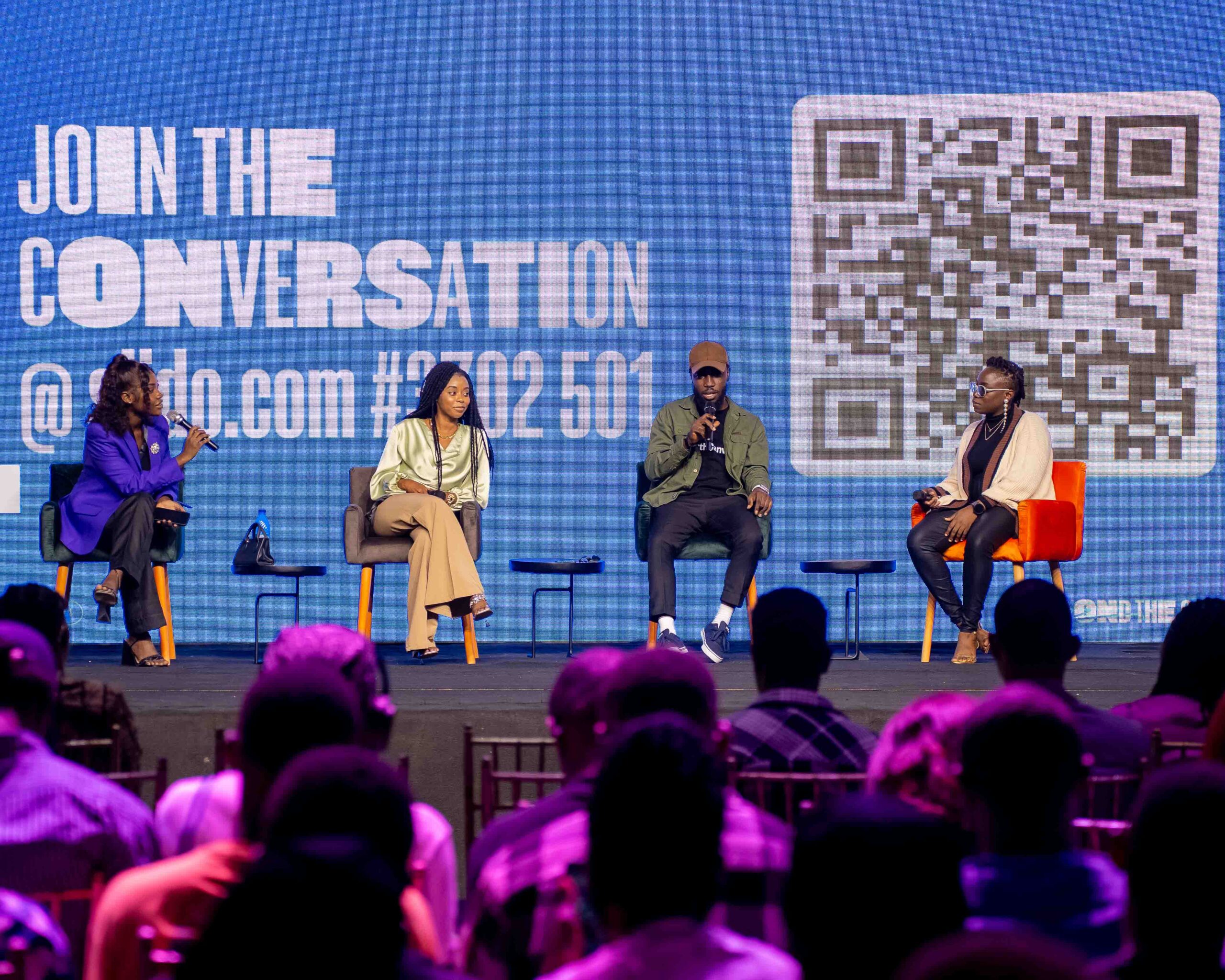




Across Nigeria’s business landscape, design is slowly moving from the last mile of communication to the first layer of serious brand/business thinking.
Somewhere in the last decade, there’s been a shift in how Nigeria’s most serious companies think about design. You can see it in the most competitive sectors where winners tend to be the companies with the clearest sense of who they are and what they stand for.
FourthCanvas, a Lagos-based design agency founded in 2015, is one of the firms most responsible for that shift. They belong to a small class of African creative companies that have spent over a decade making an unpopular argument that design is not the last step in a communications process, but the first layer of serious business thinking. Ten years in, that argument is finding more converts.
Its earliest believers were from the technology startup community in Lagos, where founders quickly understood that a young company asking people to trust it with money, data, or daily behaviour had to look as serious as the promise it was making. Since then, FourthCanvas has been most useful in moments when the distance between a company’s ambition and its public expression has grown too wide to ignore. Companies like PiggyVest, Nigerian Breweries Plc, Nomba, Raenest (formerly Geegpay), Chartered Financial Analyst (CFA), Titan Trust Bank, Sunbeth, and others came into the firm’s orbit at points of growth, clarification, or reinvention, including its recent project with the Stripe-owned company, Paystack. Over the last 10 years, Paystack has been one of Nigeria’s most significant pioneers in payments, and as it grew into a bigger ambition, it partnered with FourthCanvas to build the institutional brand identity for its new parent holding company, The Stack Group.
Nigeria’s business environment has become harder to win. The companies with real ambition now compete in crowded categories against better-capitalised peers, many of them global. They raise money from investors with a broader context. They recruit talent that measures them against international benchmarks. They sell to customers whose expectations have been shaped by products built in San Francisco and London. They deal with regulators, partners, and competitors who continuously read the signals around them. In that environment, companies change shape faster than their brands were designed for. While these transitions are celebrated internally and announced in press releases, they are often undermined by an identity that still tells the old story.
For a long time, a media or advertising agency could treat design as one task inside a larger campaign process. The brand needed a look. The campaign needed a layout. The product needed visibility. Design answered those requests, and the arrangement worked well enough. But the most serious Nigerian companies now need design to answer different questions entirely: What are we becoming? What must the market understand about us before a meeting starts? What kind of trust do we need to earn, and from whom? What should our identity make clear before anyone reads a pitch deck, visits an office, or speaks to a salesperson?
“When you’re building a consequential business, how you show up to investors, customers, partners, regulators, and your own people is no longer a soft concern,” says Victor Fatanmi, who co-founded FourthCanvas. “It’s a structural one.”
This is what the firm has come to call “high-stakes branding,” a discipline that has little in common with what most Nigerian businesses still expect when they hire a creative agency. The starting question is not what something should look like. The starting question is what the business is actually becoming and whether the people around it can see that clearly.
Wilfred Alfred, the senior strategist at the firm, describes the early weeks of a project as a sustained exercise in absorption. “We are not talking about colors, just yet,” he explains. “We are talking about who you are and what you actually believe about your business.”
Those conversations can last for weeks. The full process, depending on the client, often runs to six months. For an industry conditioned to measure agencies by how quickly they turn work around, this is, on its face, a strange offer. But it is one that FourthCanvas has made deliberately and repeatedly.
Alfred argues that speed at the wrong stage is the most expensive mistake a brand can make. A multi-licensed financial group that collapses its entities under one fuzzy brand can accidentally suggest shared risk where the law requires separation. A credit infrastructure company that keeps talking like an impact project will struggle to be taken seriously as a systemic player. A cross-border agribusiness that looks like a trading operation will make global buyers hesitant. In each case, the issue is not an old-fashioned logo but that the story no longer fits the reality of the business.
“We spend the first weeks doing interviews, studying materials… all to absorb as much context as possible before we start to create,” Mary Afolabi, design director at FourthCanvas says. “That absorption is the work. The visual output at the end is just what it looks like when that work is done well.”
FourthCanvas built this practice largely through Nigeria’s tech sector, but the argument is directed, increasingly, at the broader corporate landscape. Traditional organizations, many of which carry decades of equity built before anyone was thinking carefully about visual identity, have been slower to see design as a strategic concern. That is changing, in part because the competitive environment has changed around them.
“The questions we ask are the kind that surface tensions leaders often haven’t articulated yet to themselves.” — Bolaji Fawole, co-founder and director of systems at FourthCanvas
As Nigerian companies compete in markets where the comparisons are global, the standards have shifted. What a company chooses to call itself, how it describes what it does, how it structures relationships between its entities, and how it shows up are no longer secondary decisions. At a certain scale, these choices shape how the ecosystem understands the company. And that understanding can be the difference between the companies that earn long-term trust and the ones that keep having to explain themselves anew at every meeting, every pitch, and every new market.
Fatanmi has been consistent on this point throughout the firm’s decade of work. “If you move too fast before you understand what you are building and why, you will spend years correcting it,” he has said. “We would rather take the time upfront.”
The businesses that have gone through FourthCanvas’s process come out looking different from the ones that did not. Not just visually, but substantively. The work is visible in their products, in the coherence of their communications, and in the way their teams talk about what the company does. What FourthCanvas has proven over ten years is something Nigeria’s design industry needed proved: that this is a discipline, that it requires method and patience to practice well, and that the businesses that treat it seriously are better positioned for what comes next. The industry they helped create is still young. But it is growing, and it is growing with a clearer sense of what it is for.


Comment
No comments found.