




Ojude Oba is not a backdrop. It is not a content opportunity. It is not a trending moment to attach a logo to before the algorithm moves on.
It is one of the oldest and most magnificent cultural celebrations in West Africa, a gathering of the Ijebu people at the forecourt of the Awujale, their king, to pay homage, parade in age-grade groups, display their finest attires, ride their most celebrated horses, and declare with every colour and every drumbeat: we know who we are, and we are proud of it.
Any brand that enters this space carries a responsibility. The responsibility to understand before it speaks. To listen before it places. To contribute to the story rather than simply borrow from it.
This year, some brands entered that space and got it right.
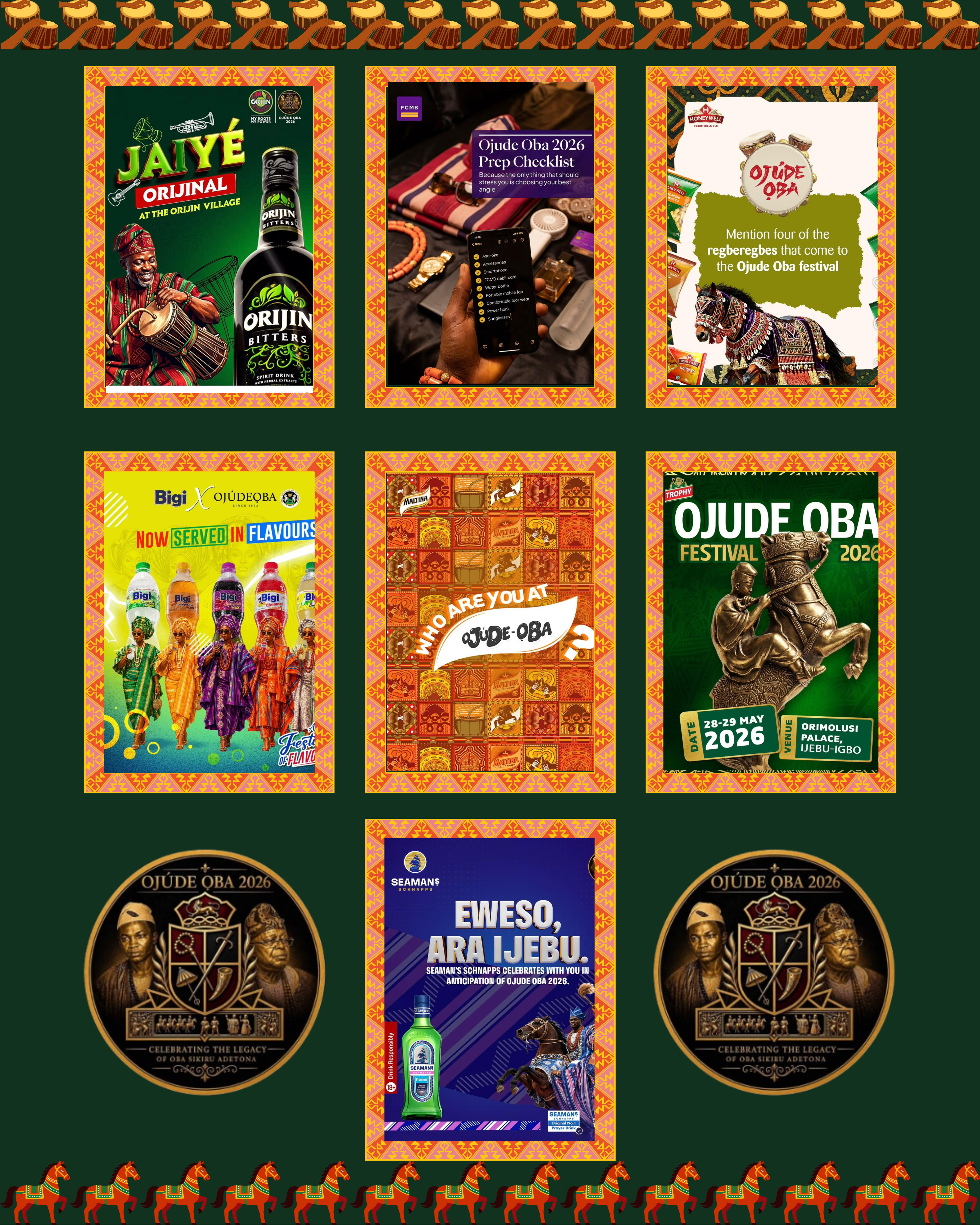
Orijin – The Brand That Was Always Coming Home
There is a version of cultural alignment that feels manufactured, a brand that spots a trend and rushes to attach itself to it. And then there is Orijin at Ojude Oba 2026, which feels like the only place this brand was ever supposed to be.
“Jaiyé Orijinal at the Orijin Village.” My Roots My Power.
A drummer in full traditional Yoruba attire, joyful, commanding, alive, sits beside the bottle that has always insisted on its African identity. The brand did not simply show up at the festival. It built a village. A dedicated Orijin Village where the brand’s roots, herbal, cultural, deeply Nigerian, could find their fullest expression in the most culturally rooted setting Nigeria has to offer.
Orijin’s entire brand architecture is built on the idea that where you come from is your greatest power. Ojude Oba is a festival built on precisely that belief. The alignment is not marketing. It is recognition. Two things that have always belonged together, finally standing in the same place.
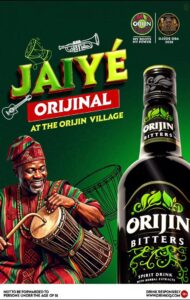
Seaman’s Schnapps – The Brand That Greeted First
Before anything else, before the product shot, before the campaign message, before a single line of copy Seaman’s Schnapps said two words.
Eweso, Ara Ijebu.
A greeting. In Yoruba. Directed as the Ijebu people on their most celebrated day. The brand did not open with its name or its offer. It opened with respect. And the doing so, it demonstrated something that most brands never understand about cultural marketing: the first thing you say tells people whatever you belong or whether you are visiting.
Seaman’s Schnapps belongs. It has always belonged. Schnapps is woven into Yoruba ceremonial life, present at libations, at prayers, at the marking of significant occasions. A brand that has sat at the table of Yoruba tradition for generations showing up at Ojude Oba is not an arrival. It is a return. The rider on horseback and the magnificently dressed woman beside him are not models in a studio. They are the festival itself, rendered in the brand’s colours, claimed as family.
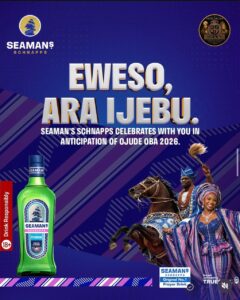
FCMB – The Bank That Packed for the Festival
The most practical creative of the collection and one of the most culturally intelligent. A hand holding a phone, a notes app open, a checklist on screen. Aso-oke. Accessories. Smartphone. FCMB debit card. Water bottle. Portable mobile fan. Comfortable footwear. Power bank. Sunglasses.
“Because the only thing that should stress you is choosing your best angle.”
FCMB did not declare its cultural credentials. It did not make a grand statement about heritage or identity. It simply placed itself among the things a real person preparing for Ojude Oba actually packs, and trusted that the audience would understand. The FCMB debit card sits between the accessories and the water bottle as naturally as it sits in a wallet. It is not the hero of the checklist. It is simply part of what makes the day possible.
That restraint is wisdom. The brands that last at cultural moments are not the ones that shout loudest. They are the ones that make themselves useful.
Honeywell Flour Mills – Speaking the Language of the Festival
Honeywell arrived at Ojude Oba speaking fluent Ijebu. Not the language of tourism or observation, the language of someone who knows the festival from the inside.
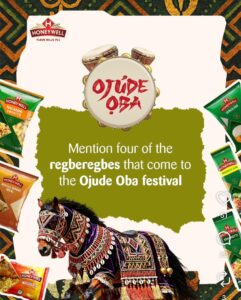
“Mention four of the regberegbes that come to the Ojude Oba festival.”
The regberegbe. The age-grade groups that are the living soul of Ojude Oba, each one representing a generation of Ijebu people, competing to outshine the other in dress, music, and presentation. Most brands at a cultural festival would describe it from the outside. Honeywell entered through the door that only those who truly know it can find. By naming the regberegbe, not explaining it, not defining it for outsiders, simply naming it and asking the audience to respond, the brand signalled that it belonged. That it had done more than read about the festival. That it understood what makes it sacred.
Bigi – Culture Served in Every Flavour
Bigi produced two creatives and both deserve their own examination because together they tell a complete story.
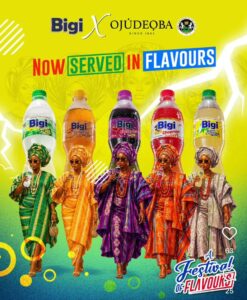
The first creative placed five women in magnificent Yoruba traditional attire, each dressed in colours matching a different Bigi flavour. Lemon and Lime in green. Ginger Ale in gold. Cherry Cola in deep purple. Chapman in vivid red. Bitter Lemon in silver-white. “Now Served in Flavours. A Festival of Flavours.” The festival’s most iconic visual element, the extraordinary diversity and vibrancy of Yoruba women’s dress, translated directly into product range. Culture first. Product follows. That sequencing is everything.
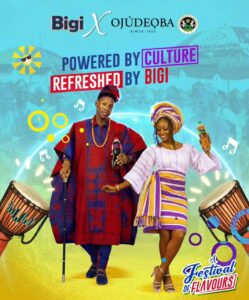
The second creative took the brand off the canvas and into the crowd. A young man in rich red and blue aso-oke beside a woman in purple and gold, both holding Bigi bottles, both dressed for the festival, the actual Ojude Oba crowd visible behind them. “Powered by Culture. Refreshed by Bigi.” Six words that define the brand’s relationship to the festival with complete precision. Bigi did not power the culture. The culture powered the day. Bigi simply kept the people refreshed while it happened. That humility, placing culture above the brand in the very line that names the brand, is the mark of a creative team that understood its assignment completely.
Maltina, The Brand That Saw Every Type of Nigerian
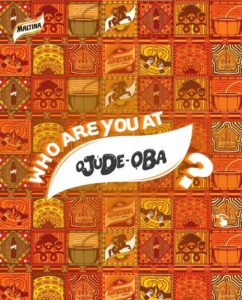
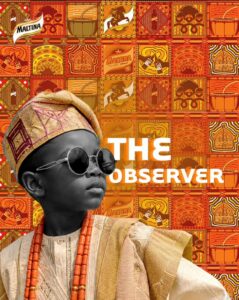
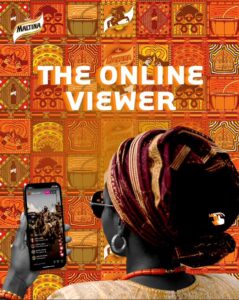
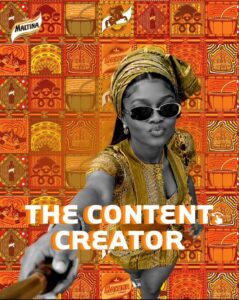
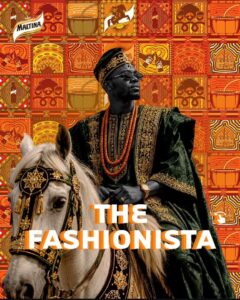
Maltina produced the most ambitious and most humanly generous creative of the collection. Four character types. Four different relationships to Ojude Oba. One question connecting them all: “Who Are You at Ojude Oba?”
The Fashionista, a man astride a white horse, draped in dark green and gold agbada, coral beads layered at his chest, composed with the absolute confidence of someone who has dressed for this moment all year. The Content Creator, a woman in gold aso-oke, camera arm extended, capturing everything because she knows the world needs to see this. The Online Viewer, a woman in a rich headwrap watching Ojude Oba on Instagram Live, the comments filling with pride from Ijebu people across the diaspora. The Observer, a young boy in iro and buba and round glasses, standing still in the movement, absorbing something he will carry for the rest of his life.
Maltina did not create a fictional Ojude Oba. It described the real one. And by asking “who are you?” it did not just create content. It created a mirror. Every Nigerian who has ever been to the festival, or watched it from their phone, or grown up near it, sees themselves in one of those four frames. The brand exists in the background, woven into the adire-inspired pattern on every slide, not as a product placement but as a textile. As part of the fabric of the day itself.
Trophy – The Brand That Honoured Legacy
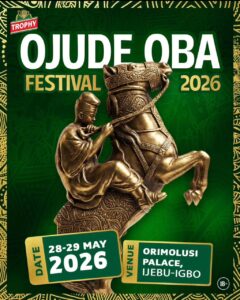
Trophy Lager made a decision that separates great cultural marketing from merely good cultural marketing: it did not make a creative about itself. It made a creative about the festival’s permanence.
A golden bronze sculpture of a horse rearing up, rider commanding and resplendent, rendered not as a photograph but as a monument. Cast in the visual language of something meant to outlast the moment. Deep green and gold framing the image with the weight of history. Date. Venue. Festival name. Nothing more.
Trophy understood that Ojude Oba does not need a brand to make it significant. It has been significant since 1892. What a brand can do, if it has the wisdom and the restraint, is stand beside that significance and honour it. Not decorate it. Not commercialise it. Simply honour it. The bronze monument says: this is not a moment. This is history. And we are here because we understand the difference.
Seaman’s, Bigi, Trophy – Three More Reasons the Standard Is Rising
Taken together, these brands tell a story that the Nigerian marketing industry should study carefully. Not one of them made the festival about their product. Every single one made their product about the festival. That inversion, from “look at us at your event” to “look at your event, and we are part of it”, is the difference between cultural opportunism and cultural contribution.
Ojude Oba has been happening since 1892. It does not need brands to survive. It does not need marketing to be magnificent. It has outlasted colonial governments, economic crises, and generations of change because it carries something that cannot be manufactured: genuine cultural identity, passed from one Ijebu generation to the next with care and pride.
The brands that showed up well at Ojude Oba 2026 understood this. They did not arrive to give the festival something it lacked. They arrived to contribute, to add their voice to a story already being told, to make themselves useful to the people living inside that story, and to demonstrate that a brand can carry genuine cultural respect without losing its commercial identity in the process.
The Awujale’s forecourt has always been a place where people come to show who they are. This year, Nigerian brands came and showed something worth seeing.
ALSO WATCH:MARKETING EDGE ONTV




Comment
No comments found.