
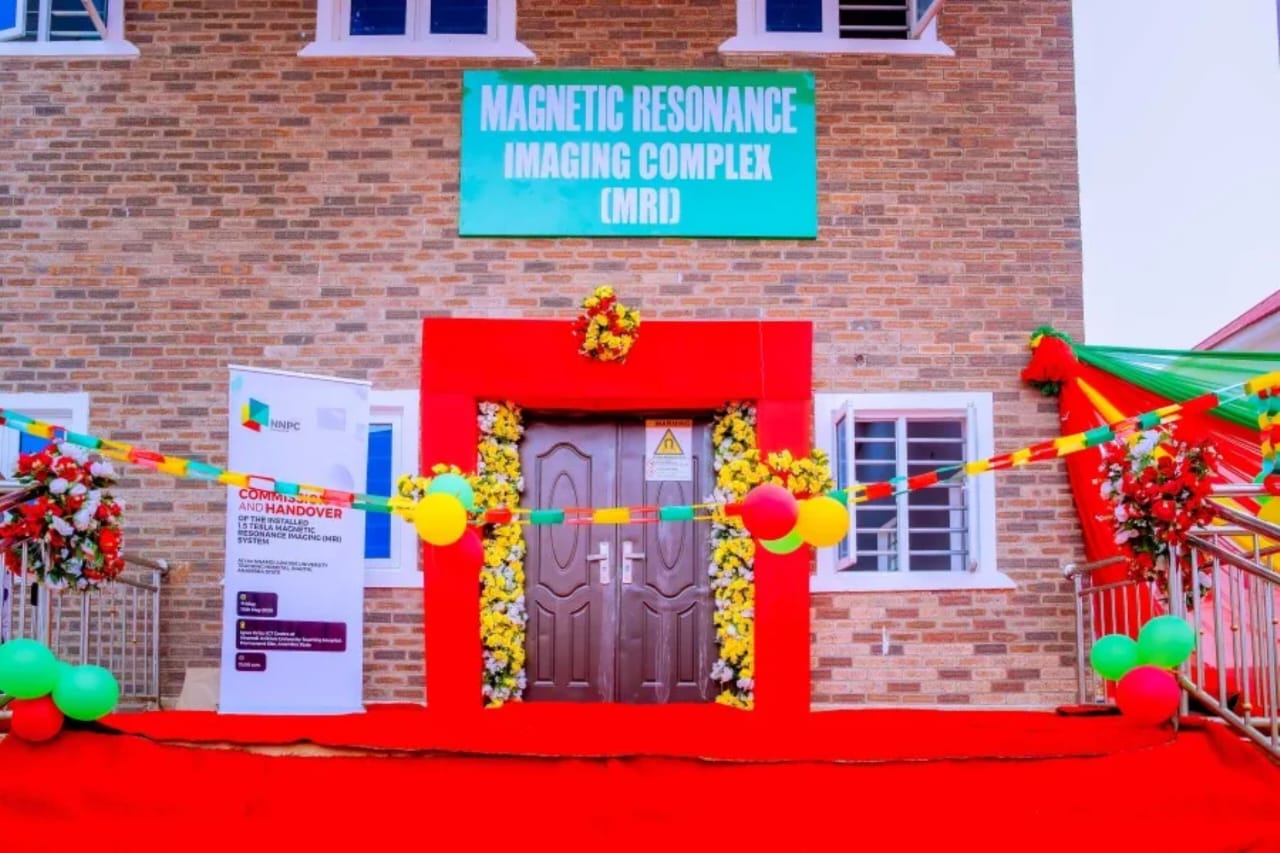




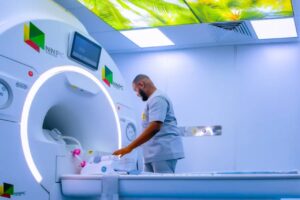
In a landmark intervention set to transform healthcare delivery in Nigeria’s South-East, the NNPC Foundation, the corporate social responsibility arm of NNPC Limited, has commissioned and handed over a state-of-the-art 1.5 Tesla GE Magnetic Resonance Imaging (MRI) System to Nnamdi Azikiwe University Teaching Hospital.
The commissioning ceremony, held at the Igwe Orizu ICT Centre of the hospital’s permanent site in Nnewi, marked more than the unveiling of medical equipment; it represented a strategic investment in human lives, healthcare accessibility and sustainable national development.
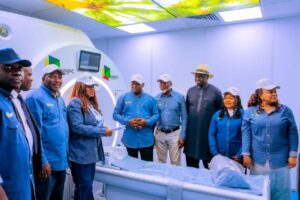

For thousands of patients across Anambra State and the wider South-East region, the new MRI system brings hope closer to home. Until now, many patients requiring advanced diagnostic imaging had to travel long distances to access MRI services, often at enormous financial, emotional and physical cost. With this intervention, critical diagnoses for neurological, cardiovascular, oncological and other complex medical conditions can now be conducted more quickly, accurately and affordably within the region.
Speaking during the handover, the Group Chief Executive Officer of NNPC Limited, Bashir Bayo Ojulari, described the project as a reflection of the company’s commitment to building enduring institutions and creating sustainable social impact beyond the energy sector.
He noted that while NNPC Limited remains focused on managing Nigeria’s vast oil and gas resources, the organisation also recognises that meaningful national development must include investments that directly improve the quality of life of Nigerians.
According to him, the MRI installation is part of a broader corporate social responsibility vision aimed at strengthening critical sectors such as healthcare, education and economic empowerment. He stressed that access to quality healthcare is fundamental to human dignity, productivity and national growth.
The intervention is especially significant for Nnamdi Azikiwe University Teaching Hospital, a major tertiary health institution that serves not only patients but also trains future healthcare professionals. By equipping the institution with advanced diagnostic technology, the project is expected to improve patient outcomes while simultaneously enhancing medical education and capacity development for students and frontline personnel.
Managing Director of the NNPC Foundation, Emmanuella N. Arukwe, explained that the project was designed with sustainability at its core. Beyond installing the MRI machine, the Foundation also provided training for healthcare personnel to ensure efficient utilisation and long-term functionality of the equipment.
She highlighted the broader healthcare realities confronting many Nigerian communities, including inadequate infrastructure, shortage of specialised equipment and limited access to quality medical services. The MRI project, she said, directly addresses these gaps by reducing delayed diagnoses, unnecessary referrals, healthcare-related travel risks and the burden of catastrophic medical expenses on families.
The intervention also reinforces the growing footprint of the NNPC Foundation across Nigeria. In recent years, the Foundation has implemented several high-impact social investment initiatives spanning healthcare, education, environmental sustainability and access to energy. Its healthcare programmes alone have delivered thousands of free cataract surgeries, cancer screenings, cardiac interventions and medical outreaches targeting vulnerable populations nationwide.
Executive Vice President, Business Services at NNPC Limited, Sophia A. Mbakwe, described the MRI installation as part of the company’s long-standing commitment to equitable and impactful community development.
She noted that the project aligns with global Sustainable Development Goals and Environmental, Social and Governance (ESG) principles by promoting accessible healthcare and improving overall community wellbeing.
For residents of the South-East, the MRI facility represents more than sophisticated technology. It symbolises reduced healthcare inequality, faster diagnosis, improved treatment outcomes and renewed confidence in Nigeria’s public healthcare system.
As the equipment begins operation, stakeholders believe the project will significantly reduce mortality rates linked to delayed diagnosis and inadequate access to specialised medical care.
The commissioning of the MRI system at Nnamdi Azikiwe University Teaching Hospital stands as another example of how strategic corporate social responsibility can move beyond philanthropy to create measurable, lasting community impact — touching lives, strengthening institutions and building a healthier future for Nigerians.
ALSO WATCH:MARKETING EDGE ONTV




Comment
No comments found.