
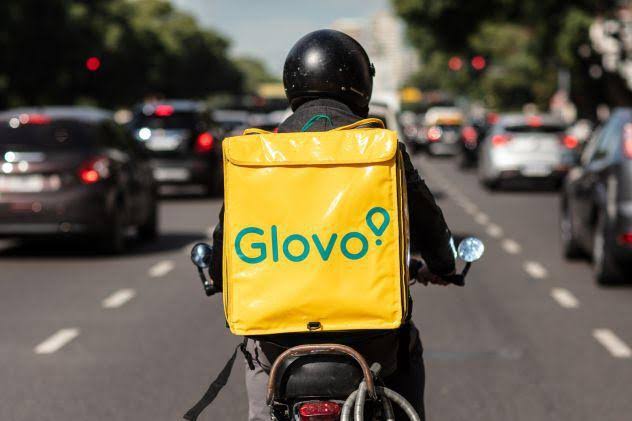




Glovo announced at its Future of Commerce 2026 summit Wednesday that Nigeria emerged as the platform’s fastest-growing market in 2025, delivering 38 million items whilst nearly doubling value generated for business partners. The Spanish on-demand delivery platform invested over ₦37 billion ($27 million) since entering Nigeria in 2021, now operating on 11 cities whilst planning expansion into underserved areas beyond current footprint. General Manger Reni Onafeko positioned Nigeria’s appeal bluntly: “Nigeria has two-things, population and momentum.” The framing reveals strategic calculation that explosive growth in imperfect market beats modest growth in stable one, especially after Ghana exit in 2024 confirmed that perfect conditions don’t guarantee profitability.


The Ghana withdrawal contextualises Nigeria bet. Glovo launched Ghana during COVID-19 pandemic when country imposed continent’s strictest travel restrictions requiring testing before leaving home country, upon entry, and again when departing. The regulations disrupted international community in Accra, core target demographic, whilst steep inflation, currency devaluation, and smaller market size created profitability challenges that Nigeria’s scale overcomes through sheer volume. The comparison demonstrates that market selection increasingly prioritises addressable population over operational ease. Nigeria’s complexity, infrastructure gaps, currency volatility, logistics challenges, becomes acceptable trade-off when 227 million people create revenue opportunities that stable smaller markets cannot match.
The quick commerce pivot drives growth acceleration. Whilst Glovo started as restaurant delivery platform, quick commerce, ultra-fast delivery of groceries, household items, pharmaceuticals, personal care, now represents fastest-growing segment. The diversification reflects industry-wide recognition that single-category apps cannot sustain growth when consumers expect platforms delivering everything within one hour. Chowdeck partnered with GoLemon in December 2025 to supply groceries to dark stores, retail outlets designed exclusively for online order fulfilment. Glovo’s expansion into multi-category commerce responds to competitive pressure from local players who built reputations on speed and customer support whilst capturing market share from international platforms slower to localise offerings.
The technology contribution to growth quantifies how platform improvements drive revenue beyond marketing spend. Onafeko noted product and technology changes accounted for 35 per cent of sales growth among merchants within past year, demonstrating that user experience optimisation generates measurable commercial impact. The road safety feature launched March 2026 with Federal Road Safety Corps provides real-time feedback on rider behaviour including speeding and braking, achieving 60 per cent adoption. The tool improves operational efficiency whilst addressing safety concerns that affect brand perception and rider retention, showing how product development solves business problems beyond immediate revenue generation.
For Nigerian brands evaluating platform partnerships, Glovo’s fastest-growing market positioning validates delivery platforms as growth infrastructure rather than optional marketing channel. When platform investment exceeds ₦37 billion and delivery volume reaches 38 million items annually, brand presence on platform transitions from experimental to essential. Restaurants and retailers not optimising for quick commerce risk missing customers who shifted permanently to on-demand purchasing during pandemic and never returned to pre-delivery shopping patterns.
The competitive dynamics reveal local players like Y Combinator-backed Chowdeck forcing international platforms to justify value proposition beyond brand recognition. Glovo’s William Benthall acknowledged competition whilst framing it positively: “They’re good at what they do. We welcome competition. It grows the category.” The diplomatic response masks reality that local platforms understanding Nigerian consumer behaviour and operational constraints can outcompete better-funded international platforms lacking localisation depth. Glovo’s expansion beyond current 11 cities represents effort to establish presence before local competitors achieve national scale that makes market entry prohibitively expensive.
The broader strategic signal is that African markets increasingly attract platform investment based on growth trajectory rather than current profitability. Nigeria’s fastest-growing designation matters more to investors than Ghana’s operational stability precisely because venture-backed platforms require demonstrating expansion potential justifying valuations that stable mature markets cannot support. Population and momentum, Onafeko’s Nigeria selling points, translate to addressable market and growth rate, the metrics determining whether platforms achieve scale necessary for profitability or remain permanently subscale operations burning capital without path to sustainability.
ALSO WATCH:MARKETING EDGE ONTV



Comment
No comments found.