
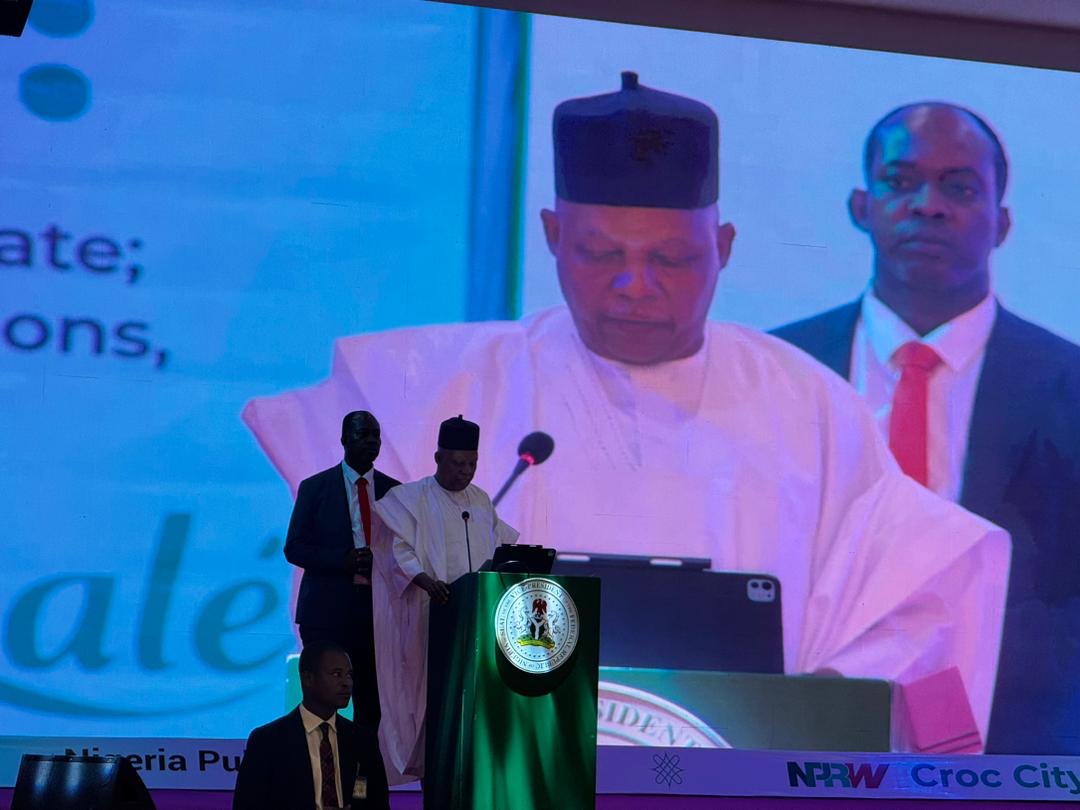




Effective communication is not a luxury of good governance. It is its oxygen. That was the central message Kashim Shettima, Vice President, delivered to public relations practitioners gathered in Kaduna for the third Nigerian Institute of Public Relations Week (NIPRW) 2026, tagged Croc City 2026, as he made the case that the success or failure of even the most well-conceived government policy ultimately rests on whether it is understood, trusted and translated into meaning for ordinary Nigerians.
Shettima was unambiguous about the indispensability of public relations to the work of government.
“As a government, we regard public relations as a strategic function of governance. It is integral to building trust, managing uncertainty, and sustaining reform. We must communicate not only what we are doing, but why we are doing it, how it serves the public good, and what place the citizen occupies in the success of that effort,” he said.
He observed that policies and reforms that are poorly explained consistently lead to public distrust and resistance, regardless of their merit or intention.
The Vice President distilled the challenge of governance communication into three direct and memorable demands.
“Governance cannot afford to be distant. Policy cannot afford to be opaque. Leadership cannot afford to speak a language the people no longer understand,” he said.
He stressed that no matter how brilliant policies are in conception, they must be explained, trusted and translated from technical language into human meaning before they can deliver their intended impact. It was a charge that placed public relations practitioners not on the periphery of governance but at its centre.
Speaking to the theme of the week, “Food Security: From Policy Paper to Public Plate,” Shettima told practitioners that their profession assumes central national importance only when the translation of government policies speaks to the anxieties of the farmer in the field, the merchant in the market and the family around the dinner table.
He outlined the specific measures the Tinubu administration has taken to address food insecurity, describing it as a priority at the heart of the President’s Renewed Hope Agenda.
“President Bola Tinubu has placed feeding our nation at the heart of the nation’s economic and social agenda. We have taken bold steps to confront this challenge with the seriousness it demands. We declared a state of emergency on food insecurity. We advanced mechanisation by deploying 2,000 tractors. We established a N100 billion agricultural fund. We scaled up dry-season farming. We introduced targeted input subsidies. And we strengthened partnerships to unlock investment across the agricultural value chain,” he said.
However, Shettima made clear that these interventions remain incomplete until they reach the people they are designed to serve.
“A policy that does not reach the farm, the market, and the home remains unfinished business,” he said, adding that the efforts of the administration can only be vindicated when the farmer feels relief, when the market reflects the change and when the household experiences the difference. It was in this space, between policy design and lived experience, that he located the professional responsibility of public relations practitioners.
The Vice President also commissioned the newly built Brigadier Abba Kyari Banquet Hall at Sir Kashim Ibrahim House, Government House, Kaduna, a facility constructed under the administration of the host governor, Senator Uba Sani. The commissioning gave the occasion an added layer of significance, tying the week’s conversations about communication and governance to a tangible expression of developmental leadership in Kaduna State.
Shettima closed his address by imploring NIPR to continue elevating the standards of the profession by insisting on ethics, professionalism and evidence-driven practice, assuring the gathering that the Tinubu administration stands ready to engage and work with the Institute as it pursues its mandate.



Comment
No comments found.