



Nigeria’s telecoms market is entering a new phase, where infrastructure strength, not subscriber growth, defines competitive advantage. Airtel Nigeria is responding with an aggressive network expansion, rolling out thousands of new sites to boost capacity and improve service quality.
Over the past three years, the operator has added 1,561 base stations, increasing its network footprint from about 15,000 sites to more than 17,000. It now plans a further 15 per cent expansion in 2026, signalling a sustained push to strengthen coverage and capacity.
The timing reflects mounting pressure on networks. Nigeria’s internet consumption hit 1.26 million terabytes in February 2026, stretching existing infrastructure and forcing operators to prioritise capacity upgrades to avoid congestion.
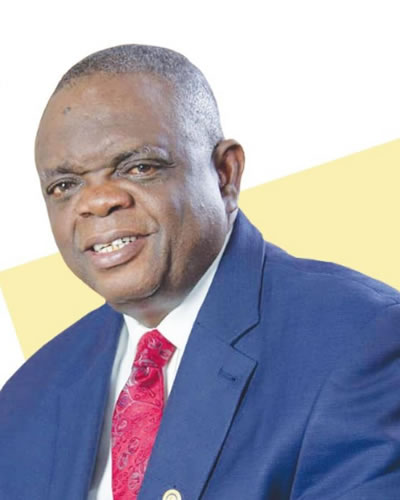
“We have crossed the 17,000-site count, and we will continue to invest in building more capacity,” said Dinesh Balsingh, noting that expansion efforts target high-demand urban corridors as well as underserved rural areas.
Beyond traditional infrastructure, Airtel is accelerating its 5G rollout. The company has more than doubled its 5G sites in recent months and plans to extend coverage to 25 per cent of its sites across Nigeria’s top 20 cities by year-end. While 4G still supports the vast majority of connections, 5G is being deployed to meet growing demand for high-speed broadband and fixed wireless services.
The operator has also upgraded about 25 per cent of its sites with additional radio equipment and expanded its 4G spectrum by 10 MHz, delivering a 20 per cent increase in network capacity. In parallel, Airtel is investing in a 39-megawatt, hyperscale-ready data centre in Eko Atlantic to support enterprise services and emerging AI-driven workloads.
However, the competitive landscape has shifted more dramatically with MTN Nigeria’s planned $2.2 billion acquisition of IHS Towers. The deal would give MTN control of tens of thousands of towers, including critical infrastructure in Nigeria, its largest market.
Such control could reshape industry dynamics. IHS Towers currently provides infrastructure to multiple operators, including Airtel. Ownership by MTN could tighten its grip on network deployment and introduce new competitive pressures around access, cost, and speed of expansion.
Regulators are already taking notice. The Federal Ministry of Communications, Innovation and Digital Economy has said it will conduct a thorough review of the transaction, citing the strategic importance of telecom infrastructure to national security and economic stability.
For Airtel, the implications are clear. The company must accelerate investment in its own infrastructure to reduce reliance on shared assets and maintain service quality in an increasingly capacity-driven market.
At roughly 60 base stations per 100,000 people, Nigeria remains underserved relative to rising data demand. As a result, network performance is becoming the key differentiator, with users more likely to switch providers based on quality of service rather than pricing.
Balsingh acknowledged ongoing challenges such as fibre cuts and infrastructure damage but praised government efforts to classify telecom assets as Critical National Information Infrastructure, aimed at improving protection and reliability.
The shift marks a turning point for the industry. The race is no longer about acquiring subscribers, but about sustaining them through superior network performance.
In this new reality, the winner will not be defined by market share alone, but by the ability to build, scale, and maintain infrastructure faster than the competition.
ALSO WATCH:MARKETING EDGE ONTV



Comment
No comments found.