
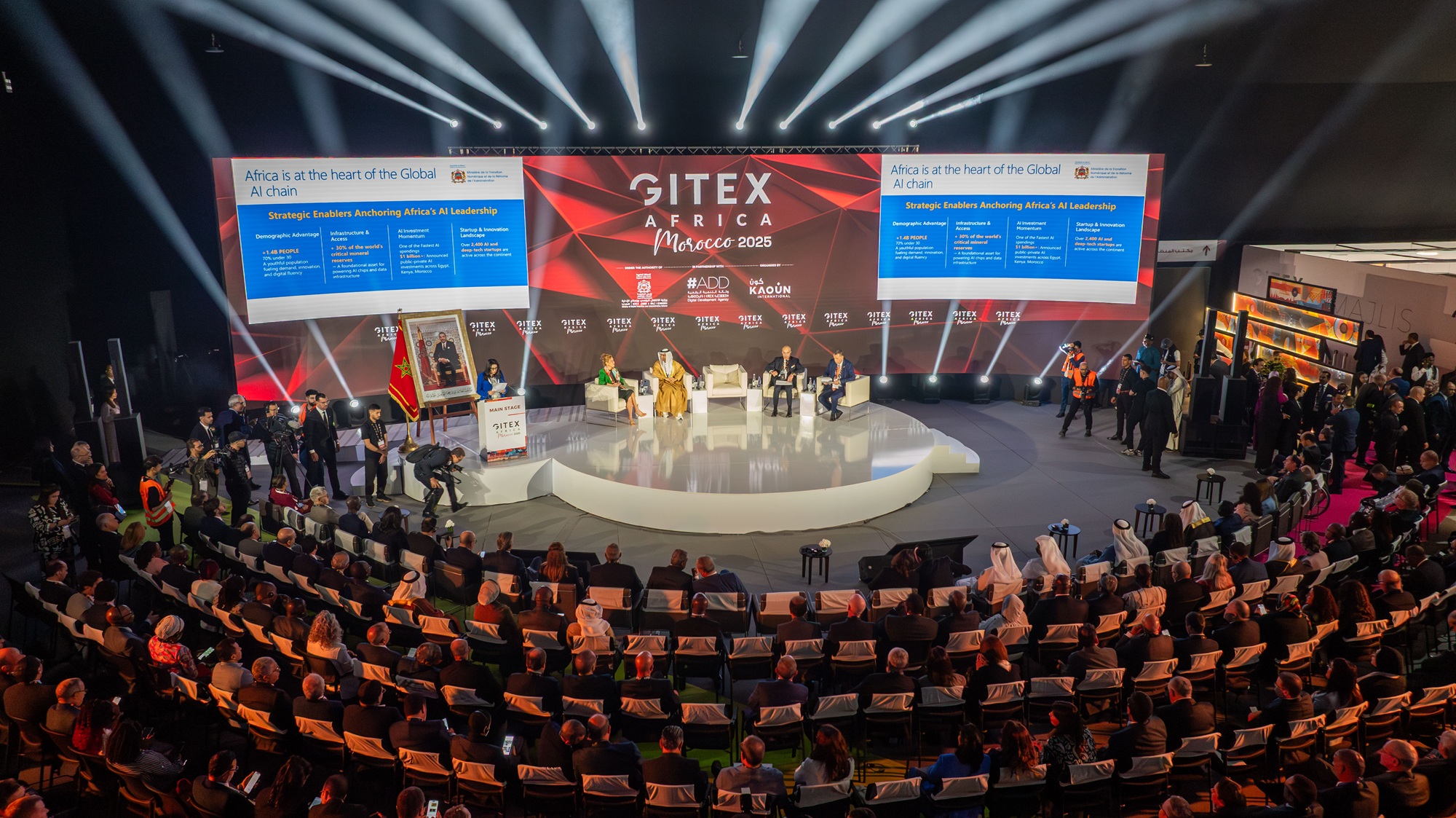


The fourth edition of GITEX Africa has officially opened in Marrakech, Morocco, drawing over 1,450 exhibitors and startups from 145 countries. Organisers expect more than 55,000 attendees across the three-day event. This is Africa’s largest technology and digital economy gathering, and it is only growing.
The event runs through April 9 under the theme: “Catalysing Africa’s Digital Economy in the Age of Artificial Intelligence.”
Earlier today, Morocco’s Head of Government, Aziz Akhannouch, opened the event with a direct message to global investors.
“Africa has the youth, the energy, and the ambition,” Akhannouch declared. “What it needs today are ecosystems that target business, create real jobs, and open markets.”
Morocco is not just talking, it is delivering. The country climbed 14 places in the global government AI readiness index in 2025. It has surpassed 1.4 million fibre-optic home subscriptions. Its 5G rollout now targets 45% population coverage by year-end.
Meanwhile, Nigeria’s telecom industry is firmly represented at GITEX Africa 2026. Tony Izuagbe Emoekpere, President of the Association of Telecommunications Companies of Nigeria (ATCON), is on the ground in Marrakech. ATCON’s official LinkedIn post confirms his presence, a clear signal that Nigeria’s private telecom sector sees this event as essential to Africa’s digital future.
Nigeria’s participation underscores the event’s pan-African character. GITEX Africa is not a Moroccan event that Africa attends; it is an African event that the world shows up for.
Beyond Nigeria, the event has drawn a genuinely global cast. Over 700 international speakers will take the stage. Around 400 investors, collectively managing over $350 billion in assets, are attending from more than 40 countries.
France’s Minister Delegate for Artificial Intelligence, Anne Le Hénanff, is present, spotlighting Franco-Moroccan digital partnerships. The Korea-Africa Foundation, now in its third consecutive year at GITEX Africa, has brought seven Korean startups to explore African market expansion.
New countries joining this year include Croatia, Czechia, Denmark, Hungary, Luxembourg, Thailand, Guinea, and Zambia.
The event’s North Star Africa showcase is a centrepiece. More than 800 local and international startups are pitching, networking, and competing for investment. Morocco’s “Morocco 300” initiative has increased domestic startup participation by 50% over last year, with government covering 95% of costs for selected founders.
The matchmaking platform remains one of GITEX Africa’s most powerful features. At last year’s edition, agritech startup Deepleaf secured $50,000 in funding through an event competition alone.
With 375 million young professionals set to enter Africa’s workforce by 2030, GITEX Africa is positioning itself as the bridge: connecting talent with capital, mentorship, and markets.
Minister Amal El Fallah Seghrouchni framed Morocco’s role boldly. She described the Kingdom as a “balancing technological power”, one capable of connecting Europe, Africa, and the Atlantic. Morocco, she argued, is betting on technology as a new model of sovereignty.
GITEX Africa 2026 is more than a trade show. It is a statement that Africa’s digital revolution will be written by Africans, with the world watching and investing.
GITEX Africa 2026 runs April 7–9 at Place Bab Jdid, Marrakech, Morocco.



Comment
No comments found.