
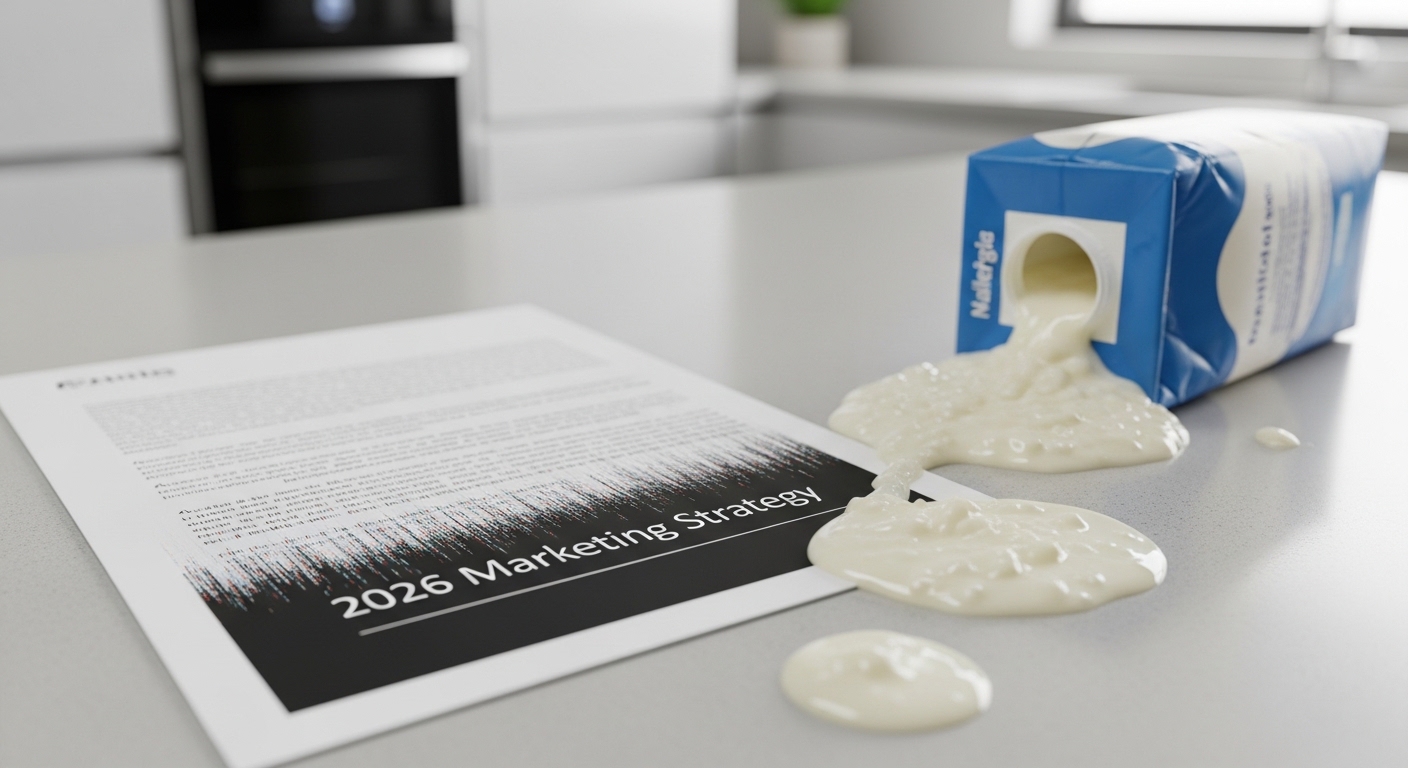



Most marketing plans have a shelf life nobody admits to. You spend weeks building the strategy, align the stakeholders, get the sign off, and within a quarter, reality has already moved on without you.
That is not a planning failure. That is the market. The question is whether your team is built to bend or built to break.
The plan is not the strategy
Too many marketers confuse the document with the thinking. The plan is a snapshot. The strategy is a living position. When a platform changes its algorithm overnight, when a competitor moves unexpectedly, when a cultural moment arrives with no warning, the plan becomes kindling. What survives is the team’s ability to think and act under pressure.
Resilience is not a personality trait. It is a professional skill. And most marketing functions are not actively building it.
Why marketers are more exposed than ever
The environment has never moved faster. AI is reshaping content, search, and targeting in real time. Consumer behaviour shifted post-pandemic and has not settled. Platform volatility, from algorithm updates to outright bans, means channels brands built entire strategies around can become unreliable problems.
What active resilience actually looks like
Passive resilience is absorbing disruption and recovering. Active resilience is anticipating it, preparing for it, and building the systems that make recovery faster.
For marketers, that means three things.
- Scenario thinking as standard practice. Not a quarterly exercise, a habit. Before any major campaign goes live, the question should be: what breaks this, and what do we do when it dies? Teams that have rehearsed disruption respond to it faster than teams encountering it for the first time.
- Diversified channel architecture. Any strategy built entirely around one platform, one format, or one audience source is a single point of failure. Resilient marketing does not chase the highest-performing channel exclusively, it maintains optionality.
- Psychological safety within teams. This one is rarely discussed in marketing circles but it matters enormously. Teams that fear reporting bad news hide problems until they become crises. Resilience requires environments where early signals, declining engagement, shifting sentiment, underperforming spend, are surfaced quickly, not buried.
The skill nobody is teaching
Marketing training is saturated with tools, platforms, and tactics. Courses on resilience thinking, adaptive strategy, and decision-making under uncertainty are almost nowhere to be found. That gap is showing.
The best marketers in the room are rarely the ones with the most elaborate plans. They are the ones who remain clear-headed when the plan falls apart, rebuild without drama, and do not need certainty to act.
The bottom line
Your next disruption is not a question of if. Build accordingly.
A marketing plan is a starting point, not a safety net. The teams that understand that difference will not just survive the next unexpected shift, they will be ready for the one after it too.
ALSO WATCH:MARKETING EDGE ONTV



Comment
No comments found.