
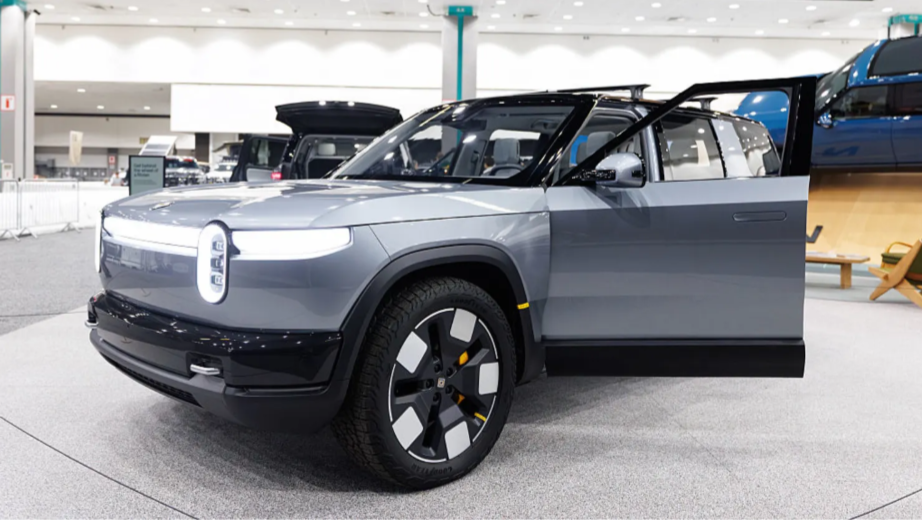





Uber has announced a major partnership with Rivian to deploy thousands of autonomous vehicles, marking one of its most significant moves into the robotaxi market.
Under the agreement, Uber will invest up to $1.25 billion in Rivian as part of a long-term plan to introduce fully self-driving vehicles on its platform.
The deal includes an initial investment of $300 million, with additional funding tied to Rivian achieving key milestones in autonomous driving technology.
50,000 robotaxis planned by 2031
As part of the partnership, Uber and its fleet partners will purchase 10,000 autonomous versions of Rivian’s upcoming R2 electric SUV. The companies also included an option to acquire up to 40,000 additional vehicles starting in 2030.
The rollout will begin in 2028, with initial deployments planned in San Francisco and Miami. The companies expect to expand operations to as many as 25 cities across the United States, Canada, and Europe by 2031.
The vehicles will operate exclusively on Uber’s ride-hailing platform, reinforcing the company’s ambition to position itself as a central marketplace for autonomous transport.
The partnership reflects Uber’s broader shift towards autonomous mobility after exiting its in-house self-driving unit in 2020.
Rather than building its own technology, the company has increasingly focused on collaborating with multiple partners, including firms such as Waymo and others developing driverless systems.
The Rivian deal represents one of Uber’s largest commitments yet, signalling a more aggressive push to secure a supply of autonomous vehicles at scale.
WATCH MARKETING EDGE ONTV
For Rivian, the agreement provides both funding and a high-volume commercial partner at a critical time.
The company is investing heavily in autonomous technology and preparing to launch its R2 model, but faces rising costs and delayed profitability expectations.
Investors reacted positively to the announcement, with Rivian’s shares rising sharply in premarket trading following the news.
The partnership comes as competition in the robotaxi sector accelerates, with major players investing heavily in autonomous fleets.
Companies including Tesla and Waymo are already advancing their own driverless services, while Uber continues to build a network of partners to remain competitive.
The global robotaxi market is expected to grow rapidly over the next decade, and Uber’s latest move positions it to play a central role without owning the underlying vehicle technology.
Uber is betting that the future of ride-hailing will be autonomous.
By partnering with Rivian and committing billions to the space, the company is moving beyond experimentation into large-scale deployment.
If successful, the deal could reshape how rides are delivered, shifting the industry from human drivers to software-driven fleets over the next decade.




Comment
No comments found.