
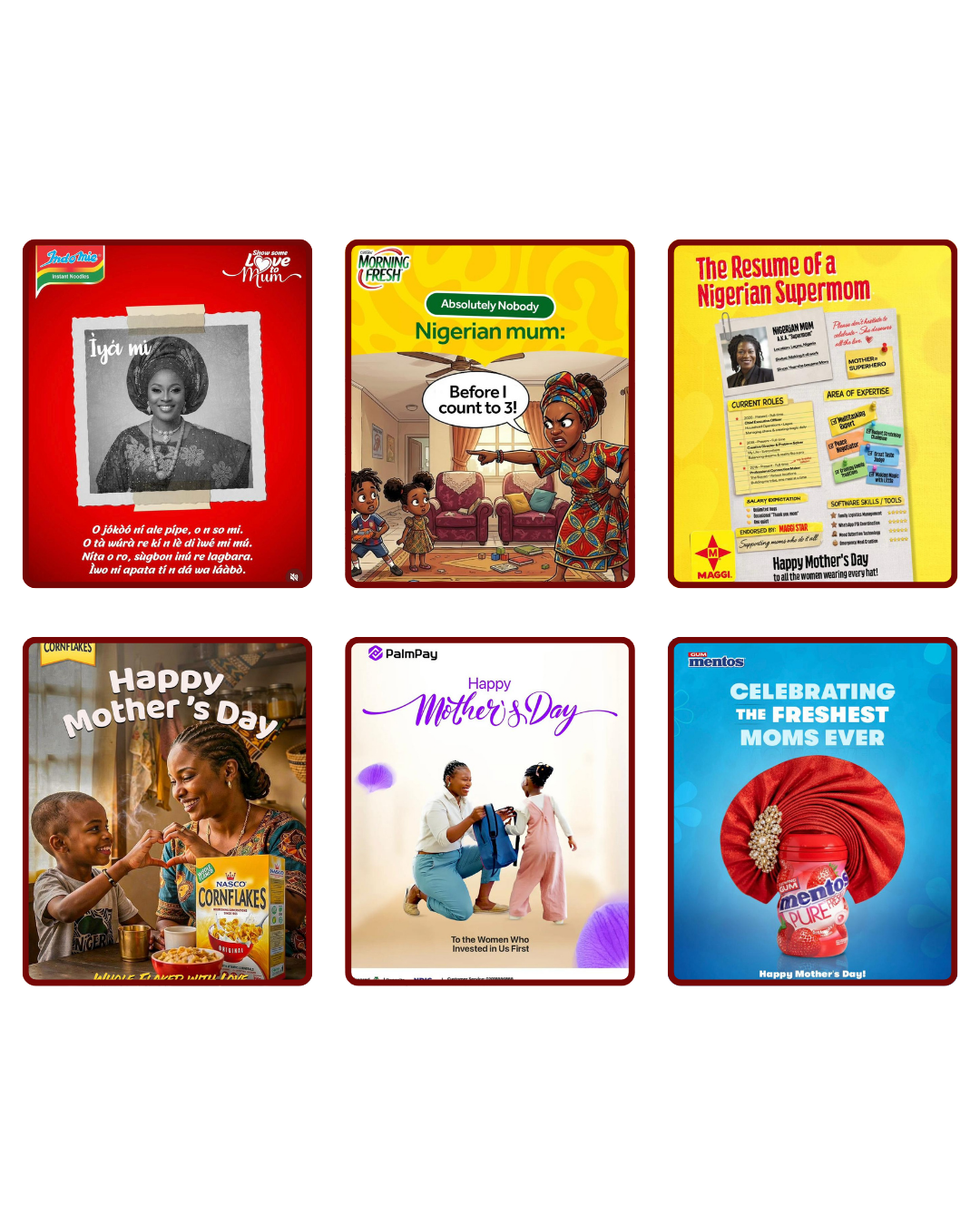





If Part 1 of Mother’s Day 2026 demonstrated how Nigerian brands moved from generic celebration to cultural specificity, Part 2 revealed something deeper: the recognition that Nigeria contains multitudes. Multiple languages. Multiple maternal archetypes. Multiple ways of expressing the same fundamental truth that mothers shape who we become.
The brands that excelled in this second wave didn’t just understand Nigerian mothers. They understood that a Yoruba mother in Lagos, an Igbo mother in Enugu, and a Hausa mother in Kano express love through different linguistic codes, yet share universal behavioural patterns. They recognized that sometimes the most effective celebration comes not through photography but through illustration that captures essence rather than attempting literal representation. They discovered that format innovation, presenting motherhood through unexpected structures like corporate resumes, can make familiar territory feel fresh.
Indomie deployed multilingual storytelling that honoured regional identity while maintaining brand cohesion. Morning Fresh illustrated the specific phrases and behaviours that make Nigerian mothers universally recognizable regardless of region. Maggi transformed maternal multitasking into professional credentials. Nasco Cornflakes captures warmth through authentic cultural moments. PalmPay positioned mothers as first investors. Mentos turned product into cultural symbol through visual metaphor.
These campaigns demonstrate marketing maturity. They show brands willing to fragment execution across languages and formats while trusting that thematic unity will hold everything together. And these brands committed fully to these approaches and created campaigns worth examining for and what they reveal about how the Nigerian marketing is evolving beyond monolithic national campaigns toward recognition of the country’s actual diversity.
Indomie’s linguistic love letters
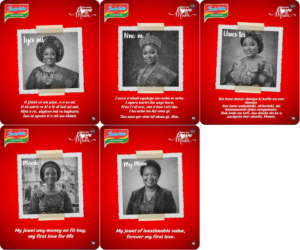
Indomie’s Mother’s Day campaign represented the most ambitious multilingual execution in Nigerian FMCG marketing this year. The brand deployed five separate creatives under the “Show Some Love to Mum” umbrella, each addressing mothers in different Nigerian languages while maintaining consistent visual identity through torn photographs aesthetics and black-and-white portraiture.
The Yoruba execution opened with “Iya mi” and delivered the message: “O jókòó ni ale pipe, o n so mi. O ta wurà re ki n lè di iwé mi mú. Nita o ro, sùgbọn inú re lagbara. Ìwo ni apata ti n dá wa láàbò.” The language carries specific Yoruba cadence and references that standard English translation flattens. The mother who stays up late, who sells her gold for school fees, whose strength lies in compassion, these images resonate particularly with Yoruba cultural context where maternal sacrifice carries specific historical and social weight.
The Igbo version addressed “Nne m” with equally specific cultural resonance: “”I noro n’abali ogologo na-eche m nche. I nyere kariri ihe anyi huru. N’ez i i di nro, ma n’ime i siri ike. I bu nche na ike umu gi. Taa uwa ga-amu idi ukwu gi, Nne.” The nighttime vigilance, the interior strength masked by gentleness, the protection of children as fundamental maternal role, these concepts translate across cultures but carry particular meaning within Igbo family structures.
The Hausa execution spoke to “Uwa ten” with languages reflecting Northern Nigerian maternal dynamics: “kin bani dukan duniya ki kafin na san duniya. Ina tuna wakokinki, abincinki, da nannuwanki daake rungumata. Duk inda na tafi, ina dauke da ke a zuciyata har abada, Mama.” The emphasis on songs, food, and hugs as vehicles of love, the eternal carrying of mother in the heart, culturally specific while universally recognizable.
The fourth post shifted to “Maale” with the powerful declaration: “My jewel wey money no fit buy, my first love for life.” The switch to Nigerian Pidgin English created accessibility across regions while maintaining emotional authenticity. The phrasing “wey money no fit buy” carries Nigerian speech patterns that formal English misses.
The final post used standard English: “My jewel of inestimable value, forever my first love.” This provided the anchor point for audiences across all regions while allowing the preceding four posts to celebrate linguistic diversity.
The visual consistency across all five executions, torn photograph aesthetic, monochrome portraits, red background, consistent typography, created brand recognition even as language varied. The strategic sequencing built narrative progression from regional specificity to universal sentiment.
What elevates this beyond simple translation is the apparent use of AI tools to generate culturally appropriate oriki, Yoruba praise poetry, and equivalent forms in other languages. Indomie didn’t just translate “Happy Mother’s Day” into multiple languages. The brand created culturally specific expressions of maternal appreciation that honour how different Nigerian cultures actually praise mothers. Oriki in Yoruba culture serves specific poetic and social functions that direct translation can’t capture. By generating language that flows naturally within each cultural context, Indomie demonstrated sophisticated understanding that language carries culture, not just communication.
The campaign also ran significantly longer than standard Mother’s Day activations, with posts beginning before March 15 and extending beyond the day itself. This sustained engagement rather than single-day participation signals strategic commitment rather than calendar obligation.
Morning Fresh’s illustrated behavioural archive
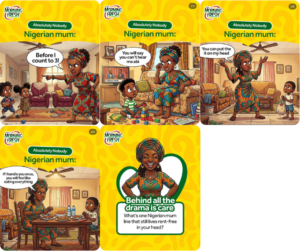
Morning Fresh took a dramatically different approach: illustrated scenarios capturing specific Nigerian maternal behaviours with humour and recognition rather than sentiment.
The opening creative established the theme: “Behind all the drama is care” paired with the question “What’s one Nigerian mum line that still lives rent-free in your head?” The brand positioned itself as curator of collective memory rather than creator of new messages.
The subsequent illustration delivered specific phrases every Nigerian recognizes: “You will say you can’t hear me abi” captures the maternal escalation when children ignore instructions. The “abi” at the end, that Nigerian linguistic marker seeking confirmation while simultaneously threatening, transforms the phrase from question to warning.
“You can put the it on my head” illustrates the moment when maternal patience shifts to exasperation and the child is told to literally place the item on the mother’s head, a gesture of ultimate frustration and imminent consequence.
“If i handle you once, you will feel like eating everything” threatens discipline so comprehensive that the child will gain sudden appetite as minor consolation for the punishment received. The specific phrasing “eating everything” rather than “eating anything” carries Nigerian English particularity.
“Before I count to 3!” needs no explanation for any Nigerian who heard those words and knew that reaching three meant consequences were imminent. The exclamation point captures the rising tone that accompanies the countdown.
The illustrated format worked where photography might have failed. Real mothers photographed saying these phrases could feel staged or mocking. Illustration creates affectionate distance, these are archetypes, not specific women being laughed at. The exaggerated expressions and body language in the artwork capture emotional essence without requiring actual mothers to perform for cameras.
The consistent illustration style across all four behavioural scenarios created visual cohesion while the phrases themselves generated recognition and sharing. Nigerians tagged friends and family with “this was my mother” or “I say this to my own children now.”
The yellow Morning Fresh branding remained prominent but not dominating. The dish soap connection to mothers, women who clean, who maintain households, who use these products daily, emerged naturally without forced product placement.
The campaign’s genius lies in behavioural recognition over sentimental celebration. Morning Fresh didn’t just tell people to appreciate mothers. It reminded them of specific moments that made their mothers unforgettable, trusting that recognition would generate affection without explicit instruction.
Maggi’s resume that reframes domestic labor
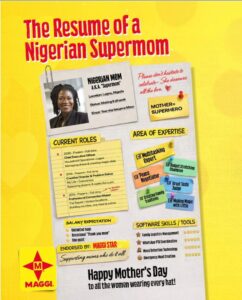
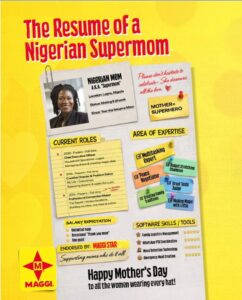
Maggi’s mock resume for “Nigerian Supermom” represented pure format innovation. The creative transformed invisible domestic and emotional labor into professional credentials, complete with job titles, role descriptions, areas of expertise, software skills, and salary expectations.
Current Roles listed as “2020-Present: Full-time Chief Executive Officer” managing “Household Operations, Lagos” with responsibilities including “Managing chaos & creating magic daily.” The CEO title reframes household management as executive leadership rather than unpaid labour. The date marker “2020-Present” acknowledges ongoing commitment rather than completed work.
The Creative Director & Problem Solver role lists “My Life + Everywhere” as the work location with duties “Balancing dreams & reality like a pro.” This captures maternal multitasking across domestic, professional, and personal spheres.
Professional Connection Maker operating from “The Squad + Various locations” builds “my tribe, one meal at a time.” The reference to meals as relationship-building tools acknowledges how Nigerian mothers use food as social currency and family bonding.
Areas of Expertise translates maternal skills into professional competencies: Multitasking Expert, Budget Stretching Champion, Peace Negotiator, Great Taste Judge, Creating Family Traditions, Making Magic with Little. Each represents actual skills mothers deploy daily but rarely receive professional credit for executing.
Software Skills lists Family Logistics Management, WhatsApp PIN Coordination, Mood Detection Technology, Emergency Meal Creation with five-star ratings, making invisible coordination visible as technical competency.
Salary Expectations subverts corporate format entirely: “Unlimited hugs, Occasional ‘Thank you mom’, One quiet afternoon.” The shift from monetary compensation to emotional recognition highlights how maternal labor operates outside economic frameworks while being equally valuable.
Endorsed by: Maggi Star. The brand positioning at the creative’s conclusion rather than opening allows the message to land before commercial intent becomes apparent.
The format worked because it honoured truth while using humour. Nigerian mothers do perform executive, creative, and technical functions without corresponding titles or compensation. Presenting these roles as resume entries reframes domestic labor as professional achievement worthy of recognition and respect.
The risk was appearing patronizing, reducing motherhood to corporate credentials could trivialize rather than elevate. Maggi avoided this through specific, recognizable details that demonstrated genuine understanding rather than surface-level analogy.
Nasco Cornflakes’ authentic cultural warmth
Nasco Cornflakes took the simplest approach among Part 2 campaigns: authentic photography capturing a genuine Nigerian domestic moment with the tagline “Whole Flaked with Love.”
The creative shows mother and son at a kitchen table forming a heart shape with their hands over a bowl of cornflakes and the prominent product box. The setting feels genuinely Nigerian, the kitchen background, the warm lighting, the mother’s traditional hairstyle, the child’s Nigeria t-shirt, the brass goblets on the table.
What separates this from stock photography mediocrity is attention to cultural specificity. The brass cups signal Nigerian household aesthetics rather than Western kitchen styling. The mother’s ankara print dress and natural hairstyle represent authentic Nigerian maternal presentation rather than aspirational Western standards. The warm, golden lighting evokes Nigerian domestic warmth rather than the cool minimalism dominating global advertising.
The “Whole Flaked with Love” tagline creates natural connection between product benefit and maternal care. Cornflakes as whole grain nutrition parallels mothers providing complete care. The love element transforms breakfast from transaction to expression.
Nasco’s challenge as a breakfast cereal brand in Nigerian market is that breakfast patterns vary significantly by region and family. Many Nigerian households don’t center breakfast around cereal. By positioning the product within a moment of connection rather than nutritional necessity, Nasco makes the emotional benefit primary and the product secondary.
The execution demonstrates that sometimes cultural specificity requires nothing more complex than authentic representation. No format innovation. No multilingual complexity. Just a real Nigerian moment captured with care and positioned with product naturally present rather than forced into frame.
PalmPay’s investment metaphor
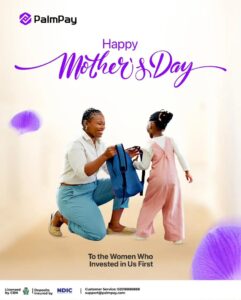
PalmPay positioned mothers as “The Women Who Invested in Us First” with imagery of a mother preparing her daughter for school, kneeling to help with a backpack, both dressed professionally, warm lighting creating golden hour aesthetics.
The financial metaphor works naturally for a fintech brand. Mothers invest time, resources, emotion, and opportunity cost into children long before any financial institution offers investment vehicles. The “first investor” framing acknowledges primacy while connecting to PalmPay’s core business.
The visual execution signals aspiration, both mother and daughter are professionally dressed, the lighting is premium, the moment feels styled rather than documentary. This positions PalmPay’s target audience as upwardly mobile Nigerians for whom financial services represent progress and opportunity.
The brand’s inclusion of regulatory markers, “Licensed by CBN, Deposits Insured by NDIC”, at the bottom demonstrates how fintech brands must balance emotional messaging with trust signals. The licenses and insurance don’t contribute to Mother’s Day sentiment but they reinforce that this company is legitimate and safe for financial transactions.
Where other brands could celebrate mothers without directly connecting to product, fintech faces different constraints. PalmPay needs to maintain association between the brand and money management even in emotional contexts. The investment metaphor achieves this without feeling mercenary because the connection between maternal care and investment is genuinely natural.
The execution skews more generic than Part 1’s culturally specific approaches or Indomie and Morning Fresh’s behavioural recognition. The mother-daughter moment could happen anywhere, with minimal Nigerian cultural markers beyond skin tone and setting. This represents strategic choice, PalmPay serves pan-Nigerian and diaspora audiences where excessive cultural specificity might limit appeal.
Mentos’ visual metaphor: product as culture
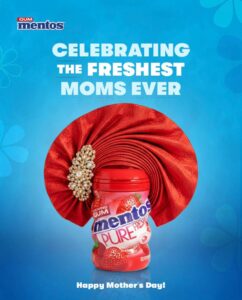
Mentos created perhaps the most visually striking execution in Part 2 by transforming their product container into a gele, the traditional Nigerian headwrap worn for special occasions and celebrations.
The creative shows the Mentos Pure Fresh strawberry container crowned with an elaborate red gele complete with jewelled brooch. The headline “Celebrating the Freshest Moms Ever” creates wordplay between product benefit (fresh breath) and the Nigerian colloquialism “fresh” meaning stylish, put-together, impressive.
The visual metaphor works on multiple levels. Gele represents Nigerian mothers at their most celebratory, weddings, ceremonies, important events where women demonstrate style and cultural pride. By positioning the product as wearing gele, Mentos connects fresh breath to fresh appearance and cultural celebration.
The red colour palette creates visual coherence between product packaging and traditional gele fabric. The jewelled brooch adds luxury associations without overwhelming the simple concept.
The execution demonstrates confidence in visual communication. No lengthy copy. No detailed explanation. Just product-as-culture symbol with brief headline. The trust that Nigerian audiences will immediately recognize gele significance and appreciate the metaphor shows sophisticated understanding of target market.
For an international brand like Mentos, this level of cultural specificity signals commitment to Nigerian market beyond generic global campaigns adapted locally. Creating bespoke creative that only works in Nigeria demonstrates market respect and investment.
The risk was product invisibility, when the hero image is gele first and product second, does brand recognition suffer? Mentos navigated this through prominent logo placement and packaging visibility beneath the fabric, ensuring product remained recognizable while cultural symbol dominated.
What Part 2 reveals about Nigerian marketing evolution
The collective execution across these Part 2 campaigns demonstrates several shifts in how sophisticated Nigerian brands approach calendar marketing.
First, linguistic fragmentation as strategy rather than limitation. Indomie’s willingness to create five separate language-specific executions rather than one pan-Nigerian message acknowledges that unity doesn’t require uniformity. The brand trusted that Yoruba speakers would appreciate Yoruba-specific oriki even if they never saw the Igbo version, and vice versa. This represents departure from the assumption that every campaign must reach every Nigerian in identical way.
Second, illustration as legitimate premium execution. Morning Fresh’s illustrated scenarios demonstrate that premium brands can use cartoon-style artwork without compromising positioning. The assumption that illustration signals low-budget or children’s content is weakening as brands recognize that illustration captures behavioural essence and creates affectionate distance impossible with photography.
Third, format innovation that respects intelligence. Maggi’s resume didn’t explain itself or apologize for unconventional structure. The brand trusted audiences to appreciate the concept without excessive hand-holding. This shift from obvious to clever signals confidence in audience sophistication.
Fourth, willingness to let visual metaphor carry messaging. Mentos’ gele image required minimal copy because the visual communicated completely. The trend away from copy-heavy explanation toward visual storytelling reflects both platform evolution (social media rewards striking visuals) and audience preference for interpretation over instruction.
Fifth, sustained activation over single-day participation. Indomie’s multi-day rollout and Morning Fresh’s series format demonstrate that calendar moments can support extended engagement rather than isolated posts. The risk is audience fatigue, but the benefit is deeper brand integration into the cultural conversation.
What brands should learn from Part 2
The Part 2 campaigns offer several lessons worth applying to future calendar marketing and broader brand strategy.
Linguistic diversity creates opportunity, not just complexity. Indomie’s multilingual approach cost more and required cultural consultants to ensure authenticity, but the payoff was genuine connection with specific audiences rather than generic reach to everyone. Brands serving Nigeria’s multiple linguistic communities should consider whether unified messaging actually serves audiences or just serves operational convenience.
Behavioural recognition resonates as powerfully as sentiment. Morning Fresh generated massive engagement not through emotional celebration but through humorous acknowledgment of specific maternal behaviours. The phrases people shared weren’t touching tributes but funny-because-true observations. Brands don’t always need to make people cry to make them care.
Format innovation can make familiar territory feel fresh. Every brand does Mother’s Day. Maggi’s resume format created distinctiveness in a crowded calendar moment by presenting familiar content through unexpected structure. The lesson applies beyond Mother’s Day, when everyone addresses the same topic, format becomes differentiator.
Visual metaphor when executed confidently requires minimal copy. Mentos’ gele image communicated completely without paragraphs explaining the concept. Brands should test whether striking visual execution can replace copy-heavy explanation, trusting audiences to interpret rather than requiring explicit instruction.
Sustained activation builds deeper connection than single posts. The brands running multi-day sequences rather than isolated posts generated cumulative engagement and conversation. Calendar moments can support narrative arcs, not just individual executions.
Cultural specificity doesn’t limit appeal when executed with care. The risk with Indomie’s linguistic strategy or Morning Fresh’s behavioural scenarios is alienating audiences who don’t share those specific cultural references. But authentic cultural expression actually expands appeal by demonstrating brand commitment to understanding audiences deeply rather than treating them generically.
The Mother’s Day 2026 verdict across both parts
Combining Part 1 and Part 2 campaigns, Mother’s Day 2026 demonstrated that Nigerian brands are moving beyond checkbox participation toward strategic cultural engagement.
Part 1 showed brands choosing Nigerian maternal specificity over universal sentiment. Chicken Republic’s “Is that what you’re wearing?” and Power Oil’s “Nobody apologizes like a Nigerian mother” worked because they captured actual behaviour rather than aspirational ideals.
Part 2 showed brands fragmenting execution across languages, formats, and approaches while trusting thematic unity would maintain coherence. Indomie’s five-language campaign and Morning Fresh’s illustrated series required confidence that audiences would appreciate effort even if they didn’t see every execution.
The brands remembered from Mother’s Day 2026 will be those that demonstrated genuine understanding of how Nigerian mothers actually operate, the languages they speak, the phrases they use, the ways they express love without always saying it directly. The brands forgotten will be those that showed up with generic sentiment that could apply to mothers anywhere, meaning it resonated with mothers nowhere specifically.
As Nigerian marketing continues maturing, the expectation for cultural sophistication will only increase. Audiences raised on this level of thoughtful, specific, authentic representation will reject generic future efforts. The brands investing now in understanding Nigeria’s actual diversity, linguistic, regional, behavioural, position themselves for sustained relevance. The brands treating Nigeria as monolithic market will find themselves increasingly disconnected from audiences demanding recognition of their specific realities.
Mother’s Day 2026 Part 2 proved that Nigerian brands can execute sophisticated, fragmented, culturally specific campaigns and succeed. The question for future calendar moments is whether brands will rise to the standard these campaigns established or retreat to the safety of generic celebration that generates polite engagement and zero memorability.
ALSO WATCH MARKETING EDGE ONTV



Comment
No comments found.