
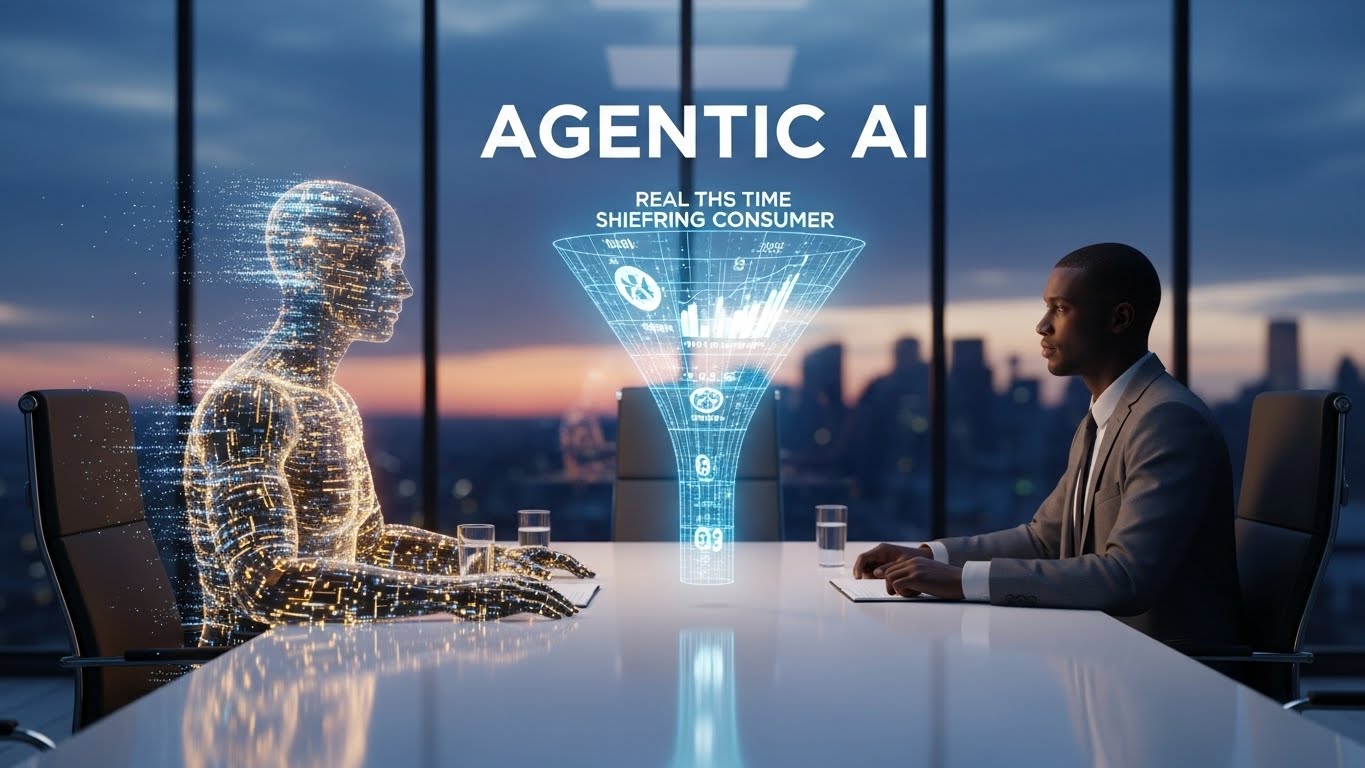




As 2026 approaches, technology will sit firmly at the centre of advertising. It will decide what appears on screens, which brands gain visibility, and how consumers move from curiosity to purchase, often without a single human click.
A quieter but equally profound shift is also unfolding. Technology is moving from a tool that executes instructions to a system that behaves like an agency in its own right. This transition demands serious attention from marketing leaders.
From Automation to Autonomy
For most of the past decade, marketers adopted automation to improve efficiency. Emails were scheduled, bids optimised, and content distributed by algorithms. Humans still defined the rules.
That boundary is now dissolving.
Agentic AI systems, capable of making decisions, adjusting tactics, and acting independently within defined goals, are moving from experimental settings into real business operations. In marketing, this means tools that do more than analyse results. They now decide which creative assets to deploy, which audiences to prioritise, and when to change strategy.
This shift is already happening. Brands are testing AI agents that manage media buying, personalise customer journeys in real time, and adjust messaging based on live behavioural signals. Strategy is no longer just executed by technology. It is increasingly shaped alongside it.
By 2026, the central challenge will not be adoption but governance. Who sets the limits? Who is accountable when an autonomous system makes the wrong call?
Search Is Being Quietly Rewritten
For decades, search engines trained users to type queries and scan results. That behaviour is changing.
AI-powered search now blends discovery, comparison, and recommendation into a single interaction. These systems deliver answers and decisions, not lists of links. Many consumers may never visit a brand’s website.
This represents a deeper disruption than social media ever introduced. Visibility is no longer about ranking alone. It depends on whether algorithms understand and trust your content enough to surface it.
In 2026, brands must optimise for human intent and machine interpretation. Data structure, content clarity, and credibility signals will determine whether AI systems prioritise your brand.
The uncomfortable reality is that if AI assistants make purchasing decisions, marketing influence shifts far upstream, long before an advert appears.
Personalisation Meets Its Limits
For years, personalisation promised better relevance and stronger performance. More data led to sharper targeting and higher returns.
That promise is now under strain.
As AI enables hyper-personalisation at scale, consumers are becoming more aware of how much brands know about them. Regulation is tightening, but cultural resistance is rising even faster. Transparency, consent, and control have moved beyond compliance. They now define trust.
In 2026, winning brands will not personalise the most aggressively. They will personalise with restraint. Experiences that feel helpful and respectful will outperform those that simply demonstrate data capability.
The future of personalisation depends on consent as much as precision.
Content in an Era of Infinite Supply
Generative AI has solved the problem of volume. Brands can now produce content faster, cheaper, and at a scale unimaginable just a few years ago.
That is exactly why content will matter more, not less.
As platforms flood with competent, machine-generated material, originality becomes scarce. The real question in 2026 will not be whether brands can produce content, but whether that content has perspective.
Audiences will judge brands on intention, cultural awareness, and humanity rather than posting frequency. Original thinking will once again become a competitive advantage.
The Marketer’s Role Is Being Redefined
Together, these shifts point to a fundamental change in marketing leadership.
As technology takes on operational decisions, marketers must focus on judgement, ethics, storytelling, and long-term brand stewardship. The role moves away from controlling systems towards designing them responsibly.
In 2026, the strongest marketing leaders will not chase every new tool. They will understand where technology should lead and where it should stop.
Looking Ahead
The changes shaping 2026 are not arriving with fanfare. They are quietly embedding themselves into workflows, platforms, and consumer habits, rewriting the rules without announcement.
Marketing has always evolved alongside technology. Now, technology is evolving to learn, predict, and act in ways that blur the line between tool and partner.
Successful brands will not simply deploy these systems. They will question them, guide them, and build trust around them.
In the next era of marketing, the most important decision may no longer be what you say, but what you allow your systems to decide on your behalf.
ALSO WATCH MARKETING EDGE ONTV



Comment
No comments found.