


Nigerian consumer behaviour in 2026 looks nothing like 2024. The playbooks that dove sales two years ago are generating diminishing returns as economic pressures, credit contraction, and platform shifts fundamentally alter how Nigerians decide what to buy, where to buy it, and whether to buy at all.
The evidence appears everywhere. FMCG companies report volume declines even as revenue holds steady consumers buying less frequently while brands raise prices to maintain performance. Premium products sit on shelves as consumers trade down to value alternatives. Digital lenders who disbursed billions in nano loans now face the regulatory constraints that eliminate easy credit previously fuelling discretionary purchases. E-commerce platforms confront logistics costs that male profitability elusive even as order volumes increase.
The brands succeeding are those recognizing that Nigerian consumers aren’t temporarily constrained by challenges that will soon pass. The behavioural shifts in 2026 represent structural changes driven by inflation persistence, credit market contradiction, and evolving expectations about value and necessity. Understanding these shifts separates brands that will thrive from those that will struggle waiting for conditions to improve, a wait that may extend far longer than optimistic forecasts suggest.
The economic reality forcing difficult choices
Nigeria’s inflation environment in early 2026 continues squeezing household budgets despite Central Bank interventions. The CBN cut its benchmark interest rate to 26.5% in February 2026, but its impact on consumer purchasing power remains limited by persistent inflation across food, transportation, and essential goods.
Food inflation particularly impacts Nigerian households given that food represents the largest budget share. Even as headline inflation shows modest improvement, the items Nigerians buy most frequently, rice, cooking oil, proteins, vegetables, continue experiencing price increases that erode purchasing power faster than wage growth restores it.
Consumer responses follow predictable patterns. Trading down represents the most common adaptation, buying cheaper alternatives within the same category rather than eliminating purchases entirely. A household that previously purchased premium rice now buys mid-tier or value brands. Families that bought fresh proteins daily now buy less frequently or substitute with cheaper options.
Purchase postponement affects durable goods most severely. Consumers delay replacing electronics, furniture, clothing, anything not immediately essential. Smaller pack sizes and unit purchases become preferred over bulk buying despite the price-per-unit disadvantage. When budgets are tight, immediate cash outlay matters more than long-term value optimization.
When easy credit disappears, discretionary spending follows
The digital lending market that exploded from 2020-2024 entered sharp contraction in 2025-2026 as regulatory pressure, default rates, and profitability challenges forced lenders to tighten credit standards. The ₦3.11 trillion consumer credit market documented in Q3 2025 grew more cautiously into 2026 as lenders shifted focus from volume growth to quality borrowers with verifiable income.
The nano loan product, small advances of ₦5,000- ₦10,000 requiring minimal documentation, effectively disappeared. These products served millions who used them to smooth consumption between paydays or finance small discretionary purchases. When nano loans vanished, so did the purchasing power they provided.
The impact cascaded through retail sectors dependent on marginal purchases. Fashion retailers who saw customers buying with borrowed funds experienced sales declines. Electronics sellers who facilitated purchases through digital credit faced reduced volumes. Even food retailers noticed changes as consumers who previously supplemented tight budgets with small loans now made do with available cash.
For brands, the credit contraction means the consumer base with immediate purchasing power shrank. Marketing campaigns generating awareness don’t automatically convert to sales when target customers lack funds to act. The solution isn’t better marketing; it’s product and pricing strategies acknowledged reduced ability to pay.
Premium brands face an existential test
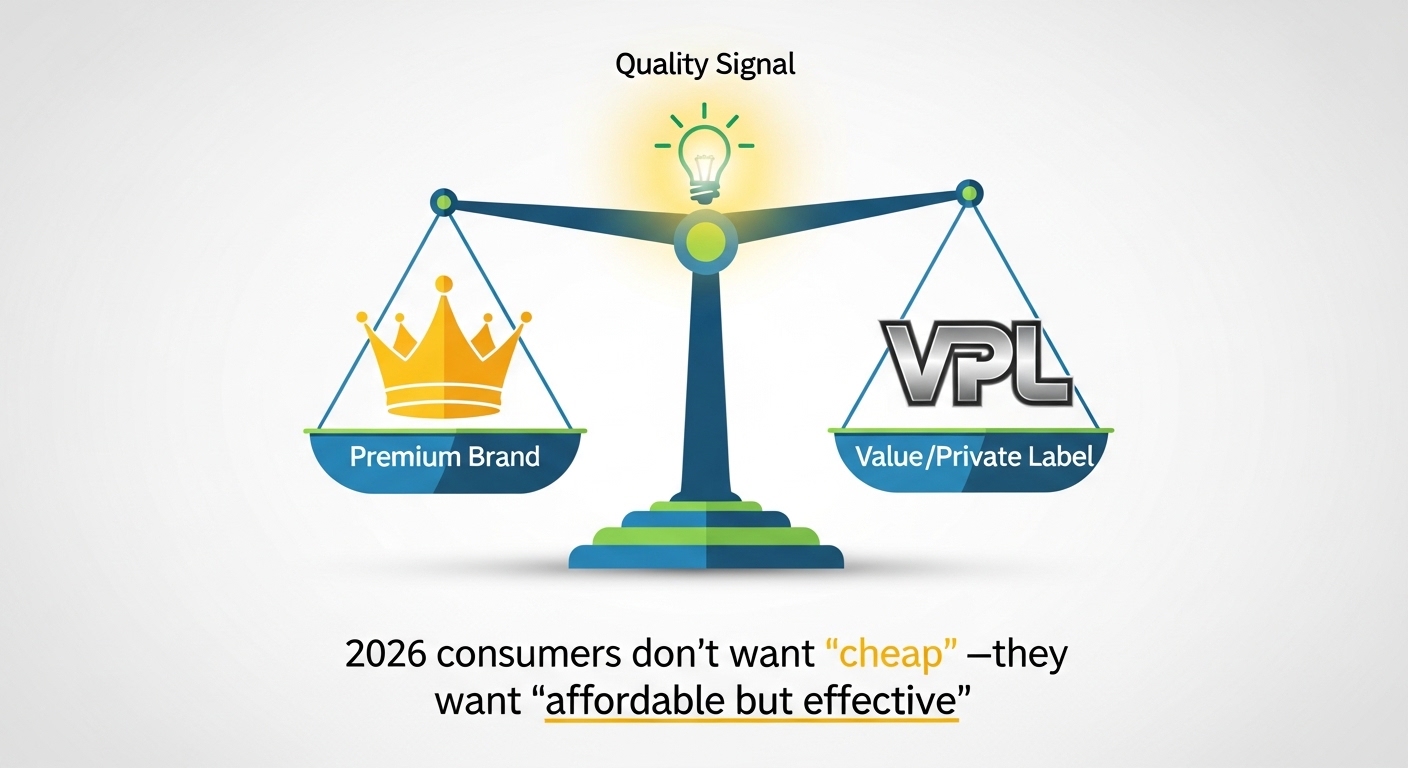
Economic pressure creates diverging fortunes for premium and value brands. Premium brands in certain categories demonstrate resilience. Baby products, personal care, and food categories where quality concerns override price sensitivity maintain premium sales even as overall consumption moderates. Parents prioritize baby formula quality over price. Food safety concerns keep some shoppers loyal despite higher costs.
But premium brands in categories lacking these protective factors face severe pressure. Premium clothing, electronics, home goods, and discretionary items where quality differences are less obvious experience significant volume declines. Consumers conclude that mid-tier alternatives provide sufficient quality for lower prices.
The premium brands succeeding introduce “entry-level premium” products maintaining quality standards while offering lower price points through smaller sizes or simplified formulations. Others double down on “affordable luxury” positioning, shifting marketing from routine usage to special occasions when consumers justify premium spending despite budget consciousness.
Value brands and private label products capitalize on trading-down behaviour by improving quality perceptions while maintaining price advantages. The gap between premium and value narrows not just on price but on perceived quality.
Where Nigerians actually shop in 2026
E-commerce grew significantly from 2020-2026, but it remains supplementary rather than primary for most Nigerians across most categories. E-commerce excels in electronics, fashion, books; items where selection variety matters more than immediate possession. But this segment doesn’t represent the mass market where volume brands generate most revenue.
Traditional retail, markets, neighbourhood shops, supermarkets, kiosks, dominates Nigerian consumer spending. Most Nigerians buy food and household essentials frequently in small quantities, making daily visits to nearby retailers more convenient than weekly online orders. Cash remains the dominant payment method, creating friction with platforms requiring digital payment.
The informal retail sector demonstrates particular resilience. Neighbourhood shops offer credit terms, flexible pack sizes, and relationship dynamics that e-commerce cannot replicate. Shop owners who know customers can extend informal credit or accept partial payment, flexibility that matters when household cash flow is tight.
Social commerce emerged significantly in 2026, bridging online convenience with relationship dynamics. Vendors using WhatsApp, Instagram, and Facebook to showcase products combine digital reach with personal connection. This hybrid model captures consumers who find traditional e-commerce impersonal while offering more selection than purely offline shopping.
What actually drives purchase decisions in 2026
The factors determining whether awareness converts to purchase have shifted noticeably. Immediate value demonstration overtakes brand prestige. Consumers increasingly ask “what does this do for me right now” rather than “what does this brand signal about me.” Functional benefits matter more than aspirational associations.
Pack size flexibility became competitive advantage. Brands offering multiple options from sachets to bulk packages accommodate different economic situations. Accessibility determines trial and adoption. Products available in neighbourhoods where people live get purchased over superior alternatives requiring special trips.
Social proof through peer recommendation outweighs advertising exposure. When budgets are tight, consumers seek validation that purchases will deliver value. Recommendations from trusted sources carry more weight than celebrity endorsements or expensive campaigns.
What brands must do now
Pack size and pricing architecture requires immediate attention. Offering only large packs when consumers buy small amounts sacrifices sales to competitors providing sachet options. The solution is comprehensive strategy spanning from single-use sachets to family-size bulk options.
Distribution strategy must prioritize accessibility over prestige. Products available only in select modern trade outlets miss the mass market shopping primarily in markets and neighbourhood stores. Expanding into informal retail requires different approaches, smaller minimum orders, flexible payment terms, more frequent delivery.
Marketing messages emphasizing value, results, and problem-solving resonate more than lifestyle aspiration. Consumers facing economic pressure respond to communications demonstrating how products deliver tangible benefits worth the price.
Retail partnerships providing credit or payment flexibility extend purchasing power when consumer credit contracts. Brands can facilitate retailer credit programs through inventory financing or payment term flexibility.
Product formulation should prioritize essential benefits over premium attributes that consumers sacrifice when budgets tighten. “Affordable quality” positioning becomes more viable than “premium at any price” when consumers actively trade down.
The longer view beyond 2026
The consumer behaviour patterns emerging in 2026 won’t simply reverse when economic conditions improve. Habits formed during constraint often persist. Consumers who discover value brands deliver acceptable quality don’t automatically return to premium alternatives when budgets ease.
For brands, strategies developed for current conditions should anticipate permanent shifts rather than temporary adaptations. The Nigerian consumer of 2027 and beyond will carry lessons from 2026’s economic pressure into future purchase decisions. Value consciousness, channel fluidity, pack size flexibility, and skepticism toward premium pricing become lasting expectations.
The brands investing now in understanding these behavioural changes, distribution networks reaching informal retail, pack size flexibility, value-focused marketing, payment flexibility, position themselves for sustained success. The brands treating current conditions as temporary disruptions risk discovering that the market has permanently moved beyond strategies that worked in easier times.
Nigerian consumer behaviour in 2026 isn’t breaking, it’s evolving under pressure into forms that will shape the market for years. The brands recognizing this evolution and adapting accordingly will lead the market those changes create.
ALSO WATCH:MARKETING EDGE ONTV




Comment
No comments found.