
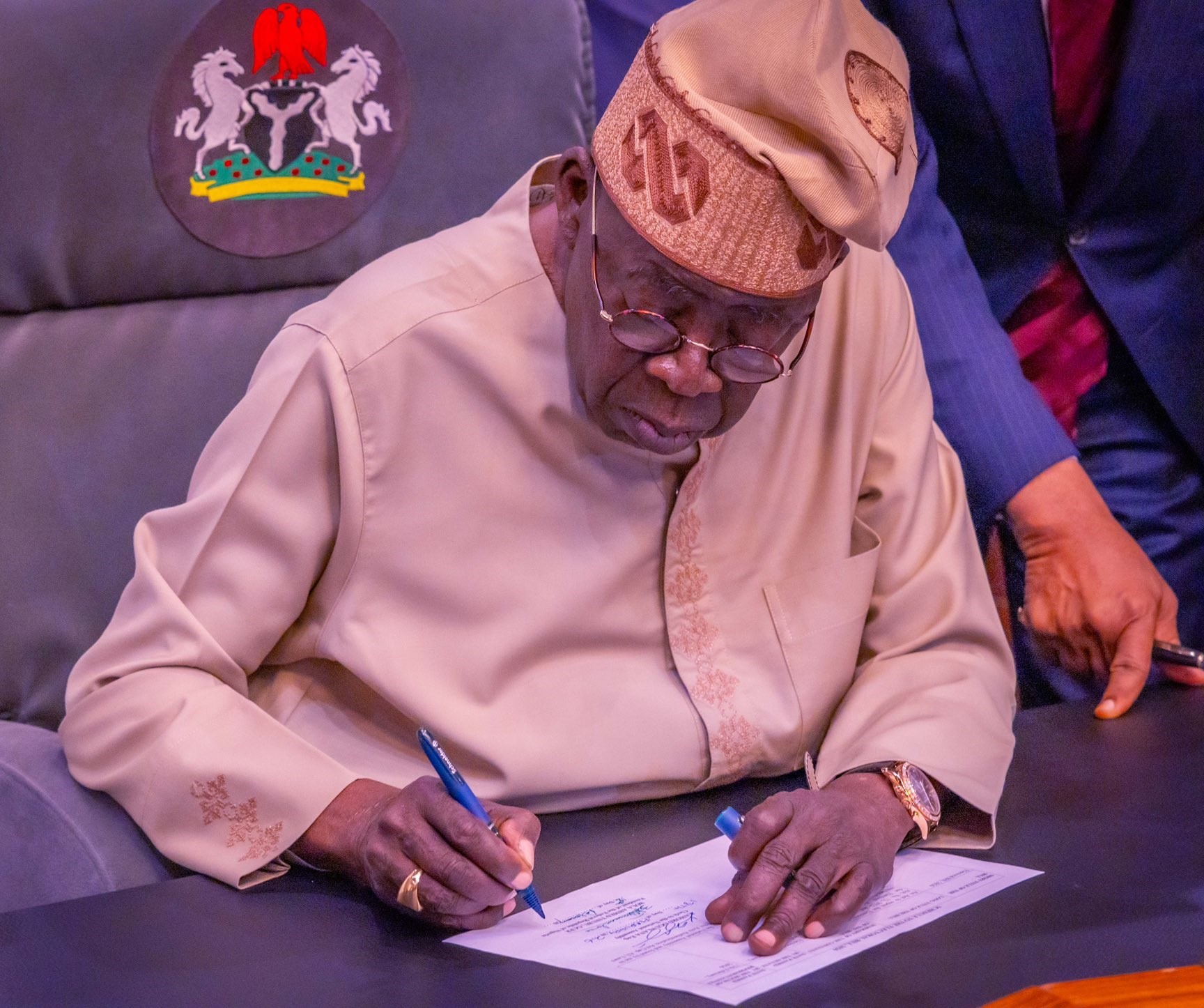


Bola Ahmed Tinubu has endorsed Nigeria’s ₦68.32 trillion 2026 Appropriation Act, thereby activating one of the country’s largest fiscal spending frameworks while simultaneously extending the execution timeline for the capital component of the 2025 budget to June 30, 2026.
More over, through this dual action, the President not only unlocked fresh expenditure authority for the current fiscal cycle but also created additional breathing space for Ministries, Departments, and Agencies to complete priority infrastructure already underway.
Consequently, government institutions can now sustain project momentum instead of leaving advanced works unfinished at the close of the earlier deadline.
Meanwhile, according to a statement issued on Friday by Bayo Onanuga, Special Adviser to the President on Information and Strategy, the newly signed appropriation law provides a structured distribution of resources across statutory obligations, debt servicing commitments, operational expenses, and development driven investments designed to strengthen national productivity.
Specifically, the fiscal plan assigns ₦4.799 trillion to statutory transfers, while it channels ₦15.8 trillion toward servicing existing debt obligations. In addition, the government earmarked ₦15.4 trillion for recurrent expenditure to sustain institutional operations across federal agencies.
More significantly, the administration committed ₦32.2 trillion to capital projects through the Development Fund, thereby placing infrastructure expansion at the centre of the year’s spending priorities.
ALSO WATCH:MARKETING EDGE ONTV
Notably, capital expenditure now represents roughly half of the entire budget size. As a result, the administration signalled a stronger push toward economic stabilisation efforts, security reinforcement, and nationwide infrastructure upgrades.
At the same time, the allocation pattern reflects an attempt to balance mandatory obligations with investments expected to stimulate inclusive growth and improve everyday living conditions across the country.
Furthermore, the presidency confirmed that implementation of the 2026 Appropriation Act officially commenced on April 1, aligning execution with the policy direction of the Renewed Hope Agenda.
With this alignment, federal institutions are expected to accelerate programme rollout while maintaining continuity across priority development initiatives.
ALSO WATCH:MARKETING EDGE ONTV
Alongside signing the new budget, the President also approved the Appropriation Amendment legislation that prolongs the capital expenditure window of the 2025 budget from March 31 to June 30, 2026. Through this extension, the government intends to prevent funding gaps that could otherwise disrupt large scale infrastructure already nearing completion.
Importantly, the presidency explained that the additional three month window will enable MDAs to consolidate ongoing projects, raise completion rates across sectors, and extract stronger value from previously committed public funds.
In practical terms, the extension is expected to protect earlier investments while ensuring that near finished development works translate into measurable national assets rather than stalled commitments.
In all the approval of the new fiscal framework and the adjustment to the earlier budget timeline illustrate a coordinated attempt to sustain infrastructure delivery, maintain expenditure continuity, and reinforce implementation discipline across the federal system.





Comment
No comments found.