
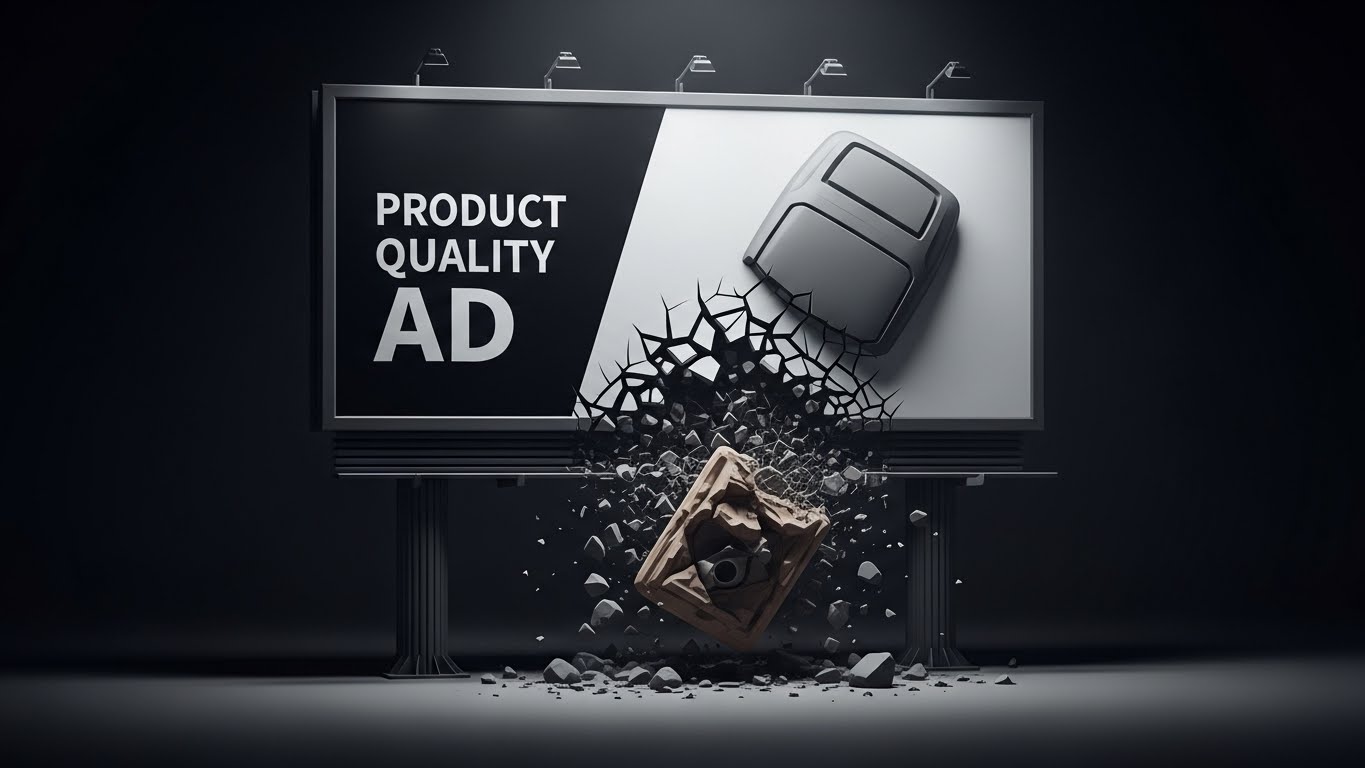


Boardrooms and campaign evaluations have been revisiting one lesson from 2025 with vehemence: advertising cannot make up for a subpar product. The advertising business has long repeated this idea as folklore. However, it has become increasingly difficult to disregard. This is due to the current economic climate, decreasing consumer patience, and the increase of unfiltered digital scrutiny.
The Rise of Unfiltered Scrutiny
Consumers in global markets have become increasingly resistant to persuasion. They now depend significantly more on peer testimonials. GWI data substantiates the transition: product evaluations, influencer-led assessments, and community feedback now surpass brand communications as the most reliable information sources.
The impact of TikTok’s “real-use” culture has expedited this transfer of power. It transforms average consumers into effective quality evaluators. Their assessments disseminate more rapidly than the marketing activities intended to affect perception.
High-Spend Campaigns Failed
By 2025, this novel setting showed itself to be merciless. Several high-spend campaigns failed to withstand the weight of their own exposure. This was not due to a lack of imagination in the plan. It happened because the product hidden beneath the narrative was unprepared for close examination.
After consumers found these issues, problems like poor durability, unreliable performance, and a cumbersome user experience became the central storyline. This happened regardless of how clever the ads were.
Visibility Becomes a Liability
As a result, marketing teams have been quietly taking stock. A ream of annual performance assessments concluded that the marketing succeeded, but the product was a bust. When anticipation surpasses actuality, consequences are immediate.
Visibility, once a strength, is now a liability. It speeds up the erosion of trust and increases the likelihood of disappointment for businesses.
The economic climate exacerbates the pressure. Budgets are constricting, competition is intensifying, and households, particularly in unstable markets, have become increasingly selective. In this context, the traditional corporate approach of “marketing through weakness” has diminished in strategic significance. Advertising continues to influence perception; however, reality increasingly constrains that perception.
The Marketer as Internal Truth-Teller
This transformation has subtly expanded the position of marketers. They are now more than just storytellers. They also speak the truth internally. They quickly warn when the market is about to punish inflated claims or an early launch.
Instead of making the greatest noise, the best marketers of 2025 made one thing clear: their product needed to resist the intense scrutiny of their job.
That light will still be shining much brighter in 2026. Weak products will have a tougher time hiding behind gloss. This is due to AI-driven review aggregation, real-time consumer feedback loops, and creator ecosystems that thrive on honesty.
Making sure the product lives up to the message’s lofty expectations is the safest—and, in the future, only—bet.
Why? Because ads in today’s markets aren’t meant to hide. They are meant to be an axis of imaging. The winning brands of next year will be those who are self-assured enough to let customers see right through their goods.
ALSO WATCH MARKETING EDGE ONTV



Comment
No comments found.