
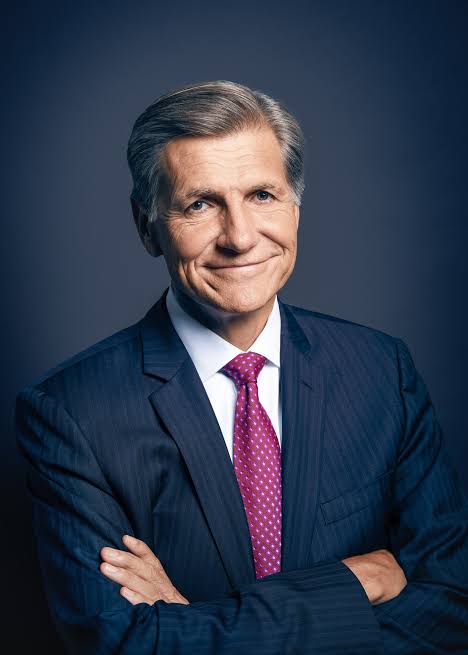


Marc Pritchard, Chief Brand Officer at Procter & Gamble, has said the rapid transformation of media and technology has changed how brands connect with consumers, but the core principles of effective brand building remain unchanged.
He described how decades of technological and media disruption have changed the way brands reach consumers, while leaving the fundamental principles of brand building largely intact.
Pritchard shared the perspective during a recent episode of The Effective CMO, the WARC Podcast hosted by Anna Hamill, Senior Editor at WARC, where he reflected on more than four decades of experience in marketing and the transformation of advertising.
At the centre of his assessment is a clear definition of marketing effectiveness. Pritchard said effective marketing should drive growth while creating value for consumers, brands and the wider business.
To demonstrate that value, he said P&G examines five key measures: market growth, market share growth, user growth, sales growth and profit growth.
Pritchard described this as the company’s “five factor” approach, explaining that P&G uses the measures to assess the performance of its brands across markets.
For him, therefore, the conversation around marketing effectiveness should move beyond simply convincing chief executives or finance chiefs that marketing matters. Instead, marketers should demonstrate how their investments translate into identifiable commercial outcomes.
He argued that when marketers can establish that connection between investment, consumer value and business performance, they strengthen the case for sustained brand building.
Beyond measurement, Pritchard said the core principles that have guided P&G’s approach to brands have remained consistent throughout the company’s history.
According to him, marketers must first understand who they are serving and identify the needs of those consumers. From there, they need to define what the brand represents, establish the benefit it provides and deliver that proposition through the product, packaging, communication and retail experience.
Pritchard referred to this as P&G’s “who, what, how” brand-building framework. However, while those fundamentals remain, he stressed that the methods used to deliver them have undergone substantial change.
The evolution, he explained, stretches from the storefronts and word of mouth of earlier generations to newspapers, radio, television, digital platforms and e commerce, with artificial intelligence now opening another chapter in the development of marketing.
Consequently, Pritchard said brand builders must continually adapt the way they work without abandoning the principles that make brands relevant to consumers. For him, that challenge has become more pronounced as media has fragmented across an expanding number of channels.
Reflecting on the environment when he began his career, Pritchard noted that marketers operated across a relatively limited media landscape dominated by television, print and radio.
Today, brands must navigate a much broader ecosystem in which consumers encounter messages across digital platforms, commerce environments and emerging technologies.
Well, as the number of channels increases, so does the complexity of managing media investment, measurement and brand safety. Again, Pritchard also revisited the industry’s progress on media transparency, an area in which he has previously called for greater accountability and changes to the digital advertising ecosystem.
Moreso, he noted that the media environment has continued to fragment significantly since those calls for greater transparency, creating new challenges for marketers.
Alongside the expansion of digital media, he pointed to issues such as misinformation and the implications of generative artificial intelligence as concerns that brands must now consider.
Meanwhile, the growing influence of AI is changing the speed and scale at which marketers can develop and distribute content. For Pritchard, however, technological advancement does not eliminate the basic responsibility of brand builders to understand consumers and deliver meaningful value.
Instead, it places greater emphasis on their ability to determine how new tools and channels can support established brand-building objectives. Significantly, the discussion also comes as retail media continues to expand, bringing advertising closer to the point of purchase while generating new questions around measurement and wider business impact.
Research cited during the podcast found that 75 percent of consumer packaged goods retail media campaigns generate impact beyond the initial retailer, while fewer than 20 percent of marketers measure those effects holistically.
That measurement gap illustrates a broader challenge created by media fragmentation. Consumers increasingly move between retailer websites, social platforms, search, traditional media and physical stores, while measurement systems frequently assess each environment separately.
For marketers, the task is therefore becoming less about simply identifying where an interaction occurred and more about establishing how different touchpoints contribute to overall business growth.
Pritchard’s five-factor approach places that question firmly within the wider commercial performance of the brand.
Rather than treating media metrics as an end in themselves, his framework connects marketing activity to market growth, share, users, sales and profit. As it is, the distinction is particularly relevant as marketers face pressure to justify spending across an increasingly complicated media environment.
Pritchard’s assessment ultimately presents the transformation of marketing as a change in execution rather than a complete rewrite of brand-building principles.
The technologies, platforms and consumer touchpoints continue to evolve, but the need to understand consumers, meet their needs, communicate a clear brand benefit and create measurable value remains central.



Comment
No comments found.