
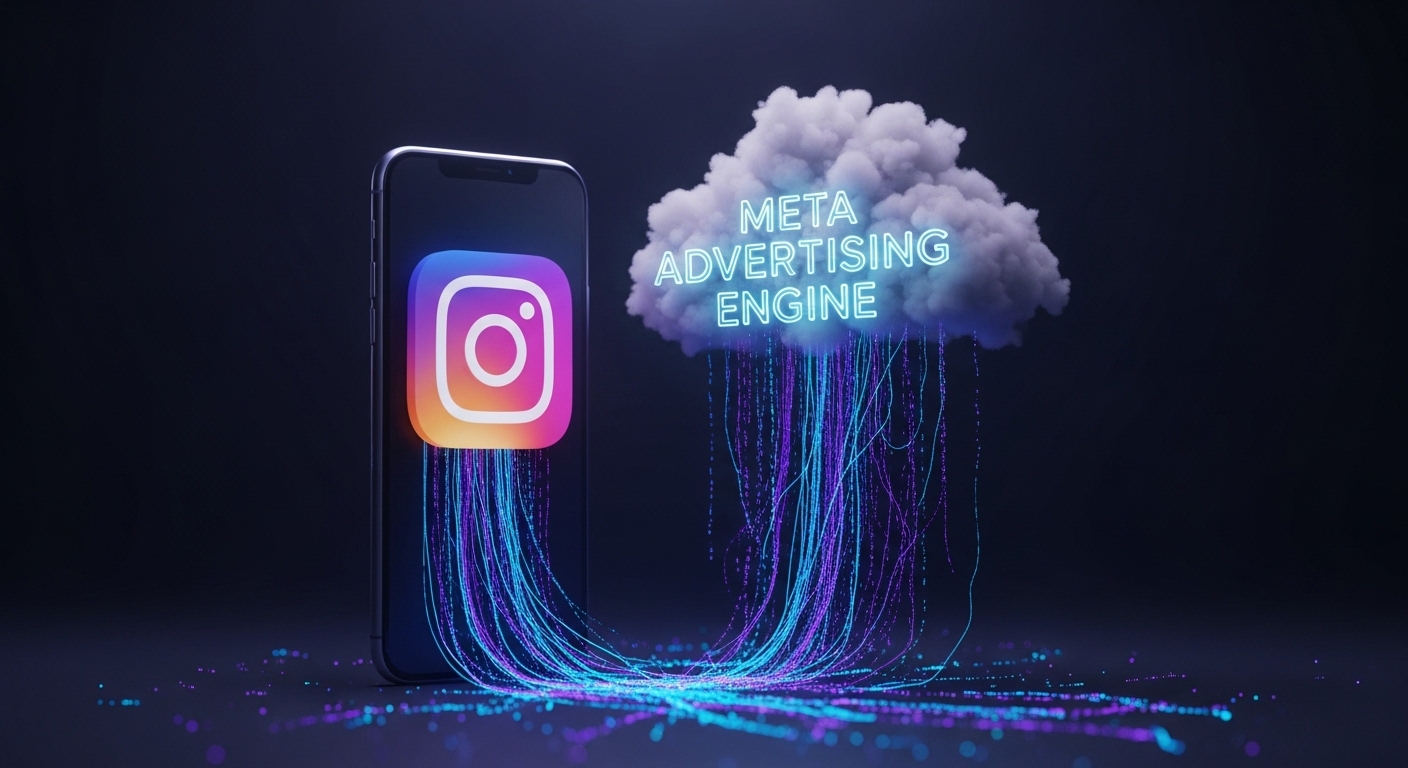


Meta is removing end-to end encryption from Instagram direct messages effective May 8, 2026, reversing a privacy feature the company rolled out in 2021 and opening millions of private conversations to potential corporate access. The change, announced March 13, gives users fewer than two months to download encrypted chat histories before Meta gains technical ability to read every message sent through the platform.
The company frames the reversal as responding to low adoption rates and law enforcement pressure to combat illegal content including child sexual abuse material and terrorist communications. Privacy advocates frame it differently: as Meta choosing surveillance and monetization over user privacy, with profound implications for anyone conducting business, negotiating deals, or sharing sensitive information through Instagram DMs.
For Nigerian brands, advertising agencies, influencers, and content creators who treat Instagram DMs as private communication channels, the change represents immediate business risk. Influencer rate negotiations, campaign strategies, competitive intelligence, brand partnerships terms, and confidential marketing plans shared through Instagram DMs are no longer protected by encryption that prevents Meta from accessing content. Every conversation becomes potentially visible to the platform, creating exposure for information that competitors, regulators, or the public were never meant to see.
The shift arrives without fanfare or prominent user notification, reflecting Meta’s calculation that most users won’t understand the implications or won’t care enough to change behaviour. For marketing professionals whose livelihood depends on confidential communication, that calculation is wrong. Understanding what changed, why it matters, and how to protect sensitive business information requires immediate attention before the May 8 deadline makes current encryption protections obsolete.
What end-to-end encryption protected and what’s now exposed
End-to-end encryption ensures that only the sender and recipient can read message content. Not the platform. Not Meat employees. Not law enforcement without a device warrant. Not hackers who breach Meta’s servers. The encryption keys exist only on users’ devices making messages technically unreadable to anyone except intended recipients.
Instagram implemented opt-in-end-to-end encryption for DMs in 2021, following WhatsApp’s deployment of the same technology years earlier. Users could enable the feature for individual conversations, protecting message content, photos, videos, and shared files from Meta’s access. Once encrypted, conversations remained secure even if Meta’s servers were compromised or the company received legal demands for message content.
Effective May 8, that protection ends. Meta will gain technical capability to access message content for conversations that lose encryption protection. The company hasn’t specified exactly how it will use that access, but the possibilities create business risk across multiple dimensions.
First, advertising targeting. Meta’s business model depends on data collection enabling precise ad targeting. Every piece of information about users improves ad relevance and increases revenue. DM content represents extraordinarily rich targeting data because people discuss interests, needs, and purchase intent explicitly in private conversations in ways they don’t in public posts.
An influencer negotiating a car brand deal discusses vehicle preferences, budget ranges, and timeline in DMs with the brand’s marketing manager. Under end-to-end encryption, that conversation remained private. Without encryption, Meta can potentially read “I’m looking at SUVs in the ₦15-20 million range, need to decide by June” and serve car advertisements to both participants based on stated intent rather than inferred interest.
Second, AI training. Meta invests heavily in artificial intelligence and large language models requiring vast amounts of text data for training. Public social media posts provide substantial training data, but private conversation contain natural language patterns, negotiations, and communications that could improve AI systems. Meta’s privacy policy allows using customer data for AI development, and DM content could theoretically feed those systems unless explicitly restricted by policy Meta hasn’t announced.
Third, third-party sharing. Meta’s data partnerships with advertisers, researchers, and other entities involve sharing user information in various forms. While the company claims not to sell data directly, it enables advertisers to target users based on Meta’s data analysis, which amounts to monetizing information access. DM content expands the data available for these commercial relationships.
Fourth, legal and regulatory requests. Governments routinely request user data from technology platforms for law enforcement and national security purposes. End-to-end encryption made complying with those requests technically impossible when agencies requested message content, Meta couldn’t provide what it couldn’t access. Without encryption, the company can read and potentially share message content when legally compelled, exposing private business communications to government review.
Why Meta is really doing this
Meta’s stated rationale emphasizes low adoption rates and child safety concerns. The company claims very few users enabled end-to-end encryption, suggesting the feature wasn’t valued enough to maintain. On child safety, Meta and other platforms face intense pressure from governments and advocacy organizations arguing that encryption enables criminals by making it harder to detect illegal content.
Both arguments contain truth but obscure commercial motivations. Low adoption rates reflect interface design that buried the encryption option rather than making it default, suggesting Meta never fully committed to the feature’s success. If adoption was truly a priority, the company would have made encryption automatic rather that opt-in, following WhatsApp’s model where encryption is mandatory and universal.
The child safety argument is genuine but incomplete. Encryption does make detecting illegal content harder, creating a real trade-off between privacy and safety. But that trade-off existed when Meta implemented encryption in 2021 and when WhatsApp made encryption default years earlier. The sudden urgency about child safety in 2026 correlates suspiciously with Meta’s broader shift toward data monetization and AI development requiring access to more user content.
The unspoken motivation is commercial. Meta’s advertising business faces challenges from Apple’s privacy controls, regulatory restrictions on data collection, and competition from TikTok. Opening Instagram DMs to content analysis expands the data Meta can use for ad targeting and AI development, potentially generating billions in additional revenue annually from improved targeting accuracy.
The May 8 implementation data coincides with Meta’s fiscal planning cycles and suggests the decision reflects corporate strategy rather than sudden child safety discoveries. If protecting children was the primary motivation, Meta would maintain WhatsApp’s encryption while removing Instagram’s. Instead, the company maintains encryption on WhatsApp, where business and international communications generate more value from privacy protection, while eliminating it on Instagram, where younger users and influencer culture generate more value from data access.
The influencer economy exposure
Instagram DMs function as the negotiating table for Nigeria’s influencer economy. Brands reach out to creators. Terms get discussed. Rates get negotiated. Exclusivity clauses get debated. Payment schedules get finalized. All through direct messages that participants assumed were private.
Without encryption, Meta gains potential access to the financial infrastructure of influencer marketing. The company could theoretically analyze millions of creator negotiations to understand pricing patterns, identify which brands pay premium rates, track which agencies represent which creators, and map the entire economic structure of the influencer ecosystem.
For individual creators, this creates negotiating disadvantage. If Meta can see that an influencer accepted ₦500,000 for a previous campaign, future brands approaching that creator might receive targeting or suggestions influenced by that pricing history. The information asymmetry tilts toward brands and platforms that can access historical negotiation data.
For brands, the exposure works differently. Campaign strategies discussed in DMs with agency partners become visible. A brand planning to launch a major product might discuss budget allocation, target audiences, and competitive positioning with their social media manager through Instagram DMs. That strategic information, now potentially accessible to Meta, could theoretically inform how the platform prices advertising inventory or prioritizes content distribution.
The practical risk isn’t that Meta employees will individually read every brand’s DMs looking for secrets. It’s that automated systems could analyze conversation content at scale, feeding insights into advertising algorithms, competitive intelligence tools, or AI systems that change how the platform operates in ways that disadvantage users whose private communications became training data.
What Nigerian marketers should do immediately
The May 8 deadline requires immediate action for anyone who has conducted sensitive business communications through Instagram DMs over the past several years.
First, download existing encrypted conversations before they lose protection. Instagram allows exporting data, though the process is cumbersome and time-consuming. Conversations containing proprietary information, negotiated rates, strategic plans, or confidential agreements should be archived outside Instagram’s platform before encryption disappears.
Second, migrate ongoing sensitive communications to platforms maintaining end-to-end encryption. WhatsApp, also owned by Meta, maintains encryption and seems unlikely to remove it given the platform’s global business use case. Signal and Telegram offer encryption with stronger privacy commitments than Meta. Email with encryption plugins provides another option, though adoption barriers are higher.
Third, assume Instagram DMs are not private going forward. Any information shared through Instagram direct messages after May 8 should be treated as potentially accessible to Meta, meaning information that competitors, clients, or the public shouldn’t see doesn’t belong in Instagram DMs. This includes pricing discussions, campaign strategies, proprietary research, and competitive intelligence.
Fourth, educate teams and partners about the change. Many marketing professionals, agency employees, and content creators remain unaware that Instagram is removing encryption protection. Organizations should implement policies clarifying which communication channels are appropriate for sensitive business discussions and which aren’t.
Fifth, review what’s been shared historically. Brands and agencies should consider what confidential information has been communicated through Instagram DMs over the years and assess exposure risk. While Meta claims it won’t retroactively access old messages, the technical capability exists once encryption is removed, and policy commitments can change.
The pattern of privacy erosion
Instagram’s encryption reversal exemplifies a broader pattern where technology platforms implement privacy features amid public pressure, then quietly remove them once attention fades. The cycle repeats across companies and services: announce privacy protection, generate positive coverage, wait for scrutiny to move elsewhere, then roll back protections in favor of data monetization.
Facebook promised not to merge Instagram and WhatsApp data, then merged them. Google launched privacy-focused features before finding reasons they couldn’t work as promised. Apple positions itself as privacy-focused while operating advertising businesses dependent on data collection. The gap between stated privacy commitments and actual practice widens over time as commercial pressures override earlier promises.
For users and businesses, the pattern demands skepticism about platform privacy claims and constant vigilance about actual privacy practices versus marketing language. Privacy policies change. Features get modified. Encryption gets removed. The protection you thought you had, disappears when the company determines that data access generates more value than privacy protection.
The particular challenge for business users is that marketing and communication increasingly happen on platforms designed primarily for personal use. Instagram, TikTok, and similar services never intended to host business negotiations and confidential communications. Their privacy models assume social interactions rather than commercial transactions. But network effects and user adoption forced professional use onto personal platforms, creating mismatched expectations about privacy and security.
Why this matters beyond Instagram
The Instagram encryption removal signals where technology platforms are headed across the board. As AI development requires ever-larger datasets, as advertising businesses face pressure from privacy restrictions, and as governments demand greater access to private communications, platforms will increasingly prioritize data access over user privacy.
The implications extend beyond Instagram DMs. If Meta determines that removing encryption creates acceptable user backlash while improving monetization, other platforms will notice. If governments successfully pressure companies to weaken encryption for child safety, the precedent applies to all private communications. If users don’t significantly change behaviour in response to privacy reductions, platforms conclude that privacy protection isn’t worth the revenue it costs.
For Nigerian businesses navigating global platforms, the challenge is geographic asymmetry. Privacy regulations protect users in Europe and increasingly in California, but Nigerian users lack equivalent legal protections. Platforms implement features based on regulatory requirements in wealthy markets, often leaving other regions with weaker protections. Instagram might maintain different encryption standards in EU markets while removing protections elsewhere, creating tiered privacy systems where location determines security.
The business response requires moving sensitive communications off platforms that don’t guarantee privacy protections, implementing clear policies about which channels are appropriate for confidential information, and accepting that convenience often conflicts with security. Instagram DMs may be easy, but ease comes at privacy cost that business users can no longer ignore.
Meta’s decision to remove Instagram encryption effective May 8 creates immediate risks for anyone who treats the platform as a secure communication channel. For Nigerian marketers, agencies, brands, and creators conducting business through Instagram DMs, the next two months require action: download sensitive conversations, migrate ongoing communications to encrypted platforms, and accept that Instagram DMs no longer protect confidential information from potential corporate access. The convenience of communicating where your audience already exists now comes with exposure that requires different platforms for different purposes. Separate the public from the private. Keep the business on WhatsApp. Treat Instagram as what it’s becoming: a public platform where nothing stays confidential for long.
ALSO WATCH MARKETING EDGE ONTV



Comment
No comments found.