
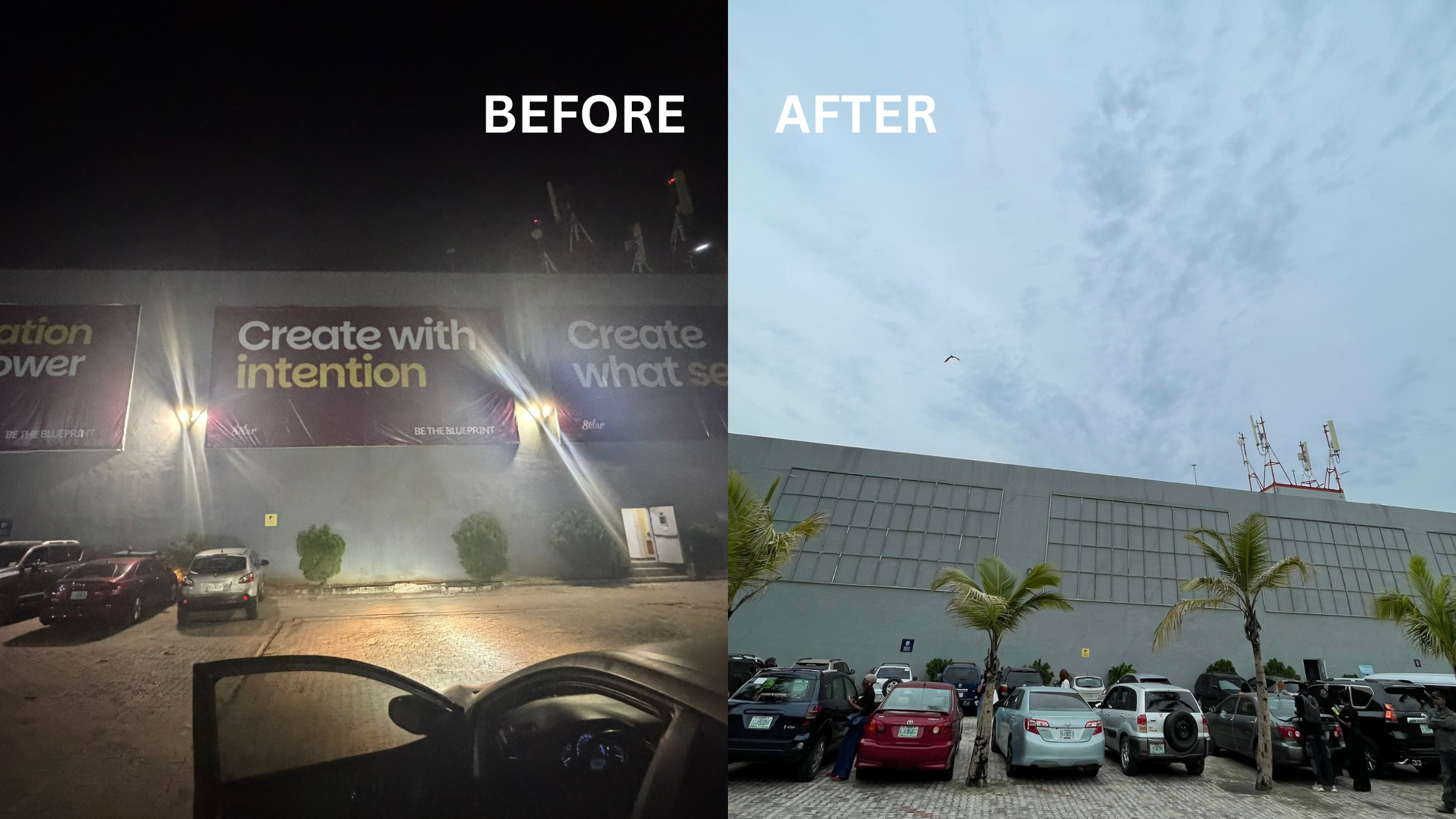


It started with a billboard.
Not a particularly large one. Not even one person noticed in real time. Yet it would set Nigeria’s creator economy corner of X ablaze during the weekend of March 13 to 14, 2026.
What followed was a rare public clash between two of Nigeria’s most visible creator economy platforms, Selar and Mainstack.
And it all began outside a conference venue.
The origin of the furore
Mainstack was hosting Moment, a major creator-focused conference in Lagos. It was their big day. Their event. Their stage. They had booked the venue, lined up the speakers, and assembled a crowd of Africa’s most prominent digital creators. What they apparently hadn’t booked was the billboard outside.
Selar, Mainstack’s closest rival in Nigeria’s creator tools ecosystem, had quietly purchased the outdoor billboard directly outside the event perimeter. It was a textbook case of ambush marketing.
Photographs shared by attendees showed Selar-branded billboards illuminated outside the venue at night, carrying slogans such as “Create with Intention” and “Create what sells”.
The images spread quickly online. Before long, the billboards were removed, but by then the debate had already taken over the internet.
“Had Selar executed a brilliant marketing stunt, or crossed a professional line?”
The Spark
The first public signal that something unusual was happening came from a quote tweet by the user @queensatoyou.
“Small creative competition, they’re pulling institutional strings. 10/10 ragebait from Team Selar,” she wrote, referencing a post from Selar’s founder, Douglas Kendyson that had gone “unavailable”.
The tweet quickly attracted attention and crossed 80,000 views within hours.
Another early post came from @Saamu_Eleja, a fintech storyteller and event industry commentator. He shared photos of the illuminated billboards outside Landmark Event Centre.
“The billboards are gone… and I really thought I was going to see a creative response instead,” he wrote the next morning, after Mainstack had them removed.
“We can say Nigeria’s marketing isn’t ready for the Guerilla marketing.”
His post triggered a second wave of debate. Some users argued that Mainstack should have responded creatively rather than requesting the removal of the billboards.
Kendyson, entered the conversation directly. Rather than taking a neutral corporate tone, he chose a far more confrontational approach. Kendyson alleged that Milton Tutu, who had recently joined Mainstack as CMO, had not simply left Selar voluntarily.
“He was fired,” Kendyson wrote.
“I gave my blessings about his new position in December 2025 when they called me. Unfortunately, they’re stooping to making a cheap coordinated PR attack on our brand with scripted tweets when it’s been nothing but love from me. I’m not Michelle Obama.”
The final line referenced Michelle Obama and her famous phrase: “When they go low, we go high.”
Kendyson’s message made his stance clear. Selar had no intention of staying quiet.
The Marketers Weigh In
Marketing professionals quickly joined the conversation. One of the most detailed responses came from brand strategist @lamideee_a, who was attending the Moment conference. She said Selar had not broken any rules.
“Someone bought available ad space at a venue. Space that was available. Space that nobody else had claimed. That’s it,” she wrote.
While she acknowledged Mainstack’s frustration, her conclusion was pointed. “If you’re hosting a major event at a large venue, you book the main hall, and you think about the perimeter. Selar found the gap. That’s not disrespect. That’s just someone being more thorough about your own event than you were.”
Not everyone agreed. Another commentator, @Marketingninjar, argued that Selar’s move was unnecessary for a company of its size.
“Selar has been in the industry for years and had every opportunity to create the biggest physical creator event but they haven’t done so,” she wrote.
“But another industry player is doing theirs and you want to rain on it claiming ‘fair competition’.”
Her final verdict was simple. “Selar is way too big for this drama.”
What It All Means
Once the online heat settles, what remains is a revealing moment for the African creator economy.
Two of the continent’s most prominent creator platforms are no longer competing quietly through feature updates, product launches and pricing pages.
They are competing in public. Selar played an aggressive ambush marketing move and doubled down when challenged. Mainstack, meanwhile, had just introduced a new chief marketing officer whose arrival suddenly became entangled in a public brand confrontation.
For any company, launching a new marketing chief’s tenure in the middle of a social media storm is complicated.
Yet the most thoughtful takeaway may still belong to Lamide’s analysis. The issue was not necessarily that Selar acted immorally. The issue was that Mainstack left a gap.
And in competitive markets, gaps rarely stay empty for long. The billboard has disappeared. The tweets remain.
And somewhere in Lagos, two creator platforms are likely watching their brand awareness metrics climb for very different reasons.



Comment
No comments found.