
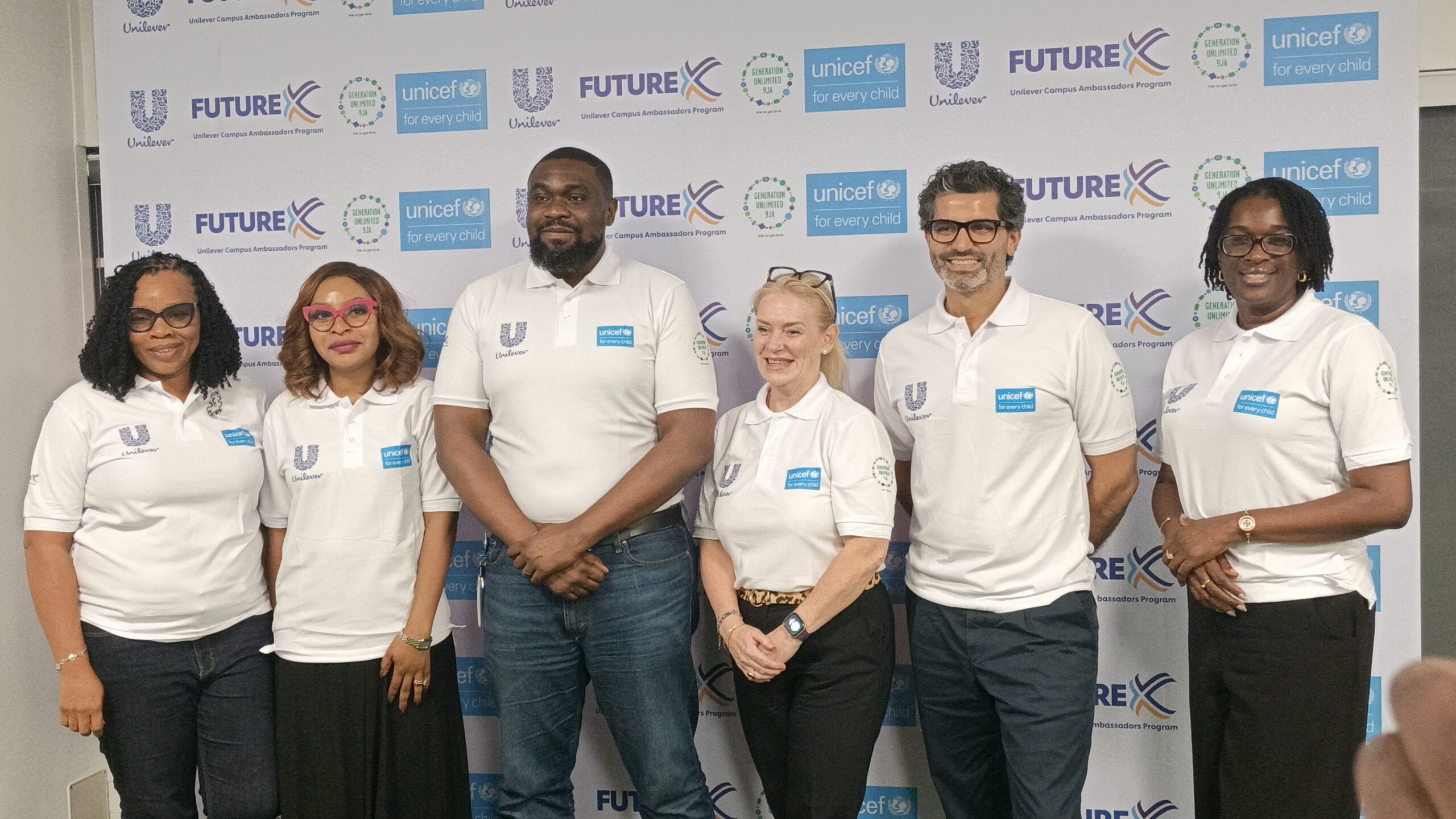


Unilever Nigeria and UNICEF have surpassed their original target of equipping 700,000 young Nigerians with workplace ready skills, reaching over 900,000 students across universities and polytechnics nationwide, two years into a three-year partnership that is reshaping how Nigeria prepares its youth for the future of work.
The was made on Monday at a press conference in Lagos, where officials from Unilever Nigeria and UNICEF outlined the achievements of the Future X Unilever Campus Ambassadors Programme, known as FUCAP, and unveiled plans for an expanded third year focused on livelihoods and economic inclusion.
Tobi Adeniyi, managing director of Unilever Nigeria, noted that FUCAP as the product of a rare alignment of political will, development expertise and private sector commitment. “You have the political will in terms of vision from the government. You have the skills and development expertise of Generation Unlimited Nigeria. And then you have private sector participation. What this does is ensure that the major beneficiaries, which are Nigerian youth, rise to the occasion,” he said, noting that Vice President Kashim Shettima chairs Generation Unlimited World Nigeria.
Adeniyi was emphatic that FUCAP represents a deliberate strategic investment rather than corporate philanthropy. “When you are training young people, it is not just employable skills. These are life skills. These are skills that they end up using for the rest of their life. If you teach someone the art of storytelling for a brand, whether or not they are employed, or whether they start their own business, that is something that is useful, because it helps you build your personal brand as well. It is about changing lives and ensuring that young people never feel stranded at any point in time,” he said.
The Unilever MD also spoke to the transformative impact the programme has had within his own organization. “The beauty of working with young people is they open your eyes. No matter how experienced you might think you are, they open your eyes to new ways of doing things. We have FUCAP interns working in our sales team, driving initiatives. In our factories, you have them driving innovation. Sustainability is at the core of our purpose and improving life skills for these young folks is something that is deliberate, something that is intentional. The sum total of what we are doing is to improve collective productivity for the nation,” Adeniyi said.
He painted a picture of the opportunity Nigeria’s youth demographics present. “Almost 60% of Nigeria’s population is below the age of 30. Imagine if we are raising a generation of confident, knowledgeable, informed young persons. Then their approach to life starts becoming one of not just waiting for success to happen, but something that is good for all of us,” he said.
Celine Lafoucriere, chief of UNICEF’s Lagos office and lead for Generation Unlimited Nigeria, described the initiative as a partnership platform rather than a conventional programme, designed to bring all critical stakeholders around a common problem. “This platform is not a programme. It is a partnership platform which tries to bring all the partners around the table to discuss where that gap is coming from and to find solutions to bridge it. We know that the gap is much bigger than what we can do,” Lafoucriere said.
She highlighted a critical insight that emerged from conversations with private sector partners on the Generation Unlimited platform. “Skills I can find. What we need are people who know how to behave on the jobs. Bringing our competencies together and really going to meet the university graduates and undergraduates in the universities has really brought a lot of benefits to them. You may be able to be a fantastic marketer, but you may have zero capacities to behave on the job,” she said.
Bharat Kundra, skills development specialist at UNICEF Nigeria, provided the demographic context that gives FUCAP its sense of urgency. “About 58% of young Nigerians are under the age of 30. Nigeria by 2050 will have a population of 500 million and it is going to be the third most populous country in the world. If we are able to tap into this energy of young people in Nigeria, this could be a huge game changer for Nigeria and Africa as a continent,” Kundra told journalists.
He outlined FUCAP’s four distinct delivery pillars. “The first part is career seminars, covering everything from CV writing to interview skills. These are hidden barriers which, even if young people have the talent, they are still not able to convert into job opportunities. The second part is skill development, including entrepreneurship and design thinking. The third part is workforce pathways, with Unilever opening up internship opportunities. And the fourth key aspect is youth-led leadership, because young people are not just beneficiaries of this programme but key agents driving it as well,” Kundra explained.
He connected FUCAP beneficiaries to YOMA, UNICEF’s Youth Agency Marketplace platform. “YOMA is an aggregator platform which creates opportunities for all the partners and puts it on a single page. We are removing the barriers for young people in their journey,” Kundra said, adding that over 40 young people have already proceeded to paid internships with Unilever following their FUCAP participation.
As the programme enters its third year, Kundra said the focus shifts from skills to livelihoods, with deliberate emphasis on young women. “This year, Unilever and UNICEF have decided that we are going to be putting a lot more focus on livelihoods. We’ve already been focusing on skill development and career guidance and achieved great results. But from this year onwards, it is going to be focused on livelihoods, with a special focus for young women, because we do understand there are certain additional barriers that young women face,” he said.
Zainab Obagun head of corporate affairs, communications and sustainability at Unilever Nigeria, closed the session by reaffirming the programme’s ambition and its place within Unilever’s global commitment to youth development. “Since our inception, the programme has surpassed its target by equipping over 900,000 young students across Nigeria with offline and online entrepreneurial and workplace management skills, including design thinking, data training and everything they need to succeed in this AI age that we are going into,” she said.
She emphasized the broader corporate and global context of the initiative. “Our vision is centred on equipping young people with the skills, the confidence, and the opportunities they need to thrive in the future of work. As part of Unilever’s commitment, we have also set a global goal to equip 10 million young people with employable essential skills by 2030. Our work with UNICEF as part of Generation Unlimited is one of the many ways we are helping to tackle the challenge of youth unemployment in the world today,”
Obagun said FUCAP currently operates across 20 universities spanning all six geopolitical zones of Nigeria, with each institution supported by a student campus ambassador who coordinates programme delivery and volunteer mobilization.



Comment
No comments found.