
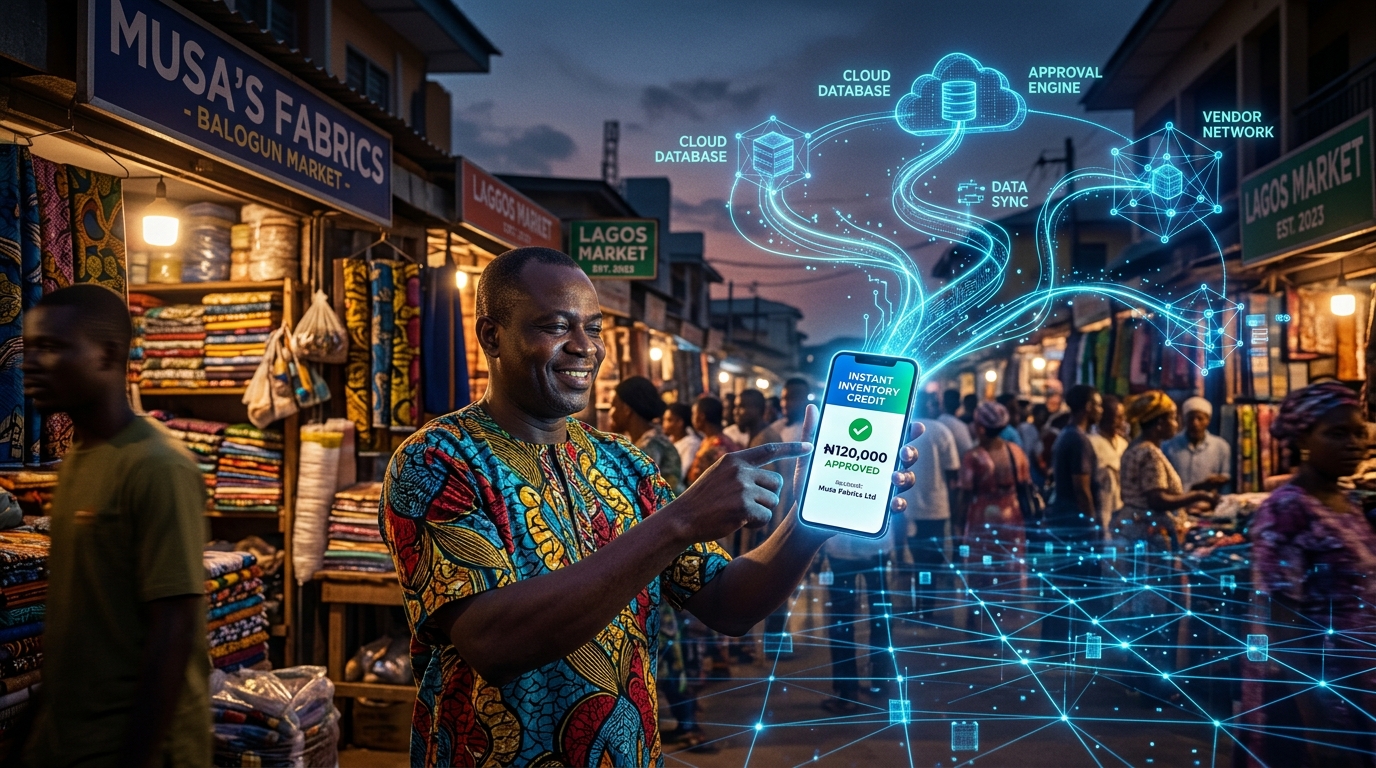


For a decade, Nigerian credit has been defined by traditional banking: balance sheets, credit histories, and formal employment. That era is ending. Two structural forces are rewriting the rules, embedded finance and artificial intelligence. The shift is already underway. What happens next will determine whether millions of Nigerians finally access credit, or remain locked out.
The Embedded Finance Revolution
Credit Direct’s 2025 Nigeria Credit Landscape Report identifies a fundamental change in how lending works. Loans are no longer sold as separate products. Instead, they are being built directly into the platforms Nigerians already use daily: money transfer apps, salary payment systems, e-commerce marketplaces, healthcare platforms, school payment apps, and transport networks.
This changes everything. When a merchant uses a commerce app, credit becomes available without visiting a bank. When a gig worker receives payment through a payroll platform, a loan offer appears instantly. Finance becomes invisible because it is integrated into existing workflows.
For lenders, the advantage is structural. They spend less time finding borrowers because borrowers are already using their platforms. They make better credit decisions because they have real-time data on behaviour and transaction history. They identify repayment likelihood through direct observation of financial activity, not historical records.
AI Rewrites Credit Assessment
Traditional credit scoring in Nigeria relies on formal credit histories and banking bureau data. This excludes most of the population. The World Bank estimates that a significant portion of Nigerian adults remain unbanked or underbanked, leaving them without the financial footprint conventional lenders demand.
Artificial intelligence is solving this problem through alternative data. Mobile phone usage patterns, utility payment history, online activity, and transaction behaviour, all become signals of creditworthiness. The Central Bank of Nigeria reports that 37.5 per cent of Nigerian fintechs are already using AI for credit scoring and risk assessment.
The implication is profound. A gig worker with no pay slips but a consistent transaction history becomes assessable. A small business operator without formal accounts but reliable revenue patterns becomes bankable. Credit decisions happen in real time, based on behaviour, not paperwork.
The Structural Shift
This is not an incremental improvement. This is a fundamental departure from how Nigerian credit has worked. The previous model required formal employment, established credit history, and significant collateral. The new model requires only digital activity and platform integration.
By 2030, Credit Direct projects that Nigeria could reach digital finance penetration levels comparable to Kenya or China, where financial services are deeply embedded in daily economic life. Buy Now Pay Later (BNPL) products are already growing at double-digit rates annually. Corporate credit processes are accelerating through supply-chain financing and data-driven underwriting.
What Changes
The credit gap, the gap between credit demand and credit availability, has been a structural constraint on Nigerian economic growth. Millions of viable borrowers remain excluded because they do not fit traditional banking criteria. Embedded finance plus AI removes that constraint by eliminating the requirement to fit traditional criteria.
The next decade of Nigerian credit will not be defined by which bank has the largest balance sheet. It will be defined by which platforms have the deepest user engagement and which lenders deploy AI most effectively to assess real-time borrower behaviour.
That shift is already beginning. The question now is whether traditional banks adapt fast enough, or whether fintech platforms capture this entire expansion.
ALSO WATCH:MARKETING EDGE ONTV



Comment
No comments found.