
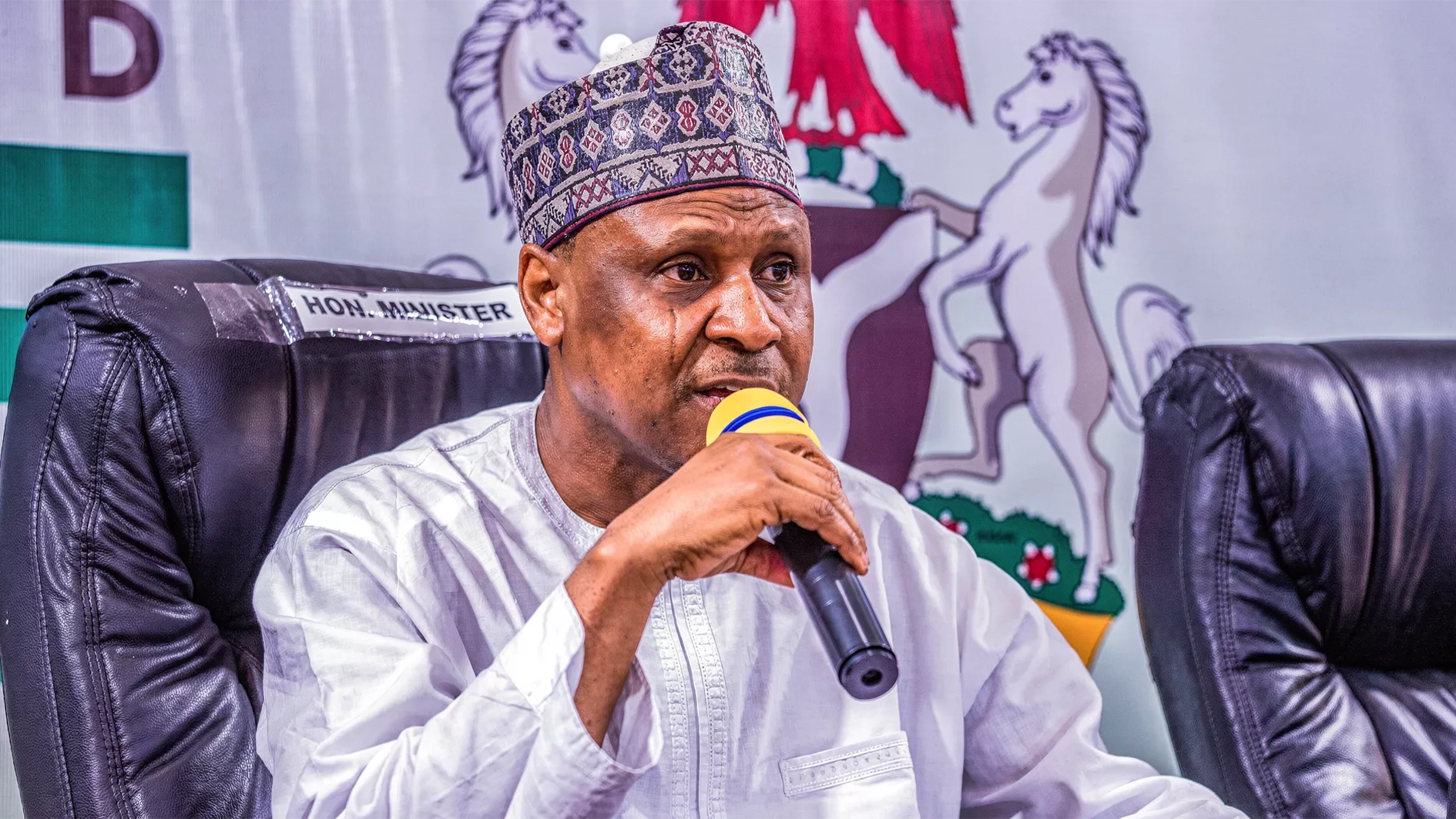


Mohammed Idris, Minister of Information and National Orientation, represented by Mallam Jibrin Baba Ndace, Director-General of Voice of Nigeria (VON) who also chaired the occasion, has called on Nigeria’s advertising industry to embrace innovation without abandoning ethics, as the Federal Government reaffirmed its commitment to building a competitive digital economy that positions the country as Africa’s leading hub for responsible advertising and creative excellence.
The minister made this known at the ongoing fourth edition of the Advertising Industry Colloquium, AIC 4.0, with the theme: “The Future of Advertising: The Role of Platforms, People and Regulation.” Organised by the Advertising Regulatory Council of Nigeria (ARCON) held Ikeja, Lagos.
In his address, the minister situated the conversation within the context of a rapidly changing global communications landscape, noting that technological innovation, especially Artificial Intelligence, digital platforms, big data and immersive technologies, is redefining how brands communicate, how consumers interact with content, and how societies receive information.
For Nigeria, he argued, this presents both enormous opportunities and significant responsibilities. Central to his address was a reframing of what advertising has become in modern society.
“Advertising has evolved far beyond selling products. It now influences culture, shapes public perception, drives economic activity, promotes national identity and supports democratic participation. In an increasingly digital world, regulation must therefore keep pace with innovation without stifling creativity,” the minister stated.
On the Federal Government’s investment in the digital infrastructure underpinning the industry’s future, the minister pointed to Nigeria’s growing telecommunications footprint as evidence of the administration’s commitment.
“Today, Nigeria boasts one of Africa’s largest digital ecosystems, with over 170 million active telecommunications subscriptions and internet penetration that continues to expand through sustained investments in broadband infrastructure,” he said, adding that an ongoing national fibre-optic expansion programme is designed to significantly improve broadband penetration, reduce connectivity costs and bring high-speed internet to underserved communities across the country.
The minister structured his address around the three pillars of the colloquium’s theme.
On platforms, he acknowledged that while digital tools have democratised communication, they have also introduced concerns around misinformation, harmful content, privacy, data protection and market fairness, arguing that “digital innovation must be accompanied by responsible governance that protects consumers while encouraging enterprise.”
On people, the minister pushed back against the notion that technology would eventually replace human input in the creative process.
“Technology will never replace human creativity, ethics and strategic thinking. Artificial Intelligence may generate content, but authentic storytelling, cultural understanding, emotional intelligence and professional judgment remain uniquely human,” he stated. He identified Nigeria’s young population as a strategic asset, calling for investment in education, digital literacy, innovation and creative entrepreneurship to equip them to compete globally.
On regulation, Idris offered a perspective that directly addressed a long-running tension within the industry.
“Effective regulation is not an obstacle to growth; it is the foundation for sustainable development. A predictable, transparent and forward-looking regulatory framework builds investor confidence, protects consumers and promotes fair competition,” he said.
He commended ARCON for its ongoing efforts to modernise advertising regulation while engaging industry stakeholders, noting that “regulation works best when it is consultative, adaptive and responsive to emerging realities.”
The minister also drew attention to the growing convergence between government communication and the advertising industry, noting that his ministry was leveraging digital platforms to deepen citizen engagement and promote transparency. He described partnerships with the advertising and media industries as indispensable, arguing that together, they can build campaigns that promote public health, national unity, environmental sustainability, financial inclusion, education and responsible citizenship.
On the conversation around Artificial Intelligence and intellectual property, the minister signalled government’s intent to remain engaged.
“As AI continues to reshape the creative economy, stakeholders must work together to develop ethical frameworks that protect originality, reward creators and encourage responsible innovation,” he said.
“The future of advertising will not be determined by technology alone. It will be shaped by the quality of our ideas, the integrity of our institutions and the courage of our leadership. Let us therefore embrace innovation without abandoning ethics; pursue growth without compromising public trust; and build an advertising industry that reflects the creativity, resilience and aspirations of the Nigerian people.”




Comment
No comments found.