
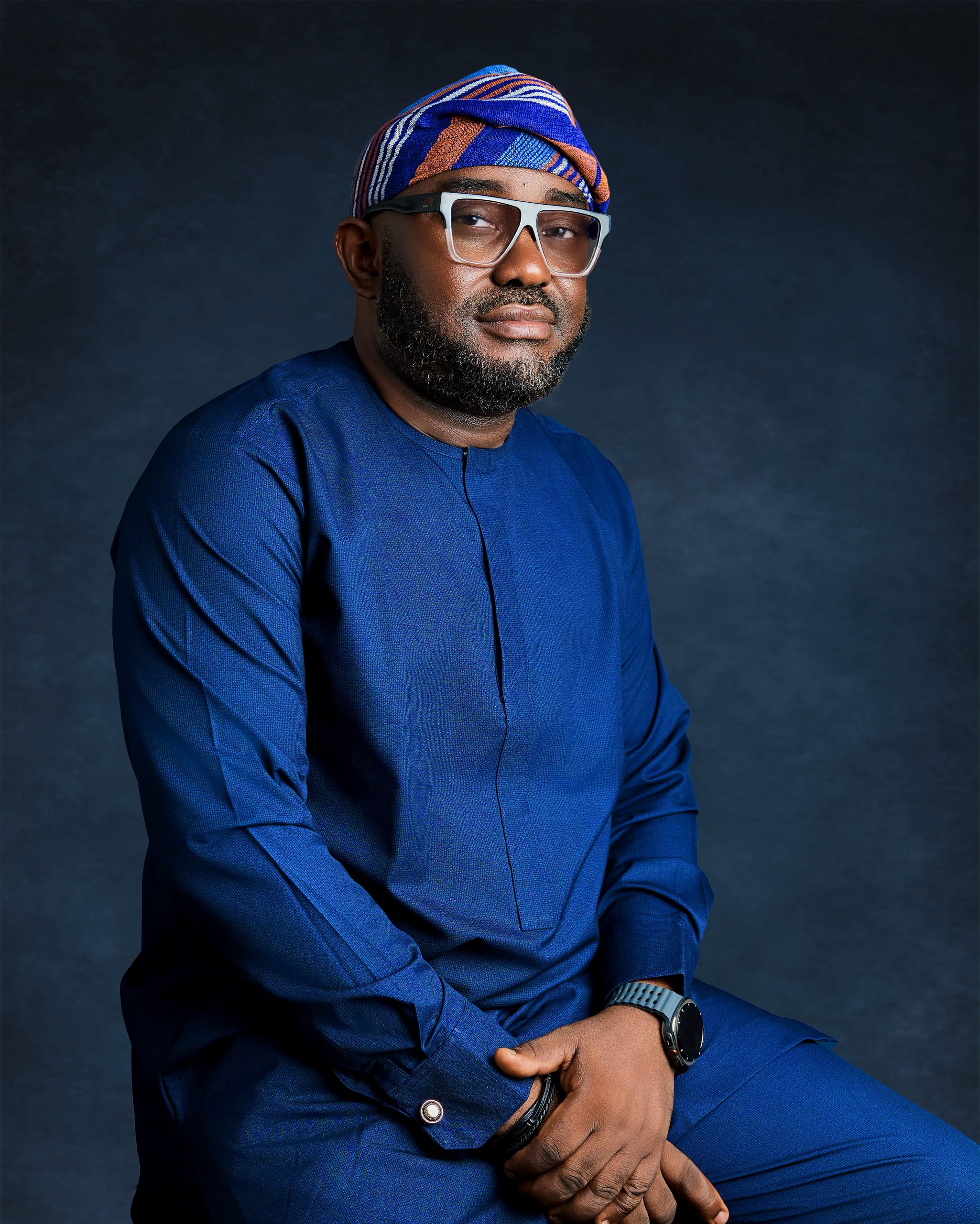




There is a moment in the evolution of every profession when the work it does suddenly becomes too important to be kept at the margins of serious decision-making. For public relations, Odion Aleobua, founder and CEO of Creato Urban, believes that moment has already arrived.
Presenting at the Nigerian Institute of Public Relations (NIPR) Lagos State Chapter Monthly Clinic with the theme: “The Golden Age of Strategic PR”, Aleobua made a case that is as data-driven as it is timely: reputation has become the world’s most valuable currency, and the professionals who manage it are no longer a support function. They are an intelligence function.
Aleobua mapped the four eras through which public relations has travelled as a profession, from publicity through media relations and reputation management to what he described as its fourth and most consequential era: strategic value creation. “PR is no longer managing publicity. PR is influencing enterprise value,” he said.
Three forces, he argued, have made this shift irreversible. Information overload is placing a premium on clarity and credibility. Institutional distrust has collapsed public confidence in governments, media and corporations globally, creating a space that strategic communicators are now being called upon to fill. And technological disruption through artificial intelligence, algorithms and real-time media cycles has rewritten the rules entirely.
“Practitioners who adapt become indispensable. Those who do not become obsolete,” he said.
The numbers support the argument. The global public relations industry grew from approximately 64 billion dollars in 2015 to 106 billion dollars in 2025, a 66 percent increase in a decade, and is projected to reach 161 billion dollars by 2031. Nigeria specifically posted 11.2 percent growth in media and communications in 2024, the fastest rate recorded on the African continent.
The PR tools market covering intelligence, monitoring and analytics reached 15.8 billion dollars in 2024 and is forecast to reach 29.5 billion dollars by 2030. “The world is not spending less on trust,” Aleobua said. “It is spending more. Every year.”
At the heart of his argument is a reframing of reputation as the most important capital in any enterprise. He described reputation capital not as another asset sitting alongside financial, human, technological and intellectual capital but as the multiplier of all four.
Research from AIRA and AMO Research across more than 200 companies in 15 stock markets found that 35.3 percent of total market capitalisation is attributable to corporate reputation, equivalent to approximately 16.8 trillion dollars in shareholder value.
Fombrun Research found that every single point improvement in corporate reputation score generates an average 500 million dollar increase in market value. Among the world’s largest companies, 90 percent of enterprise value is now derived from intangible assets including brand, relationships and reputation. “Reputation is not the fifth capital,” Aleobua said. “It is the multiplier of the other four.”
He drew a sharp distinction between legacy PR and strategic PR, presenting them as fundamentally different disciplines. Legacy PR is reactive, measured by clip counts and operates at the edges of business decisions.
Strategic PR is proactive, measured by business outcomes and return on investment, and sits at the heart of strategic decisions. For practitioners, he outlined six competencies that define the modern communications professional in this era: strategic intelligence, data fluency, digital mastery, stakeholder diplomacy, narrative craftsmanship and business acumen.
“Tomorrow’s communicator is a Strategist, Risk Adviser, Behavioural Scientist, Data Interpreter, Reputation Architect, and CEO Counsellor,” he said. “PR has become a leadership discipline.”
“Communication creates awareness. Strategy creates influence. Reputation creates value. Trust creates enduring prosperity.” Then came the challenge he left the room to carry home. “The Golden Age is not coming. It is here. The question is whether we, as a profession, are ready for it.”




Comment
No comments found.