
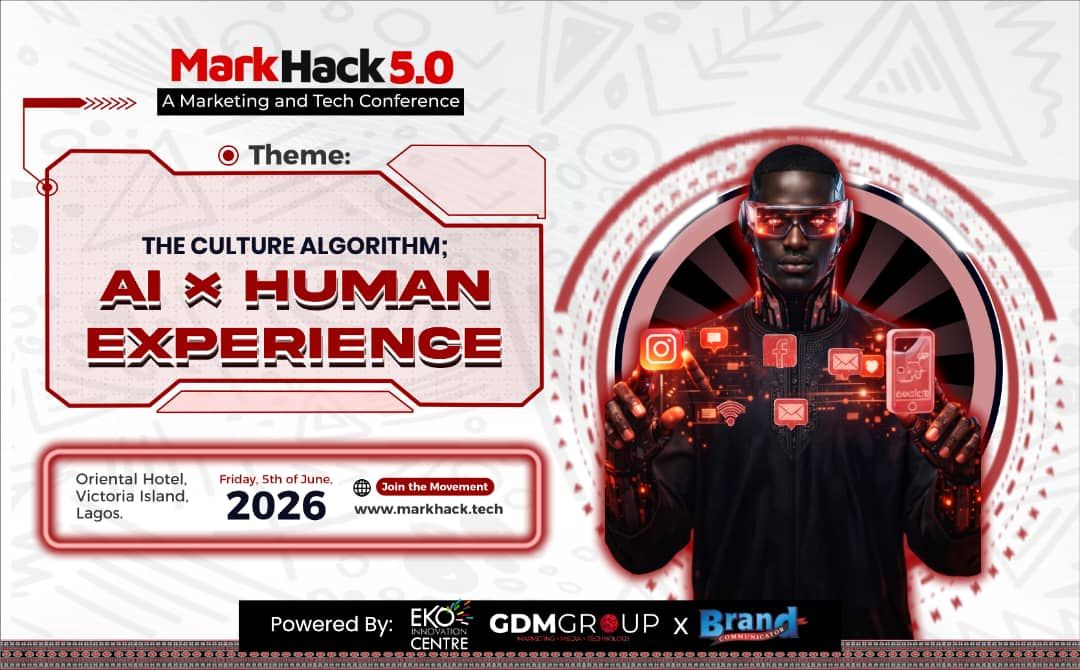


Marketing and technology leaders at MarkHack 5.0 have warned that the rapid rise of artificial intelligence is reshaping consumer behaviour, brand relationships and workplace culture, urging businesses to adopt a more human-centred approach to innovation.
The conference, held in Lagos under the theme “The Culture Algorithm: AI x Human Experience,” brought together marketers, agency executives, policymakers and tech innovators to examine the growing influence of AI on marketing and society.
Joshua Ajayi, publisher of Brand Communicator and co-convener of MarkHack, said conversations around artificial intelligence must move beyond tools and automation to focus on culture, identity and human experience.
According to Ajayi, AI is no longer just a productivity tool; it is increasingly shaping what people consume, how they interact with brands and the way culture is created and distributed.
“We must move the AI conversation from tools to culture,” he said, adding that businesses must ensure technology serves people rather than dictates human behaviour.
Ajayi noted that the future of marketing would depend on how effectively brands combine technological innovation with cultural intelligence and meaningful human experiences. He also highlighted the unveiling of Ad-Agency GPT, described as Africa’s first generative AI ecosystem built specifically for advertising agencies, as well as the launch of the CMO Circle, an executive forum for senior marketing leaders.
ALSO WATCH MARKETING EDGE ONTV
In a related address at the event, the President and Chairman of the Council of the National Institute of Marketing of Nigeria (NIMN), Dr Bolajoko Bayo-Ajayi, warned that consumer trust is increasingly under threat in the age of AI.
She said while artificial intelligence has improved personalisation, automation and data analysis, consumers are becoming more cautious about technology-driven interactions and impersonal brand communication.
“Trust is the most valuable currency in today’s marketplace,” Bayo-Ajayi said. “AI can process data at scale, but it cannot replace empathy, emotional intelligence and genuine human connection.”
The NIMN President urged marketers to use AI as a support tool rather than a replacement for human insight, stressing that brands must build systems that listen, engage and foster authentic relationships with consumers.
She added that the industry must ensure technological advancement strengthens rather than erodes public confidence in brands, especially as AI-generated content and automated customer interactions become more widespread.
The discussions at MarkHack 5.0 reflected a broader industry concern: that the next phase of digital transformation will not be judged solely by technological capability, but by whether brands can preserve authenticity, trust and cultural relevance in an increasingly automated world.



Comment
No comments found.