
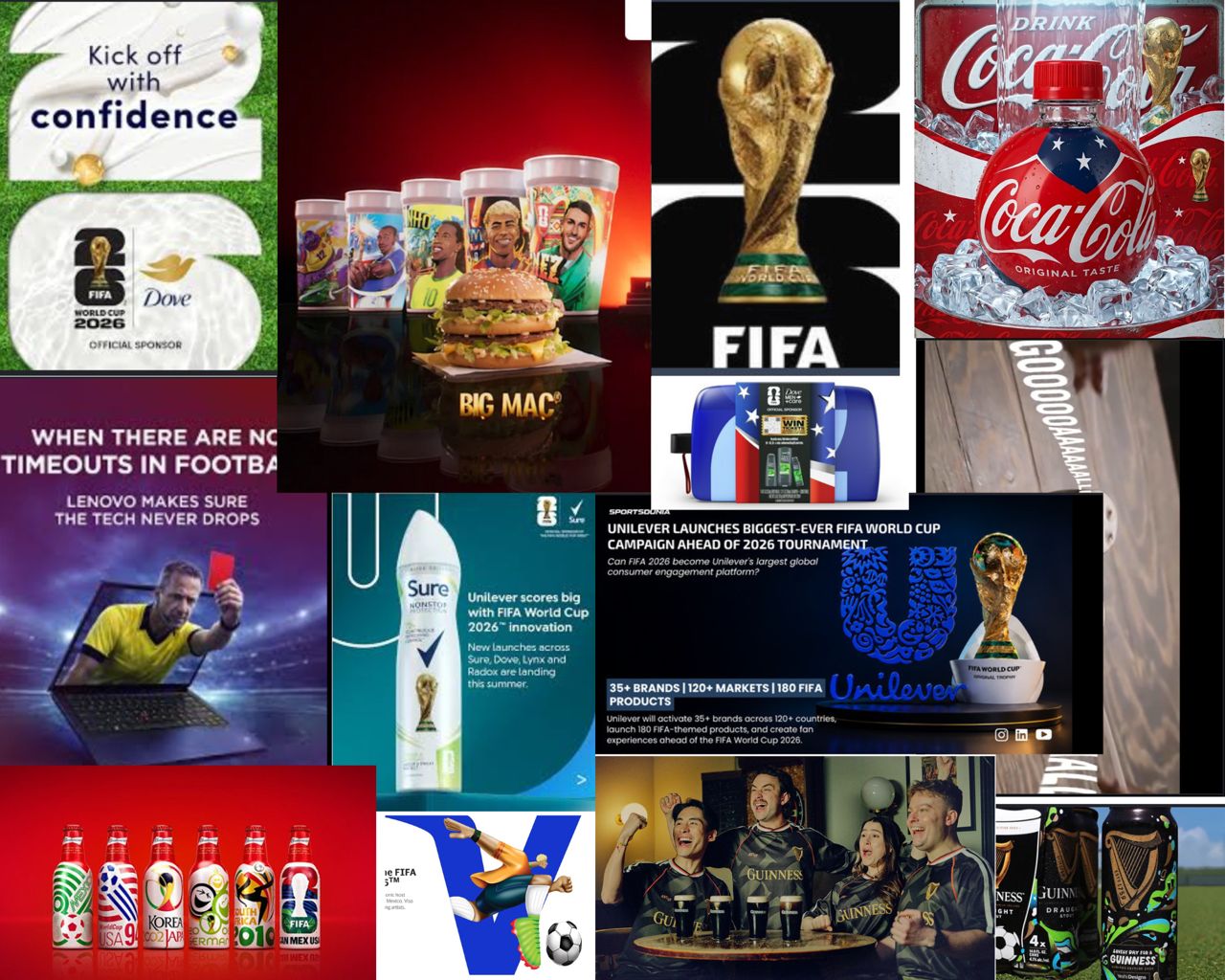


When the first whistle blows at the 2026 FIFA World Cup, the action will not be confined to the pitch alone. Across stadiums, airports, city landmarks, pubs, digital platforms, retail shelves, and millions of mobile screens worldwide, another competition will already be in full swing.
This time, however, the contestants will not be football nations. Instead, they will be some of the world’s most ambitious brands, all racing to capture attention, ignite emotions, and secure a lasting place in the hearts of billions of fans.
For global marketers, the FIFA World Cup remains far more than a sporting spectacle. It represents the ultimate stage for brand storytelling, cultural relevance, and consumer engagement.
Consequently, as anticipation builds for the first ever 48 team World Cup hosted across the United States, Canada, and Mexico, brands are unveiling increasingly imaginative campaigns designed to transform sponsorship into unforgettable consumer experiences.
Notably, industry analysts at the Sponsorship Marketing Association (SMA) describe FIFA World Cup 2026 as potentially the most commercially powerful sporting event in history.
The association projects marketing and sponsorship revenues alone to generate between $2.5 billion and $3 billion, while the entire FIFA cycle is forecast to deliver almost $11 billion in revenue.
Furthermore, the tournament’s expanded format, featuring 104 matches across 16 host cities and a projected global audience of five billion viewers, has intensified competition among brands seeking maximum visibility and engagement.
Meanwhile, Sponsorship Marketing Association also noted that major brands are increasingly moving away from scattered sponsorship investments and instead placing larger, more strategic bets on premium global properties capable of delivering unmatched reach and cultural impact. FIFA World Cup 2026 sits firmly at the centre of that trend.
As a result, brands are no longer satisfied with simply placing logos around stadiums. Instead, they are creating immersive experiences that connect football, culture, entertainment, technology, travel, and commerce.
Coca-Cola Turns Its Iconic Bottle Into A World Cup Collectible
Among the brands seeking to stand out from the sponsorship crowd is Coca-Cola, which has transformed its product itself into a football celebration.
The beverage giant has introduced limited edition football shaped bottles created specifically for FIFA World Cup 2026, turning its iconic packaging into a collectible keepsake for fans.
Rather than relying solely on tournament branding, Coca-Cola has reimagined the bottle itself, creating an activation that functions simultaneously as packaging, memorabilia, and fan engagement.
By blending football culture with one of the world’s most recognisable brand assets, Coca-Cola is reinforcing its long standing connection with the sport while creating a memorable consumer experience that extends far beyond the refreshment inside the bottle.
McDonald’s Turns Every Meal Into A Football Collectible
Leading the charge is McDonald’s, which has transformed tournament excitement into a collector’s dream. Through its FIFA World Cup 2026 meals, the restaurant giant is combining food, nostalgia, and football fandom by introducing collectible cups featuring stars such as David Beckham, Christian Pulisic, Ronaldinho, Thierry Henry, Son Heung Min, Lamine Yamal, Alphonso Davies, and Santiago Gimenez.
Additionally, younger fans can collect exclusive World Cup themed Squishmallows through specially designed Happy Meals, ensuring engagement stretches far beyond the restaurant counter. Rather than relying solely on traditional advertising, McDonald’s is bringing football directly into everyday family experiences.
Guinness Revives A Classic To Celebrate Football’s Community Spirit
Meanwhile, Guinness has chosen a different path. Rather than looking forward alone, the iconic stout brand has reached back 35 years to revive one of its most memorable football campaigns.
Through its “The World’s Cup” platform, Guinness has reimagined a classic 1990 advertisement while simultaneously celebrating the communal spirit that makes football special.
The campaign extends beyond advertising into culture through collaborations with Art of Football, limited edition jerseys, specially designed cans illustrated by Sophia Yeshi, and storytelling centred on bartenders and pubs that serve as gathering places for fans during major matches.
Consequently, Guinness is positioning itself not merely as a beverage brand but as a facilitator of connection, belonging, and football culture.
Budweiser Celebrates Four Decades Of World Cup Heritage
Similarly, Budweiser is leaning heavily into football nostalgia. Celebrating forty years as an official FIFA World Cup beer partner, the brand has launched collectible aluminium bottles commemorating historic tournaments, including Mexico 1986, South Africa 2010, and Brazil’s memorable 2002 World Cup triumph.
Through the initiative, Budweiser seeks to transform every goal celebration into a tribute to football history while encouraging fans to relive iconic moments from previous tournaments.
Dove Brings Confidence To Football’s Biggest Stage
Elsewhere, Dove is entering football’s biggest stage with a message built around confidence and self expression.
As an official FIFA World Cup 2026 sponsor, the personal care brand is positioning itself at the intersection of empowerment, wellbeing, and sport, reflecting a broader trend among sponsors that seek deeper emotional connections with consumers.
Hyundai Looks To The Future With ‘Next Starts Now’
Technology and innovation are also taking centre stage. Hyundai is blending football ambition with futuristic thinking through its “Next Starts Now” campaign.
The automotive giant features emerging football stars alongside South Korean icon Son Heung Min and a Boston Dynamics Atlas robot, creating a narrative built around innovation, mobility, and the possibilities of tomorrow.
Visa Connects Football, Creativity And Community
Visa is extending its World Cup presence far beyond payment technology. The company has commissioned more than twenty artists from six continents to celebrate football’s universal appeal while simultaneously investing in community football infrastructure through partnerships such as Street Soccer USA.
Additionally, Visa continues introducing innovative payment experiences throughout tournament venues, demonstrating how sponsorship can connect commerce, culture, and community impact.
American Airlines Takes Fans Above The Tournament
American Airlines is taking fan engagement to new heights.Through its “Spot The Bag” activation, branded suitcases are appearing across host cities, airports, and iconic landmarks, encouraging supporters to participate in interactive experiences and prize draws.
Ultimately, selected participants will gain access to an exclusive FIFA World Cup Final viewing experience high above New York City, transforming travel into a memorable part of the tournament journey.
Diageo Elevates Premium Brands Through Football Culture
Beyond Guinness, Diageo is leveraging its wider portfolio through a specially curated FIFA World Cup 2026 limited edition collection. The initiative demonstrates how premium brands can use football to strengthen cultural relevance, deepen emotional connections, and create distinctive consumer experiences that stretch beyond the product itself.
The campaign also highlights the increasing importance of aligning packaging, retail execution, availability, and consumer engagement within one integrated activation strategy.
Lenovo Powers The Tournament Through Artificial Intelligence
As FIFA’s Official Technology Partner, Lenovo is playing one of the competition’s most important behind the scenes roles. Its campaign, “The World’s Gone Football, Powered By Lenovo AI,” showcases advanced artificial intelligence capabilities, player avatars, tournament analytics, and mission critical technology systems supporting the event. While many sponsors focus on visibility, Lenovo is positioning itself as one of the technological engines helping to power the tournament.
Unilever Activates More Than 35 Brands Worldwide
Unilever is executing one of the largest consumer activations connected to FIFA World Cup 2026. Through its “Fresh For Every Stage” platform, the consumer goods giant is deploying more than 35 brands across over 120 markets while introducing approximately 180 limited edition products tied to the tournament.
Furthermore, consumers are being offered opportunities to win exclusive World Cup experiences, reinforcing football’s ability to unite diverse audiences across continents. Indeed, this is entirely a new era Of world cup marketing as collectively, these campaigns reveal a significant transformation in sports marketing.
Rather than focusing solely on broad audience reach, brands are increasingly embracing connected omnichannel experiences that follow consumers across physical and digital environments. Advanced programmatic technologies now allow marketers to target specific cities, moments, and fan communities with unprecedented precision, ensuring every interaction feels more personal and meaningful.
Consequently, FIFA World Cup 2026 has evolved into far more than a football tournament. It has become a global marketing laboratory where creativity, technology, culture, commerce, and fandom intersect on an unprecedented scale.
So, while only one nation will eventually lift football’s most coveted trophy, dozens of global brands are already competing fiercely for a different prize: lasting relevance in the minds of billions of consumers long after the final whistle sounds.




Comment
No comments found.