
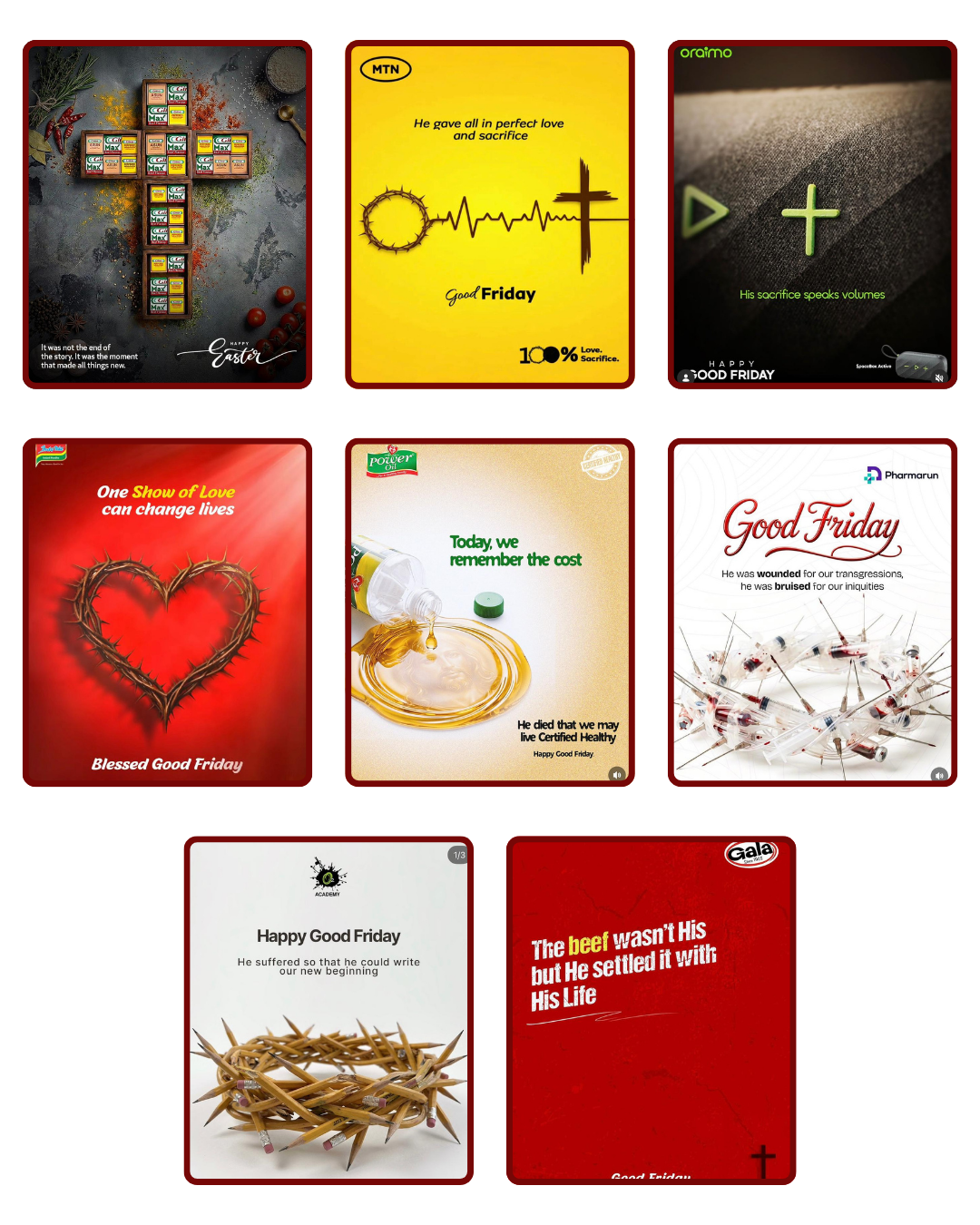


Good Friday 2026 delivered something unexpected from Nigerian marketing: reverence executed through product storytelling. Not Easter sales promotions wrapped in crosses. Not a discount campaign disguised as spiritual messages. Actual creative work that connected sacrifice narratives to everyday objects that consumers already trusted and recognised.
The campaigns shared common DNA, visual symbolism anchored by product integration, religious messaging delivered through familiar items, and copywriting that bridged spiritual significance with brand presence. What made them work wasn’t what they said. It was how they made products themselves carry the message.
Consider the execution strategy. Gino arranged seasoning cubes into a cross formation surrounded by cooking spices and fresh herbs, then positioned Ester not as the ending but as a transformation: “It was not the end of the story. It was the moment that made all things new.” The product became a compositional element. The spices reinforced domestic ritual. The message connected kitchen staples to the theology of resurrection.
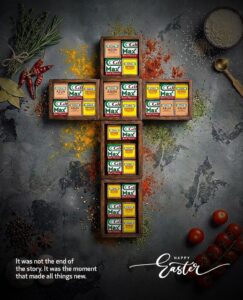
Gino
MTN visualised sacrifice through medical imagery, crown of thorns rendered as EKG heartbeat line forming cross against signature yellow, with copy reading “He gave all in perfect love and sacrifice” above “100 Love. Sacrifice.” The telecom brand transformed its connectivity proposition into an emotional connection through a visual metaphor that required no product shot whilst remaining unmistakably MTN.

MTN
Oraimo reduced Good Friday to essential geometry: volume control buttons forming a cross, minimal copy declaring “His sacrifice speaks volume” against product photography showing earbuds. The electronics brand connected audio technology to message amplification through visual restraint that let symbolism carry persuasion.

Oraimo
Indomie created a crown of thorns from thorny branches shaped into a heart, stating “One Show of Love can change lives” for Blessed Good Friday. The instant noodle brand positioned love as a transformative action rather than sentiment, using thorns-as-heart to visualise pain producing redemption.

Indomie
Power Oil showed a vegetable oil bottle pouring golden liquid that forms a pool revealing the face of Jesus Christ, with copy reading “Today, we remember the cost” and “He died that we may live Certified Healthy” against a Happy Good Friday greeting. The cooking oil brand connected product promise, health certification, to sacrifice outcome through the visual metaphor of pouring as giving.

Power Oil
Pharmarun arranged medical syringes into a crown of thorns formation with scripture: “He was wounded for our transgressions, he was bruised for our iniquities.” The pharmacy platform transformed medical implements into religious iconography, connecting the healthcare mission to healing through suffering.

Pharmarun
O2 Academy created pencil crown variations, yellow pencils, black pens, mixed media, with a consistent message: “He suffered so that he could write our new beginning.” The creative academy positioned suffering as a prerequisite for transformation, using writing implements to literalise the metaphor of authoring new narratives.
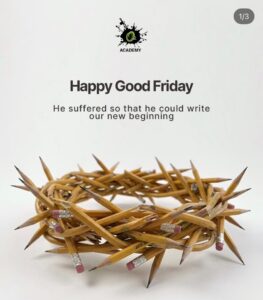
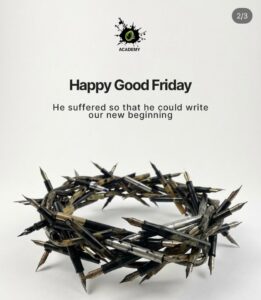
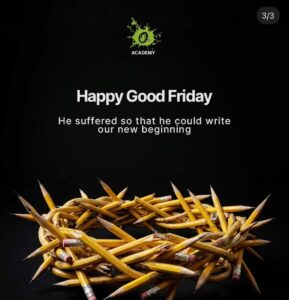
O2 Academy
Gala delivered wordplay connecting product to theology: “The beef wasn’t His but He settled it with His Life.” The snack brand used product ingredients as a creative device whilst maintaining a respectful tone through careful copywriting that acknowledged sacrifice without trivialising suffering.

Gala
These creatives work because they understand Good Friday requires different approach than Easter Sunday or Easter Monday. Friday commemorates death and sacrifice. Sunday celebrates resurrection. Monday extends the celebration. The messaging architecture changes accordingly.
Brands attempting discount-heavy Easter promotions on Good Friday risk tone-deafness. Campaigns featuring bunnies, eggs, or spring imagery miss the solemnity. Messages focused on celebration rather than reflection demonstrate cultural insensitivity. Good Friday creative requires restraint, symbolism, and genuine engagement with sacrifice narratives rather than generic holiday cheerfulness.
The strategic pattern across successful 2026 Good Friday creatives reveals five execution principles Nigerian brands mastered:
First, product integration through symbolism rather than product placement. The items themselves, cubes, pencils, syringes, oil bottles; became compositional elements carrying meaning rather than objects being sold. Consumers saw familiar products reimagined as visual metaphors, creating memory associations without explicit selling.
Second, copy that bridges the spiritual and commercial through careful tone calibration. Messages acknowledged sacrifice whilst connecting to the brand promise or positioning. “Certified Healthy” relates to the outcome. “Speaks volumes” connects audio products to message amplification. “Write our new beginning” positions creativity as a renewal mechanism. The copywriting found genuine connection points rather than forcing commercial messages into religious contexts.
Third, visual restraint that lets symbolism drive engagement. These weren’t busy, cluttered designs. Crown of thorns, cross formations, pouring liquid, each campaign used a single powerful visual element rather than multiple competing images. The restraint created impact through focus rather than overwhelming viewers with information.
Fourth, cultural sensitivity is demonstrated through execution choices. Brands avoided trivialising suffering, maintained a respectful tone despite product presence, and positioned themselves as participating in observance rather than exploiting the holiday for commercial gain. The campaigns felt like brand contributions to collective reflection rather than sales opportunities disguised as spirituality.
Fifth, strategic use of religious symbolism that resonates across denominations. Crosses, crowns of thorns, sacrifice language, these elements transcend specific Christian traditions and connect with broader audiences whilst maintaining theological accuracy. The campaigns demonstrated cultural literacy through symbol selection.
For Nigerian marketers, these campaigns establish a blueprint for religious holiday creative that balances brand presence with cultural respect. Easter weekend offers multiple messaging opportunities, Good Friday solemnity, Easter Sunday celebration, Easter Monday family focus. Brands attempting single campaign across all three days miss strategic opportunity to demonstrate cultural fluency through differentiated messaging.
The 2026 Good Friday campaigns also signal maturation in Nigerian brand marketing. Previous years saw brands treating religious holidays as discount opportunities or posting generic well-wishes with logo placement. These campaigns demonstrated willingness to invest creative resources in meaningful content that builds brand equity through cultural participation rather than interruption.
The execution quality matters. These weren’t stock photography with text overlays. They were conceived visual concepts requiring art direction, photography, and copywriting that understood assignment. Brands investing in this level of creative work signal commitment to audiences beyond transactional relationships.
The strategic implication extends beyond single campaign performance. Brands building reputation for cultural sensitivity and creative excellence during religious observances position themselves differently in consumer consideration. Audiences remember brands that honoured rather than exploited culturally significant moments. That memory translates to preference when purchase decisions arrive.
Good Friday 2026 demonstrated Nigerian brands understand religious holidays offer creative opportunity rather than sales interruption. The campaigns honoured spiritual significance whilst maintaining brand presence through product integration and thoughtful messaging. The execution quality proved creative excellence and cultural respect aren’t mutually exclusive, they’re complementary when brands invest proper resources in understanding audiences and contexts.
The question for 2027 becomes whether more brands recognise this strategic opportunity or whether Good Friday creative remains dominated by discount announcements and generic greetings. The difference between brands that build cultural capital and those that simply occupy advertising space lies in willingness to invest creative thinking in every consumer touchpoint, including religious observances that require sensitivity alongside selling.
Nigerian brands showed in 2026 that Good Friday creative can honour sacrifice narratives whilst maintaining commercial objectives. The path forward isn’t choosing between spirituality and branding; it’s finding authentic connections between what brands sell and what moments mean to audiences who buy them.
ALSO WATCH:MARKETING EDGE ONTV



Comment
No comments found.