
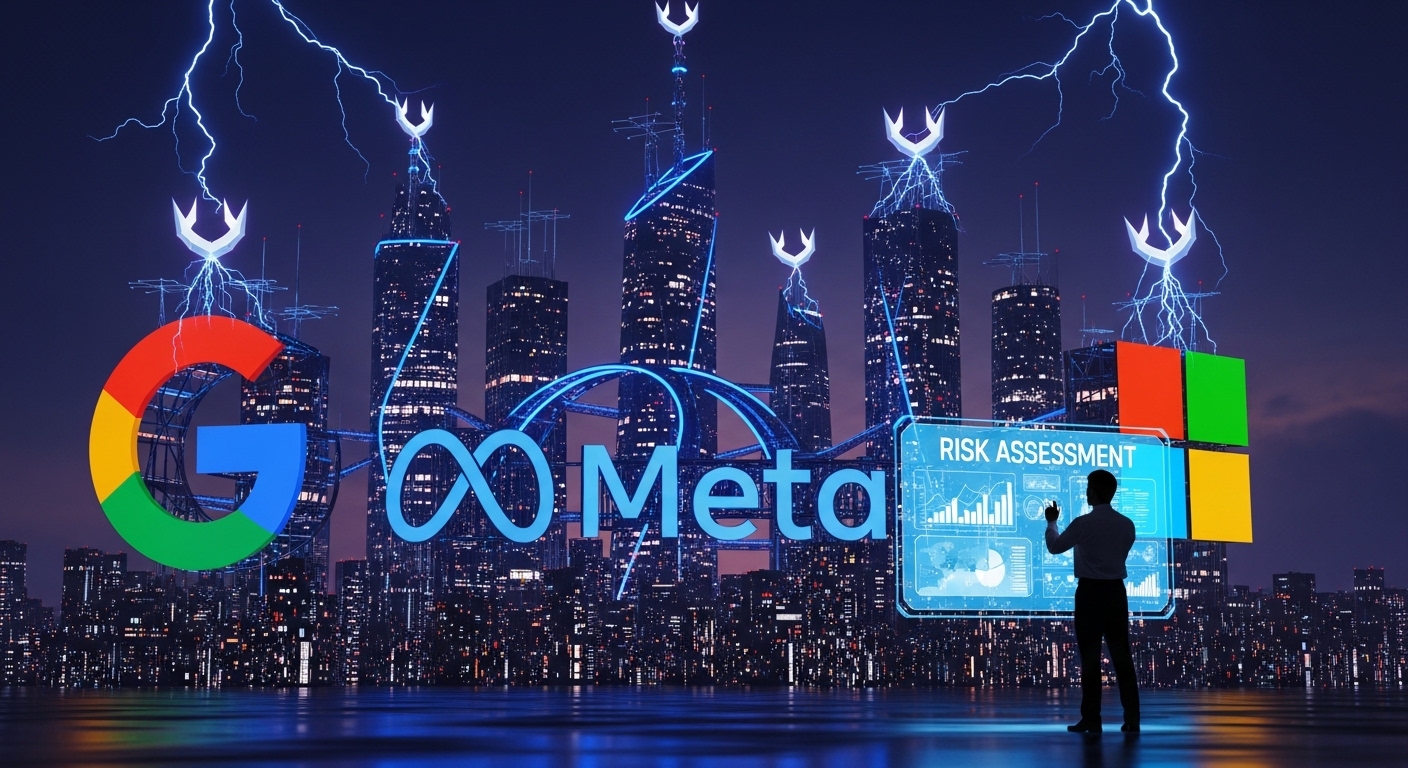


Geopolitics used to happen to other industries. Energy. Defence. Shipping. Marketers watched from a comfortable distance, adjusted media budgets for regional volatility, and moved on.
That distance no longer exists.
Iran’s Revolutionary Guard Corps has formally listed 17 major American corporations as targets, including Microsoft, Apple, Google, Meta, Nvidia, Tesla, Boeing, JP Morgan, and others, effective from Wednesday, 1st April. These are not obscure contractors. They are the platforms, tools, and infrastructure that the global marketing industry runs on every single day.
This is a Marketing Story
The instinct is to frame this as a geopolitical or military story. It is both of those things. But for anyone running a brand, a campaign, or a marketing function in 2026, it is also something else entirely, a live demonstration of how quickly the environment a strategy was built on can shift beneath your feet.
Brent crude has surged from roughly $70 per barrel to as high as $119 since the conflict began. The S&P 500 recorded its worst quarterly performance since 2022. The Nasdaq entered correction territory. Those are not abstract numbers. They are the conditions inside which every marketing budget conversation is now happening.
What happens to Ad Markets under this pressure
When the platforms on your media plan are named in a threat list, three things happen simultaneously. Investors reprice risk. Brands quietly begin contingency conversations. And the agencies caught in the middle start asking questions for which nobody has clean answers.
Morgan Stanley has noted that markets may tolerate uncertainty for now, but prolonged uncertainty will be harder to look through. For marketing, that uncertainty translates directly: campaign timelines stretch, sign-offs slow, and discretionary spend, which marketing almost always is, becomes the first line scrutinised in a budget review.
Historically, the S&P 500 has lost an average 0.9% in the first month following a major geopolitical event, before recovering 3.4% across the following six months. Recovery happens. But the brands that manage the middle period well are the ones that planned for it.
The Infrastructure Question nobody is asking
Most marketing teams have not audited their technology dependency recently. They should. Cloud infrastructure, AI tools, ad serving platforms, CRM systems, and the companies named in this threat are woven into the operational backbone of modern marketing. The IRGC threat specifically cited AI and ICT companies as central targets, framing them as key components of broader strategic operations.
That framing matters. These are no longer just advertising platforms. They are infrastructure, and infrastructure carries a risk that marketing plans have historically not accounted for.
What marketers should be doing right now
Not panicking. Not overreacting. But not ignoring it either.
Scenario planning for regional campaign exposure. Reviewing which platforms carry operational dependencies versus optional media spend. Understanding where supply chain disruption, diesel prices are now averaging $5.45 per gallon, up from $3.76 before the conflict, feeds directly into the cost of physical marketing, events, and distribution.
The brands best positioned right now are those that built flexibility into their strategy before they needed it.
The bottom line is that modern marketing is built on digital infrastructure owned by a handful of companies. Those companies just became geopolitical assets. That is the new reality of the environment every marketer is operating in, and the plans that do not account for it are already out of date.
ALSO WATCH:MARKETING EDGE ONTV




Comment
No comments found.