
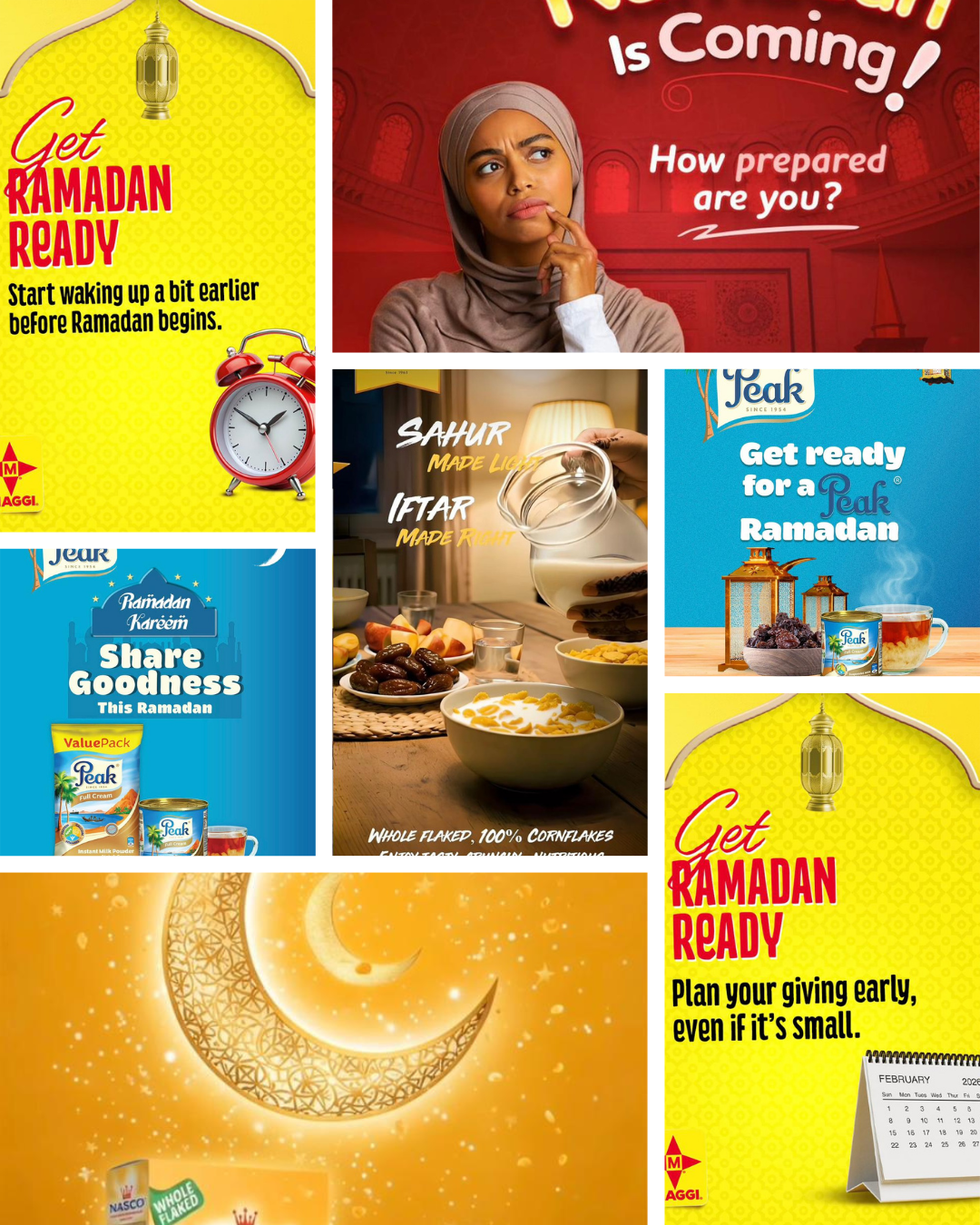



Ramadan commences today, and Nigerian FMCG brands have responded with campaigns, emphasising their increasing sophistication in their engagement with the sacred month. The creatives across social media platforms demonstrate that brands are increasingly aware that Ramadan marketing necessitates genuine utility, rather than merely seasonal acknowledgement.
From the creatives of Maggi’s practical preparation suggestions to Nasco’s meal occasion strategy, Ramadan induces substantial modifications in household expenditures, eating habits, and daily rituals for approximately 20 to 25 per cent of Nigerians who observe the Muslim fast.
In Nigeria, consumer research indicates that 80 per cent of consumers intend to increase their expenditures on food and beverages in comparison to the rest of the year, the highest rate in Africa. Brands that address these practical realities are well-positioned to capture market share during this month.
Here are some of the biggest Nigerian FMCG companies’ plans for Ramadan 2026, and what those plans say about how marketing is changing, what opportunities the season brings for food and drink brands in general.
What brands are doing right this Ramadan
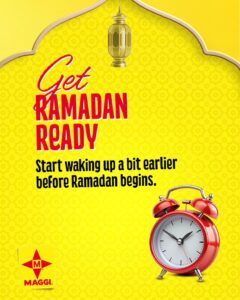
Maggi began with two creatives giving useful planning advice: “Start getting up a little earlier before Ramadan starts” and “Plan your giving early, even if it’s just a little.” Both have the brand’s signature yellow background, pictures of lanterns for Ramadan, and useful props like an alarm clock and schedule.
The strategic significance here lies in timing and utility. Maggi positioned these messages during the critical preparation phase when observers are genuinely adjusting routines and planning for the month ahead. The first creative addresses a real challenge: shifting sleep schedules to accommodate Suhoor, the pre-dawn meal.
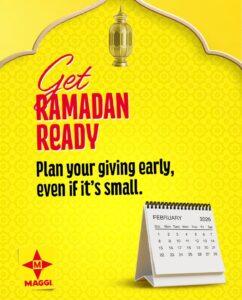
The second taps into the charitable giving that defines Ramadan observance. By offering helpful guidance rather than product-focused messaging, Maggi builds goodwill and maintains top-of-mind awareness when consumers are making purchasing decisions.
Meanwhile, Nasco Cornflakes demonstrated strong occasion-based positioning with “Sahur Made Light, Iftar Made Right.” The creative shows a complete meal spread with the product prominently featured alongside dates and milk. This execution addresses Ramadan’s altered eating schedule by positioning cornflakes as appropriate for both key meal occasions: a light, quick option for Suhoor when time is limited, and a component of the heavier Iftar meal that breaks the fast at sunset.

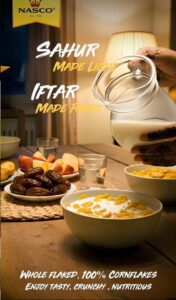
What makes this effective is the dual functionality. Breakfast cereals face a natural challenge during Ramadan since their primary morning consumption occasion disappears during fasting hours. Nasco solved this by articulating genuine utility at both Suhoor and Iftar, expanding the product’s relevance across the day’s eating windows. This represents smart category adaptation to seasonal behaviour shifts.
Peak Milk approached the season through two complementary creatives. The first, “Get ready for a Peak Ramadan,” establishes seasonal presence with the product alongside traditional Ramadan elements like lanterns, dates, and tea. The second creative, “Share Goodness This Ramadan,” elevates the strategy by featuring both ValuePack pouch and tin formats while emphasising sharing, a core Ramadan value.
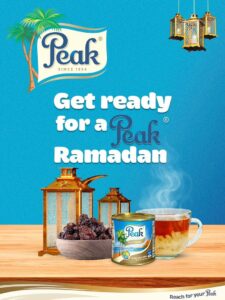
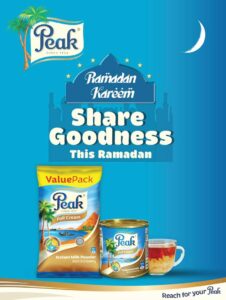
The ValuePck focus carries particular significance given current economic conditions. With research showing 14% of Nigerian consumers planning to take loans to cover Ramadan expenses, the highest rate in Africa, highlighting bulk formats that deliver better per-unit value directly addresses real budget concerns. Peak positions itself as understanding both the spiritual and practical dimensions of Ramadan preparation.
Dano’s creative asks, “Ramadan is Coming! How prepared are you?” featuring a thoughtful young woman in hijab. The approach creates engagement through questioning, prompting consumers to consider their Ramadan readiness. By positioning the brand within preparation conversations, Dano inserts itself into the mental checklist observers are developing as they stock their households for the month ahead.
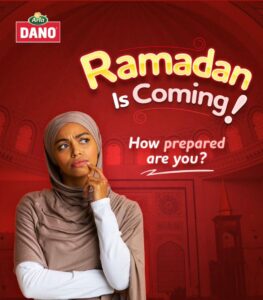
This reflective style works differently from explicitly instructional messaging. Rather than telling consumers what to do, it invites them into a moment of consideration where the brand becomes associated with thoughtful preparation. The execution assumes brand familiarity and relies on the product’s established role in Nigerian households during Ramadan.
The Ramadan opportunity: Why FMCG brands should invest
The commercial case for Ramadan marketing grows stronger each year. Beyond the 80% of Nigerian consumers planning increased food spending, research from TGM reveals that this isn’t aspirational behaviour. It’s driven by the practical reality that families gather for Iftar meals nightly, hospitality expectations increase, and many observers purchase higher-quality ingredients to make evening meals special after a day of fasting.
While 90% of Ramadan meals in Nigeria are still prepared at home, convenience is gaining ground. 35% of consumers now purchase ready-made meals from local markets, and 26% order by phone. This signals openness to solutions that reduce preparation burden while maintaining the quality expected during Ramadan.
Global Ramadan data reinforces the opportunity. 86% of consumers across Muslim-majority markets consider Ramadan the best time for discounts. 45% are very likely to purchase from Ramadan-specific campaigns, and 81% try new products inspired by Ramadan content. These aren’t passive observers. They’re active shoppers looking for brands that understand their needs during this period.
The spending dynamic creates genuine openness to brand messaging, provided that messaging delivers value. Consumers during Ramadan are simultaneously managing increased budgets and seeking products that help them fulfil both spiritual and practical obligations. Brands that position themselves as facilitators of successful Ramadan observance, rather than just seasonal participants, capture a disproportionate share of this spending.
Strategic guidance: How to leverage Ramadan effectively
Successful Ramadan marketing requires understanding the month’s structure and how consumer behaviour shifts across its phases.
The preparation phase begins two to three weeks before Ramadan starts. Consumer search activity spikes around decorations, meal planning, bulk purchasing, and spiritual preparation. Brands should focus this period on practical guidance: recipe ideas, meal prep tips, product bundles, and early-bird promotions that help consumers prepare financially. Maggi’s preparation-focused creatives demonstrate this timing well, addressing what consumers are actively doing rather than just the sentiment they might be feeling.
During Ramadan itself, consumer activity shifts dramatically. Online engagement peaks between 2 p.m. and 4 p.m. as observers spend afternoons at lower energy levels, followed by a surge in the 7 p.m. to 10 p.m. window around Iftar. Brands should time social media content, promotional messaging, and advertising for these windows when attention is closest.
Product positioning needs to address specific meal occasions. Suhoor requires quick, nutritious options that provide sustained energy without extensive preparation at pre-dawn hours. Iftar demands celebratory, satisfying foods that feel special after a day of fasting. Brands that can demonstrate relevance to both occasions, as Nasco did with its dual positioning, expand their consumption footprint throughout Ramadan.
Value messaging matters critically during Ramadan, given increased spending pressure. But value doesn’t always mean discounts. It can mean bulk formats that reduce per-unit costs, as Peak highlighted with ValuePack. It can mean versatile products that serve multiple meal occasions. It can mean recipe content that helps consumers stretch their budgets further. The key is demonstrating how the brand helps observers manage the financial reality of increased Ramadan spending.
Charitable tie-ins align naturally with Ramadan’s emphasis on generosity, but they must feel genuine rather than opportunistic. The most effective approaches involve brands facilitating giving, whether by donating portions of sales to food banks, sponsoring Iftar meals at mosques, or creating platforms for consumers to contribute to causes. Maggi’s “plan your giving early” creative touches this theme authentically by offering practical guidance rather than making grand corporate promises.
Cultural authenticity remains essential. Consumers quickly distinguish between brands that understand Ramadan and those using it as a generic marketing opportunity. Authentic campaigns feature appropriate visual elements like lanterns and crescents, use language that reflects Ramadan’s spiritual significance, and most importantly, demonstrate knowledge of actual Ramadan practices and challenges.
Which categories naturally fit Ramadan marketing
Not all FMCG categories benefit equally from Ramadan marketing investment. Understanding which products align naturally with the season versus which require creative repositioning determines where marketing budgets generate the strongest returns.
Food staples represent the core Ramadan opportunity. Rice, cooking oil, spices, seasonings, flour, and basic ingredients for meal preparation see sustained demand throughout the month as families cook Iftar meals daily. These categories face increased purchase frequency and often see consumers trading up to premium variants or buying larger pack sizes. Maggi, as a seasoning brand, sits in a prime position since the product is essential to Nigerian cooking and becomes even more relevant during Ramadan when meal preparation intensifies.
Dairy products occupy strong positions because they serve multiple Ramadan needs. They’re used in tea and beverages consumed throughout the evening. They’re incorporated into desserts and sweet dishes traditional to Iftar meals. They provide nutritional density for Suhoor when observers need sustained energy. Both Peak and Dano benefit from this natural category fit, and their campaigns reinforce existing consumption patterns while potentially expanding usage occasions.
Breakfast cereals require strategic repositioning since their primary morning consumption occasion disappears during fasting hours. Nasco’s campaign demonstrates how brands can maintain relevance by articulating utility at Suhoor, when a quick, easy breakfast option genuinely solves the problem of limited preparation time in early morning hours. The brand’s dual positioning for both Suhoor and Iftar further expands relevance throughout the day’s eating windows.
Beverages see varied opportunities depending on type. Tea and coffee benefit from evening consumption around Iftar. Soft drinks and juices are purchased to break the fast. Non-alcoholic malt drinks and fruit-flavoured beverages serve celebratory functions. Energy drinks that might help people stay alert for evening prayers or Suhoor preparation can position themselves strategically, though messaging must emphasise supporting worship and family time rather than compensating for fasting’s physical effects.
Snacks and treats occupy premium territory during Ramadan. Dates are traditional for breaking the fast and have seen dramatic sales increases. Sweet baked goods and desserts feature heavily at Iftar. Consumers actively seek premium snacks to make evening gatherings special. Brands in this space can leverage both traditional associations and indulgence positioning, emphasising that Ramadan evenings are moments of celebration worth marking with quality products.
Convenience foods and meal solutions represent growing opportunities, as the data on ready-made meal purchases indicates. Brands offering products that reduce Iftar preparation time without sacrificing quality can capture from households balancing work obligations with Ramadan observance. The key is positioning convenience as enabling, not replacing, the family meal traditions that define Ramadan for many Nigerian Muslims.
Beyond Ramadan: Extending campaigns through Eid
Ramadan marketing shouldn’t stop when the month ends. Eid al-Fitr, the celebration marking Ramadan’s conclusion, represents another significant spending moment. Consumer behaviour shifts again toward gifting special meals, new clothing, and celebratory gatherings.
Food brands can extend Ramadan campaigns into Eid by repositioning products for celebration rather than routine. The family emphasis continues, but the tone shifts from sustaining the fast to commemorating its completion. Brands that built goodwill during Ramadan through useful content and genuine value can leverage that equity into Eid sales.
Post-Eid retention matters for long-term brand building. Consumers who tried new products during Ramadan, purchased larger formats, or discovered new usage occasions represent valuable acquisition opportunities. Smart brands use post-Ramadan periods to convert trial into loyalty through targeted promotions, continued recipe inspirations, and messaging that maintains the relationship built during the holy month.
The extended Ramadan-to-Eid period can span five to six weeks when properly leveraged. Brands that think beyond the 30 days of fasting to encompass preparation, observance, celebration, and retention phases maximise returns on their seasonal marketing investments.
What these campaigns signal about industry evolution
The 2026 Ramadan campaigns from Nigerian FMCG brands reveal a maturing understanding of cultural marketing. Five years ago, Ramadan campaigns often consisted of generic seasonal greetings with minimal strategic thinking. Today’s executions demonstrate brands investing in understanding actual consumer behaviour during the holy month and developing messaging that addresses real needs.
Maggi’s practical preparation tips, Nasco’s dual meal occasion positioning, Peak’s value-focused format highlighting, and Dano’s preparation engagement each represent different but legitimate approaches to connecting with Ramadan observers. The diversity of strategies reflects brands recognising that one-size-fits-all seasonal messaging no longer cuts through.
This evolution matters because Nigeria’s Muslim population represents a substantial market segment with distinct seasonal consumption patterns. Brands that treat Ramadan as a genuine strategic opportunity rather than a checkbox marketing moment are building long-term equity with these consumers. They’re demonstrating cultural fluency and earning preference that extends beyond the holy month.
The data support this investment. Research showing 81% of consumers trying new products inspired by Ramadan content indicates that seasonal campaigns can drive meaningful behaviour change, not just awareness. Brands using Ramadan to introduce new formats, variants, or usage occasions can convert seasonal trials into year-round consumption if the product delivers on its Ramadan promise.
In Conclusion
Ramadan 2026 demonstrates that Nigerian FMCG brands increasingly understand the commercial and strategic opportunity the holy month presents. The campaigns rolling out this year show a genuine effort to connect with consumers through practical utility, cultural authenticity, and clear value propositions.
As the moth progresses, the effectiveness of these different approaches will become clearer through sales data and consumer response. Brands that positioned themselves as helpful Ramadan companions should see increased trail and potentially format shifts toward larger pack sizes. Those that offered genuine value through bulk options or promotional pricing should capture share from budget-conscious consumers managing increased spending.
For marketers planning future Ramadan campaigns, this year’s efforts provide useful models. The most effective strategies start with consumer research on actual Ramadan challenges and routines, develop positioning around solving real problems, create messaging that demonstrates product utility at specific moments, and offer genuine value through formats, promotions, or content.
The opportunity extends beyond the 30 days of fasting to encompass preparation, observance, Eid celebration, and post-season retention. Brands that think strategically across this extended period maximize returns on their seasonal investments while building lasting relationships with Muslim consumers.
With Nigerian consumer data showing 80% planning to spend more on food during Ramada, the highest rate across Africa, and research indicating that consumers are actively seeking brands that understand their needs during this period, the commercial case for sophisticated Ramadan marketing has never been stronger.
The brands getting it right this year are not just capturing short-term sales. They’re building the kind of cultural fluency and consumer trust that drives long-term preference in an increasingly competitive market.
ALSO WATCH MARKETING EDGE ONTV




Comment
No comments found.