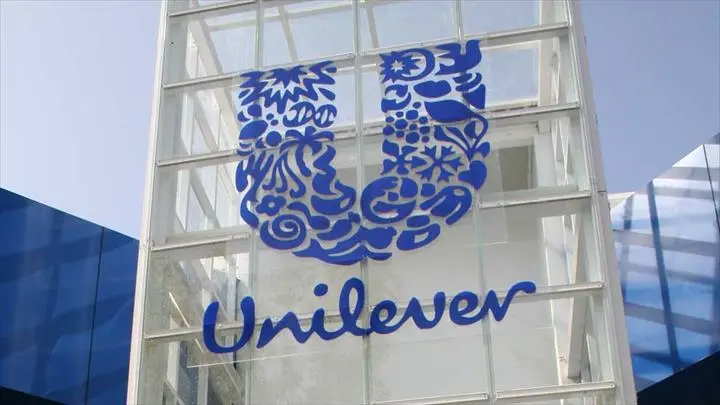


Fernando Fernández calls it revolution. Traditional advertising agencies might call it an extinction event. Either way, Unilever just turned 300,000 influencers into its primary marketing force whilst reducing conventional agencies to supporting cast in the drama they used to direct.
The consumer goods giant shifted 50 per cent of its advertising budget to social media, up from 30 per cent, and increased influencer partnerships twentyfold in less than a year. That’s not a strategic adjustment. That’s wholesale abandonment of a model that built brands like Dove, Vaseline, Hellmann’s, and Knorr into household names over decades.
Fernández, who became CEO in March 2025, delivered a message with brutal clarity at the Consumer Analysts Group of New York conference in February 2026: “The time of lazy marketing, a couple of ads a year for a couple of innovations, is gone. Marketing today is hard work.”
He rated Unilever’s current marketing execution at “six or six and a half out of ten” and declared that “broadcasting messages from big brands now can become suspicious.” The solution, according to Fernández, isn’t to better broadcast messages. It’s abandoning broadcast entirely in favour of what Unilever calls “said by others” recommendations delivered not by corporations but by people.
The numbers reveal a scale that makes influencer marketing a boardroom issue rather than a channel test. Unilever currently collaborates with 300,000 creators globally. In the beauty and wellbeing division alone, partnerships grew from 75,000 to 180,000 in a single year. The company increased content production sevenfold, doubled posting frequency, and now operates on the assumption that social video lifespan is four days.
“This is only possible through adoption of AI at scale in content creation,” Fernández explained, revealing that Unilever’s influencer strategy depends on artificial intelligence to generate volume required to feed algorithmic preference across platforms.
The strategy delivered measurable results that justify the pivot. Vaseline, a 155-year-old brand that epitomises traditional marketing, drove 12 per cent volume growth in two years by tapping social media. Dove’s #ShareTheFirst became the brand’s first campaign made entirely from creator content without studios or added production. Cleanipedia platform, working with 2,000 influencers across global markets, generated a 5.2 per cent uplift in favourability for Persil Wonder Wash.
Unilever appointed social-first agency Samy to develop a global influencer strategy for its food business, giving the agency access to 120 million influencers worldwide through the proprietary Maia platform. The appointment came as Unilever entered talks to sell its food business to McCormick & Co for an estimated $33 billion, proving that even divisions potentially on the block must conform to an influencer-first mandate.
The ripple effects reshaped the entire industry. Marketing consultants reported inbound calls from Fortune 500 brands surging after Unilever’s announcement, with companies explicitly citing Unilever as the reason they wanted an influencer roadmap built. “Where Unilever goes, others follow,” stated Sarah Mansfield, former Unilever global media VP who now advises brands.
Earnings calls from General Mills, Gap, Victoria’s Secret, and Bath & Body Works echoed a pattern, with executives outlining plans to increase influencer spend. Linqia survey of 200 marketers found 62 per cent plan to increase influencer budgets in 2026. Interactive Advertising Bureau projects US creator spending will reach $37 billion in 2025, up 26 per cent year over year.
For Nigerian marketers watching this transformation, implications are both immediate and strategic. First, the creator economy that seemed an optional channel for testing in 2023 became a mandatory competency requirement by 2026. Brands that built capabilities early gained a structural advantage. Those treating influencer marketing as an experimental budget line now face catching up to companies operating at scale, as Unilever demonstrated is achievable.
Second, the pricing dynamics shifted dramatically. Unilever’s 20x expansion pushed demand in a polarised market, increasing rates for established creators whilst surplus UGC supply pushed average fees downward. Nigerian brands entering influencer marketing in 2026 face more expensive established creators and a more cluttered landscape of emerging voices competing for attention.
Third, measurement expectations rose alongside budgets. When influencer marketing represented 5 per cent of spending, informal tracking sufficed. When it captures 50 per cent of the budget, executives demand proof that the investment outperforms declining traditional reach. Nigerian marketers must build measurement infrastructure simultaneously with creator relationships, not afterwards.
The strategic question isn’t whether to embrace the creator economy. Unilever already answered that. The question is whether Nigerian brands can build systems that make scale possible: cleaner contracts, tighter measurement, workflows that keep pace with creator-led media moving at four-day content lifecycles.
Fernández described Unilever’s transformation as building an “army” of creators. The military metaphor is deliberate. Armies require command structure, logistics systems, intelligence gathering, and constant resource allocation. Traditional advertising agencies provided those functions for the broadcast era. Unilever is discovering whether influencer agencies can provide them for the social era.
The shift exposes structural unpreparedness. Most brands lack contracts standardised for 300,000 partnerships. Most measurement systems can’t attribute outcomes across that many touchpoints. Most workflows can’t produce sevenfold content increases without AI assistance that raises its own authenticity questions.
Traditional agencies built expertise over decades scaling broadcast campaigns. Influencer agencies are building comparable expertise in a compressed timeframe whilst market dynamics change underneath them. The winners won’t be agencies that simply broker creator relationships. They’ll be platforms that provide infrastructure making 300,000 partnerships manageable.
Unilever didn’t just shift budgets. It proved that a consumer goods giant can operate at a creator economy scale. Whether that model works long-term remains unproven. But traditional agencies watching 50 per cent of Unilever’s budget flow toward 300,000 influencers instead of them aren’t debating viability. They’re calculating survival odds.
ALSO WATCH:MARKETING EDGE ONTV

Comment
No comments found.