
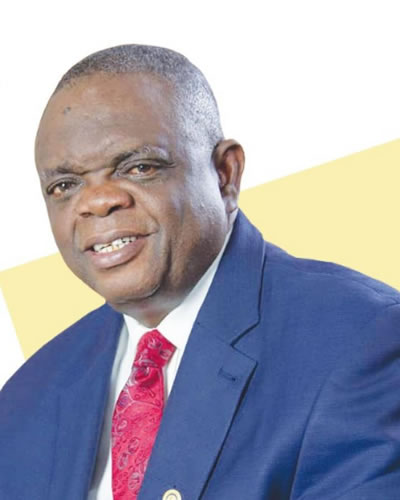


The President of the Out of Home Advertising Association of Nigeria OAAN, Sola Akinsiku, said the association is deliberately studying the recent Federal High Court judgments concerning out of home advertising regulation before taking a position.
Speaking during an Industry Conversation interview with MARKETING EDGE ONTV in Lagos, the OAAN president clarified that OAAN did not initiate the lawsuits that produced the judgments.
Instead, he explained that two separate courts of competent jurisdiction interpreted the law based on the cases brought before them.
However, he stressed that OAAN is not ignoring the development. The association, he said, has already assembled a team of lawyers, including legal professionals within its membership, to carefully review both judgments and advise the association accordingly.Meanwhile, he noted that one of the judgments has already been appealed.
Therefore, he explained, OAAN will continue to observe developments until higher courts provide clearer direction. According to the industry expert, the present legal reality still recognizes ARCON’s role in vetting advertisements.
ARCON and local governments must avoid regulatory confusion
Continuing, the OAAN president addressed the regulatory boundary between ARCON and local government authorities.
He acknowledged that both institutions derive authority from legitimate legal sources.
Nevertheless, he argued strongly for coordination and efficiency.
He explained that requiring advertisers to obtain vetting approvals from multiple local governments across Nigeria would create unnecessary administrative burdens.
Consequently, he said centralised vetting through ARCON would ensure professionalism, order, and efficiency across the country.
At the same time, he emphasised that such a position does not invalidate the constitutional responsibilities of local governments.
Instead, he encouraged ARCON to lead efforts to harmonize regulatory processes nationwide.
Sectoral groups preparing collective response
Furthermore, the industry stakeholder revealed that discussions are ongoing within the Heads of Advertising Sectoral Groups. Because the issue affects the entire marketing communications ecosystem, he explained, no single association can act alone.
He noted that OAAN is consulting legal experts while waiting for broader industry engagement.
Eventually, he said, sectoral groups will meet and take a collective, informed position on the matter.
OYSAA directive on gaming and lottery vetting raises legal questions
The OAAN president also addressed the directive from the Oyo State Signage and Advertising Agency OYSAA requiring vetting of gaming and lottery advertisements.
He explained that OAAN received the communication and immediately responded by stating that, to the association’s knowledge, ARCON remains the legally recognized body responsible for advertisement vetting.
Akinsiku added that OAAN also prepared to write ARCON before the regulator issued its own public clarification.
However, the advertising professional emphasized that OAAN’s response remains guided strictly by legal interpretation.
If existing gaming or lottery laws empower state authorities to regulate communication related to those sectors, he said, the association would respect such authority. Until then, he maintained that OYSAA may be acting outside its legal mandate.
He also recalled similar past situations where some states attempted to require vetting of political campaign materials. In those cases, OAAN intervened and reaffirmed ARCON’s authority after regulatory consultation.
Therefore, he concluded that OYSAA’s position remains subject to legal clarification, especially given ongoing disputes between some states and the federal government over gaming regulation.
Multiple taxation remains a pressing concern
Meanwhile, he acknowledged that out of home operators continue to face multiple regulatory levies across states.
Although regulation often includes revenue generation, he said the current structure places pressure on practitioners.
Nevertheless,he affirmed that OAAN is actively engaging signage agencies and regulators to find solutions.
He explained that billboard structures themselves do not generate revenue unless advertisers use them. For this reason, he encouraged regulators to harmonise levies to support business sustainability.
Media charter to strengthen professionalism
Transitioning to industry reform, the association leader spoke about OAAN’s proposed media charter initiative.
He explained that the association aims to establish professional standards and guidelines for out of home media practice nationwide.
He compared the effort to the professionalisation of advertising practice that led to the creation of APCON, now ARCON.
According to him, the initiative seeks to discourage unprofessional conduct and ensure only qualified practitioners operate within the sector.
Although he confirmed steady progress, he said the association will provide details when discussions mature.
Clarifying the difference between advertising and media ownership
The industry expert also clarified what he described as a common misunderstanding within the sector. He explained that out of home advertising and out of home media ownership are not the same.
Creative agencies produce advertising messages, he said, while out of home practitioners provide exposure platforms.
Therefore, he encouraged practitioners to strengthen their identity as media platform owners while maintaining professional standards.
AI cannot replace human creativity
On technology, the OAAN president addressed concerns about artificial intelligence replacing creative thinking.
He rejected the idea, explaining that AI itself is a product of human creativity.
While AI and data analytics improve execution and decision making, he said human intuition, insight, and emotional understanding remain central to creativity.
Nevertheless, he encouraged practitioners to continue investing in technology, research, and innovation.
He added that out of home advertising already depends heavily on engineering and technological processes, from structural fabrication to installation and digital displays.
Industry growth requires collaboration and compliance
Looking at the broader marketing communications ecosystem, the association leader said the Nigerian industry continues to grow despite infrastructure and data challenges.
However, he stressed that collaboration across sectoral groups remains essential.
He also advised practitioners to comply with regulations at all times, noting that laws remain binding until changed through legal processes.
In closing, he expressed optimism about the future of the industry, saying continued collaboration, investment in technology, and regulatory clarity will strengthen marketing communications in Nigeria.



Comment
No comments found.