
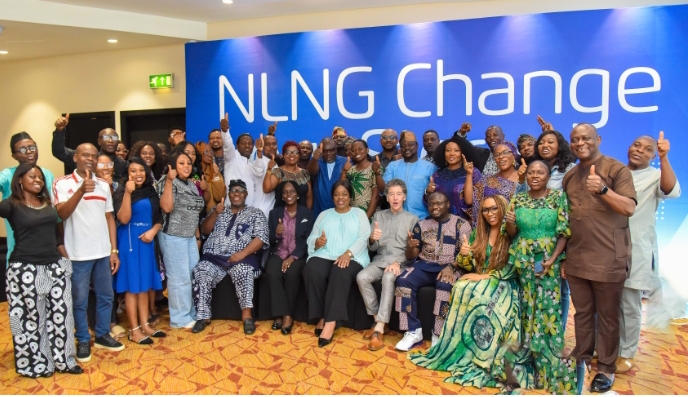


Energy, excitement, and a renewed sense of rebirth and purpose filled the room as the 2026 “Change Your Story” training reached its peak, and journalists openly reflected on an experience that has clearly reshaped how they think, work, and tell stories.
NLNG “Change Your Story” 2026,
What began as a three-day programme quickly transformed into a defining turning point, as it not only challenged long-held habits but also introduced practical tools, and ultimately ignited a fresh, forward-looking mindset.
From the very first session, participants actively engaged with the process, and in doing so, they immersed themselves in a fast-paced, hands-on learning environment.
As the sessions progressed, they continuously stretched beyond their familiar routines, and by the end, they confidently acknowledged that they were not just better equipped, but fully reoriented for the demands of a digital-first media landscape.
Speaking exclusively with MARKETING EDGE, several participants strongly emphasised the far-reaching impact of the NLNG “Change Your Story” 2026 training, and in clear terms, they described it as a transformative experience that has fundamentally reshaped their approach to storytelling.
Moreover, these participants, who came from diverse media organisations, collectively commended the organisers, noting that the programme did not only meet expectations but significantly enhanced their skills, sharpened their thinking, and elevated their professional outlook.
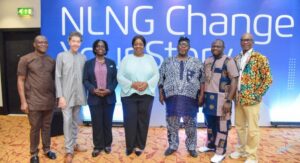
hoto: Dr. Sophia Horsfall, NLNG’s GM, External Relations & Sustainable Development (4th left), and Anne-Marie Palmer-Ikuku, Manager, Corporate Communication and Public Affairs (3rd left), with the NLNG team and facilitators for the #NLNGChangeYourStory Workshop for journalists in Lagos
Muyiwa Akintunde of Breezy News immediately captured the mood when he described the experience as “awesome.” However, beyond that, he clearly explained how the training sharpened his focus on audience-centred storytelling, and at the same time, pushed him to rethink his approach to content creation.
In addition, he pointed out that he discovered practical techniques he had previously overlooked, and as a result, he now feels better prepared as he moves to launch his YouTube channel.
Ultimately, he stressed that the most important lesson remains clear, stressing that journalism must consistently prioritise people, relevance, and impact.
In the same vein, Funmilola Gboteku of the News Agency of Nigeria shared a noticeable shift in perspective. At first, she admitted she had modest expectations; however, as the training unfolded, she quickly recognised its depth and relevance.
She actively highlighted newly acquired skills in video creation, editing, and digital storytelling, and furthermore, she stressed that these tools will immediately enhance her daily reporting.
Consequently, she called on more organisations to invest in journalists, insisting that such deliberate support remains critical for sustainable industry growth.
Equally, Vivian Ihechu of the News Agency of Nigeria strongly reinforced the urgency of adaptation. She clearly stated that digital journalism is no longer optional but absolutely necessary.
In addition, she praised the training as one of the most insightful she has attended, especially as it delivered practical lessons in multimedia storytelling, data application, and audience engagement.
More importantly, she committed to extending the impact by sharing the knowledge with colleagues, thereby ensuring that the benefits continue beyond the training room.
Furthermore, Zulu Ani described the programme as a true eye-opener, and in doing so, he affirmed that it fully delivered on its promise of transformation.
According to him, each day consistently introduced new dimensions to journalism practice, particularly through the integration of AI and digital tools that now simplify complex processes.
At the same time, he commended the structure, consistency, and long-term value of the initiative, noting that it equips participants not just for today, but for the future.
Similarly, Raymond Tedunjaye of New Nigerian Newspaper focused on the depth and practicality of the learning experience. He clearly described the knowledge gained as extensive, and more importantly, immediately applicable.
The exited journalist acknowledged the huge impact the capacity training would have on participants, and he shared several key learnings that he intends to take back to the field as a journalist.
He noted that these lessons are enormous, and applying AI in storytelling will now be far more exciting. He also commended the facilitator, Dan Mason, describing him as a top professional with a remarkable aura when it comes to journalism, while highlighting his patience and understanding in imparting knowledge.
Raymond further appreciated NLNG for taking the pains to empower a large number of journalists simultaneously, noting that a training of such magnitude would typically cost a fortune, making this opportunity highly valuable for all participants.
Beyond individual reflections, participants collectively pushed forward a strong and consistent message—there is an urgent need for deeper collaboration between the media and corporate organisations. They firmly stressed that journalists play a central role in shaping narratives, driving visibility, and influencing public perception.
As a result, they strongly urged more companies to adopt similar initiatives, and more importantly, to intentionally invest in the professionals who consistently tell their stories and amplify their impact.
For all the partcipants, this was not just another workshop, rather, it marked a defining moment. It equipped participants with practical skills, sharpened their mindset, and strengthened their confidence. Above all, it prepared them to navigate a rapidly evolving media landscape and, ultimately, to tell stories that truly matter.



Comment
No comments found.