
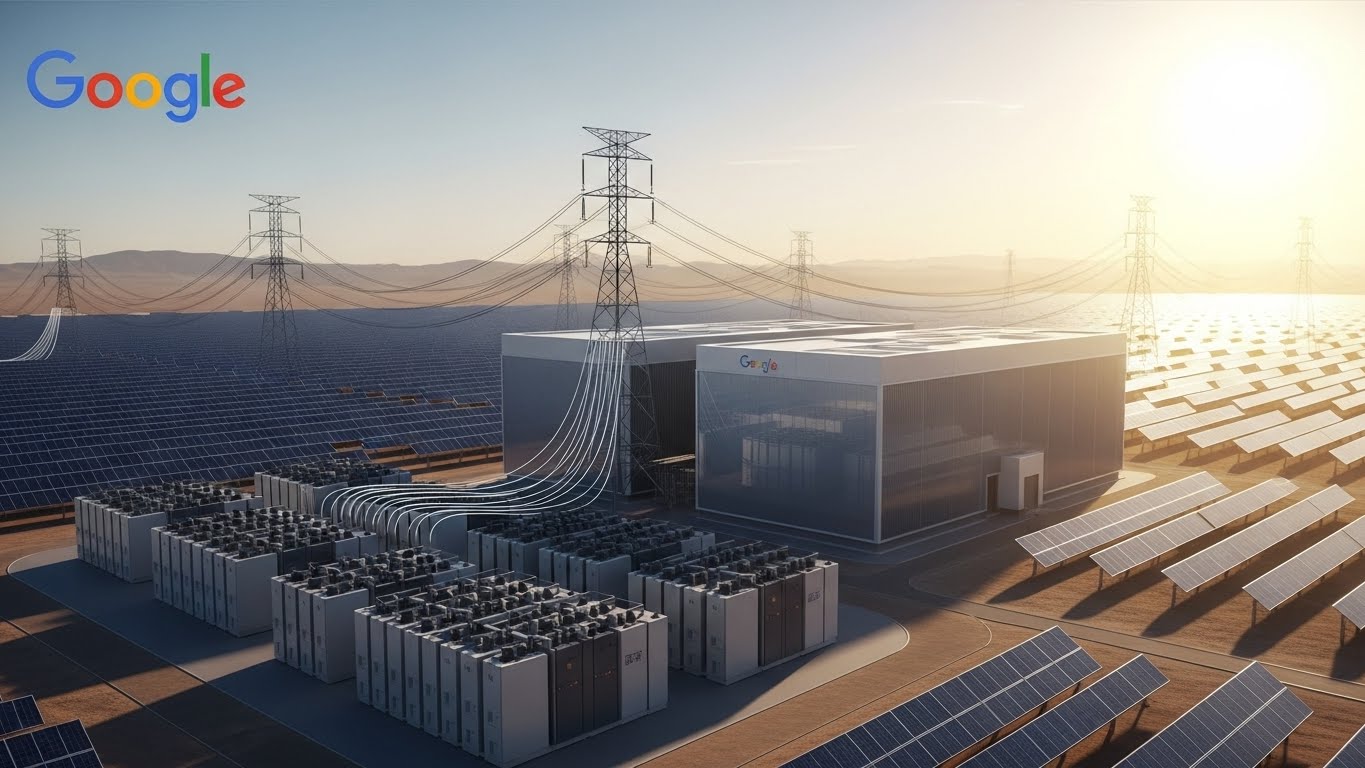


When Google announced its agreement to acquire Intersect Power for approximately $4.75 billion, the move represented more than just another infrastructure play. It served as a straightforward admission of a new reality driving the global technology industry. In the age of artificial intelligence, power has become the new bottleneck.
The transaction should finalize in the first half of 2026, pending regulatory approvals. Intersect will maintain its brand identity. However, the company will collaborate closely with Google on energy and data-center projects located together. Underlying this corporate framework is a strategic adjustment. It highlights the profound impact AI now has on the economics and logistics of digital expansion.
Why Energy Has Become the Choke Point
For years, the competition in Big Tech focused on chips, talent, and algorithms. Today, another constraint has come sharply into view: electricity.
Contemporary AI models require vast quantities of energy. This is especially true for those driving extensive generative systems. Training and operating them on a large scale necessitates more than just advanced semiconductors. These systems also require a dependable and continuous power supply. Currently, obtaining such power from already overburdened public electricity grids is becoming more challenging.
In numerous regions across the United States, data-center developers are experiencing prolonged delays. These delays span years as they effort to connect new facilities to power networks. Interconnection queues are expanding while grid enhancements lag. Consequently, utilities are finding it challenging to keep up with the demand fueled by AI, cloud computing, electric vehicles, and industrial electrification. Google acquired Intersect Power specifically to sidestep that bottleneck entirely.
What Intersect Brings to the Table
Intersect Power specializes in the development of large-scale sustainable energy projects. Specifically, they focus on solar generation combined with battery storage. They tailor these projects for energy-intensive consumers such as data centers. The model emphasizes co-location. This involves establishing power generation in proximity to computing infrastructure instead of depending on remote grid connections.
Prior to the acquisition, Intersect had established or was developing projects valued at over $15 billion in assets. They anticipate a clean-energy capacity exceeding 10 gigawatts by 2028. This capacity makes them comparable to major global power producers.
The allure for Google is dual-faceted. First, the corporation establishes a more defined route to obtain a stable and foreseeable energy supply for its AI-driven data centers. Secondly, it accomplishes this in a manner consistent with its enduring public commitment to sustainability. This move diminishes reliance on fossil-fuel-intensive grids. Alphabet executives have recognized that energy availability is becoming the primary constraint on AI expansion. They believe this now limits growth more than computing ambition does.
A Quieter But Deeper Shift
This acquisition indicates a significant change in how technology companies view infrastructure. Google is shifting away from solely negotiating power purchase agreements. Instead, the company is pursuing vertical integration. It now recognizes energy as a strategic asset rather than merely an operational consideration.
This reflects a broader trend within the industry. Technology companies are investigating direct investments in power generation, nuclear energy, and microgrids. They are anticipating a future where AI workloads function as continuous, always-on utilities instead of intermittent computing tasks. Intersect’s ongoing function as an independent brand highlights a significant aspect. This initiative does not focus on integrating an energy firm into Google’s culture. Instead, Google is incorporating energy expertise directly into its growth strategy.
The Stakes Go Beyond Google
The effects will reach many different types of businesses. Competition for remaining grid capacity may arise as hyperscalers secure power resources. This could leave smaller competitors scrambling to compete. These includes startups, regional data-center operators, and established companies.
From a policy perspective, the acquisition raises questions about control. In an increasingly concentrated digital economy, it is unclear who should control vital energy infrastructure. Governments and utilities now face more pressure than ever before. They must upgrade grids more quickly than what is currently feasible.
At the moment, Google is taking a practical rather than controversial approach. It shows that people are starting to realize two things. Innovation and infrastructure resilience are the most important factors that will define AI leadership.
A Power Play for the AI Era
Energy may emerge as the more important resource in the coming decade. It follows data, which served as the most important resource in the previous one. The purchase of Intersect Power by Google serves as a clear indication of this change. In the competition to develop advanced machines, the winners will likely be those who prioritize securing the electricity necessary for their operation.
ALSO WATCH MARKETING EDGE ONTV



Comment
No comments found.