


The global Out of Home advertising industry is experiencing one of its strongest growth cycles in recent years, with worldwide revenues reaching an impressive 54 billion dollars and reinforcing the medium’s growing influence within the global marketing ecosystem.
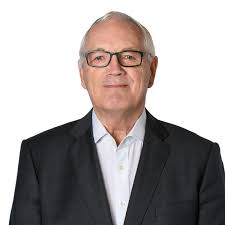
The upbeat assessment came from Tom Goddard, President of the World Out of Home Organization (WOO), during the organisation’s Annual Congress in London, where hundreds of industry leaders gathered to evaluate market performance, emerging opportunities, and the future direction of the sector.
According to Goddard, global OOH revenue expanded by 15 per cent compared to 2024, underlining the medium’s resilience and growing relevance as brands increasingly seek channels capable of delivering visibility, audience engagement, and measurable impact.
The figures, compiled across 85 markets representing approximately 95 per cent of global Gross Domestic Product, paint a picture of an industry that has moved beyond post-pandemic recovery and is now firmly focused on expansion and innovation.
Driving much of that momentum is the Asia Pacific region, which continues to outperform other territories. The region recorded close to 30 per cent growth, making it the strongest contributor to the industry’s current upward trajectory. Meanwhile, markets across the Americas as well as Europe, the Middle East and Africa maintained steady gains, further supporting global revenue growth.
At the same time, the industry’s digital transformation is gathering even greater speed. Digital Out of Home now accounts for 47 per cent of total global OOH revenue, placing it on the verge of surpassing traditional static advertising formats for the first time in the history of the medium.
Although adoption rates continue to vary across countries, the trend signals a significant shift in how advertisers, agencies, and media owners are approaching audience engagement in an increasingly connected marketplace.
Despite the encouraging performance, Goddard stressed that the industry cannot afford to become complacent. Instead, he challenged stakeholders to address several key issues that could determine the pace and sustainability of future growth.
Foremost among these is the need to strengthen proof of effectiveness. As marketing budgets come under greater scrutiny, advertisers are increasingly demanding clear evidence that media investments generate tangible business results. Consequently, Goddard called for a coordinated industry effort to develop stronger effectiveness frameworks capable of demonstrating return on investment more convincingly.
Equally important, he identified audience measurement and data infrastructure as a critical area requiring immediate attention. While some markets operate sophisticated measurement systems, many others continue to struggle with outdated or inadequate frameworks that limit transparency and advertiser confidence.
Goddard argued that media owners must take a leading role in supporting and funding audience measurement initiatives, describing reliable data as a non-negotiable requirement for the industry’s long term development.
Furthermore, he highlighted the need for greater progress in advertising technology integration. While programmatic trading continues to expand across the sector, much of the industry’s buying and selling process remains fragmented and heavily dependent on manual procedures. As a result, he urged stakeholders to pursue more unified AdTech solutions that can streamline transactions and improve operational efficiency.
In addition, Goddard encouraged the sector to become more vocal in promoting its competitive strengths. According to him, Out of Home advertising offers brands unique advantages in areas such as reach, visibility, contextual relevance, and real world consumer engagement. However, the industry has not always communicated those strengths forcefully enough to marketers and business leaders.
Beyond discussing market performance, Goddard also unveiled plans aimed at strengthening the World Out of Home Organization itself. Having overseen the transition from FEPE International to WOO in 2019, he revealed that the organisation intends to appoint a full time Chief Executive Officer, a move designed to enhance operational leadership while allowing him to focus more extensively on industry advocacy and strategic representation.
Meanwhile, the London Congress achieved a milestone of its own. Hosted at the Park Lane Hilton, the gathering attracted a record 807 delegates, making it the largest international Out of Home event held in the city since 1989.
Attendees also heard from industry veteran Jean-Francois Decaux, who delivered the opening keynote and helped set the agenda for discussions focused on innovation, technology, measurement, sustainability, and future growth.
Reflecting on the industry’s current standing, Goddard described the Congress as both a celebration of progress and a platform for defining the next chapter of development.
With revenues climbing, digital adoption accelerating, and investment confidence strengthening across multiple regions, the global Out of Home industry appears well positioned to capitalise on emerging opportunities. Nevertheless, industry leaders acknowledge that success will depend on their ability to improve accountability, modernise infrastructure, strengthen measurement capabilities, and clearly communicate the value OOH brings to today’s increasingly demanding marketers.
As conversations continue in London, one message remains clear: Out of Home advertising is no longer simply recovering. It is evolving, expanding, and steadily reinforcing its position as one of the world’s most dynamic and adaptable media channels.




Comment
No comments found.