
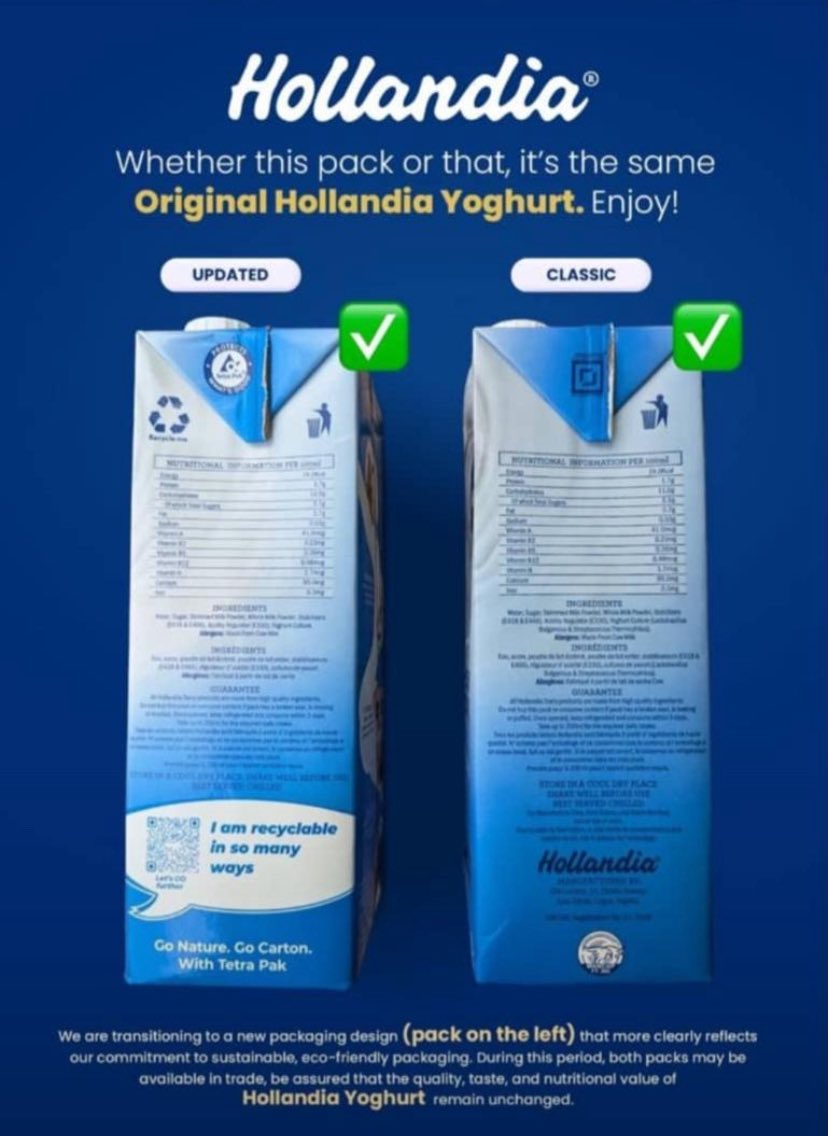


In recent weeks, discussions around Hollandia Yogurt have taken an unsettling turn. Nigerians are asking on social media whether some cartons on store shelves are real. Claims of “fake Hollandia” have spread rapidly. Specifically, these rumors are spurred by perceived variations in packaging, seals, and product texture.
Concerns about a reputable brand are understandable. However, the situation is more complex than viral messages suggest. This uncertainty exposes a reality that many consumer goods firms overlook. When packaging evolves but communication does not move as quickly, trust can erode. This is especially true in areas already vulnerable to counterfeits.
A Packaging Refresh, Not a Product Change
Chivita and Hollandia have announced a revised container design for their product line. This change includes Hollandia yogurt and milk. Notably, the redesign is part of a larger attempt to explain the recyclability of their materials. The company aims to do this while retaining the premium taste and quality that customers expect.
The new design prominently features a sustainability message. A white bubble at the bottom of larger packs displays a QR code. In addition, it includes the phrase, “I am recyclable in numerous ways.” Compact packages show similar indicators that emphasize the recyclable nature of the materials.
The implementation has been incremental. Therefore, consumers may simultaneously see both current and revised designs on store shelves. This is a typical stage in brand development, yet it is often misinterpreted. Significantly, the brands have underscored that while the external appearance is transforming, the internal product stays consistent.
Why the Confusion Escalated
For many consumers, packaging serves as the primary indicator of genuineness. Alterations in well-known visual indicators, such as logos or seals, can cause uncertainty. This is especially true in a market where counterfeit food items are a recognized issue.
Online discussions highlight particular concerns. Some mention cartons that deviate from familiar appearances or absent seals. Individually, these observations may lack significance. However, when disseminated through social networks, they rapidly transform into panic. The issue is not exclusive to Hollandia. Brands operating at scale often face the difficulty of inadequate product education.
The Counterfeit Context Nigerians Can’t Ignore
Nigeria has a well-documented history of counterfeit products infiltrating the market. Specifically, these items often move through informal distribution channels. Regulatory authorities have previously identified illegal activities involving counterfeit dairy products produced under hazardous conditions.
This broader context explains why consumers are prompt to query authenticity. The apprehension is genuine and grounded in personal experience. Furthermore, it implies that packaging modifications can readily be interpreted as indications of counterfeiting if they are not explicitly explained.
Where Brands Must Be More Intentional
This moment exposes a deficiency in communication rather than just a packaging problem. When brands renew their appearance, they must anticipate confusion before confidence. Therefore, clear and frequent consumer education is critical. This must happen not only through press releases but also on store shelves and social media.
Sustainability messaging is important, but reassurance is equally vital. Consumers want to know:
-
What has changed
-
What hasn’t
-
How to recognize the genuine product with confidence
When those answers are not immediately available, speculation fills the vacuum.
A Teachable Moment for the Industry
The Hollandia issue demonstrates how delicate brand trust is in today’s world. Packaging is more than just design; it is a symbol of confidence. As brands move toward modernization, communication must progress with equal intentionality. Otherwise, even well-intended modifications can be misconstrued as a potential risk.
For the broader FMCG sector, this presents an opportunity to strengthen trust. Ultimately, brands must communicate the nature of changes as clearly as they promote the products themselves.
ALSO WATCH MARKETING EDGE ONTV




Comment
No comments found.